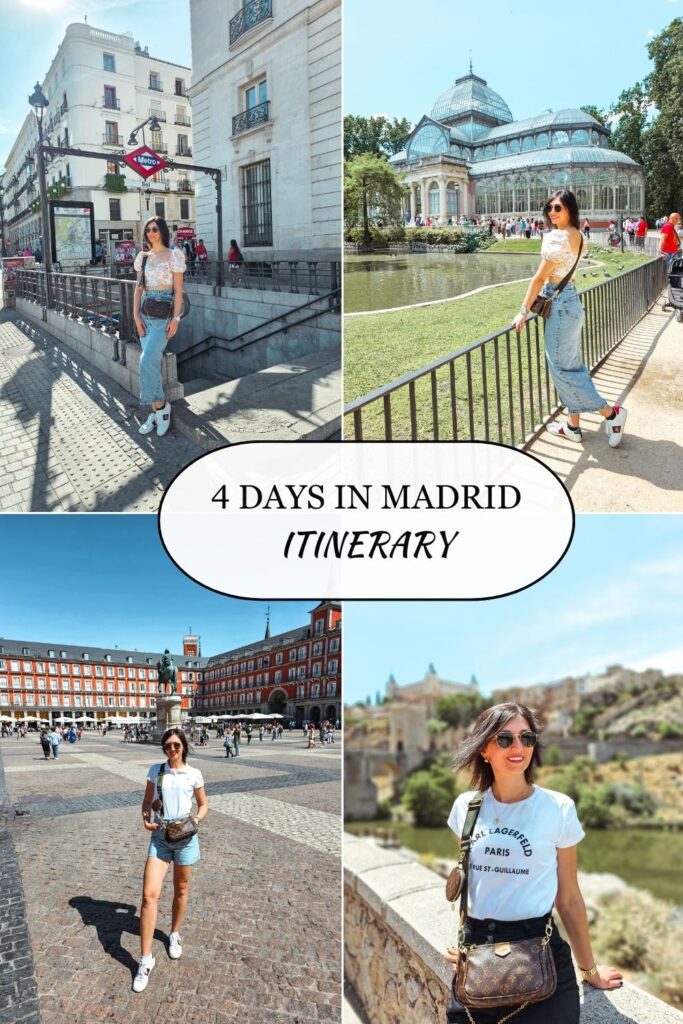
The Ultimate 4 Days in Madrid Itinerary

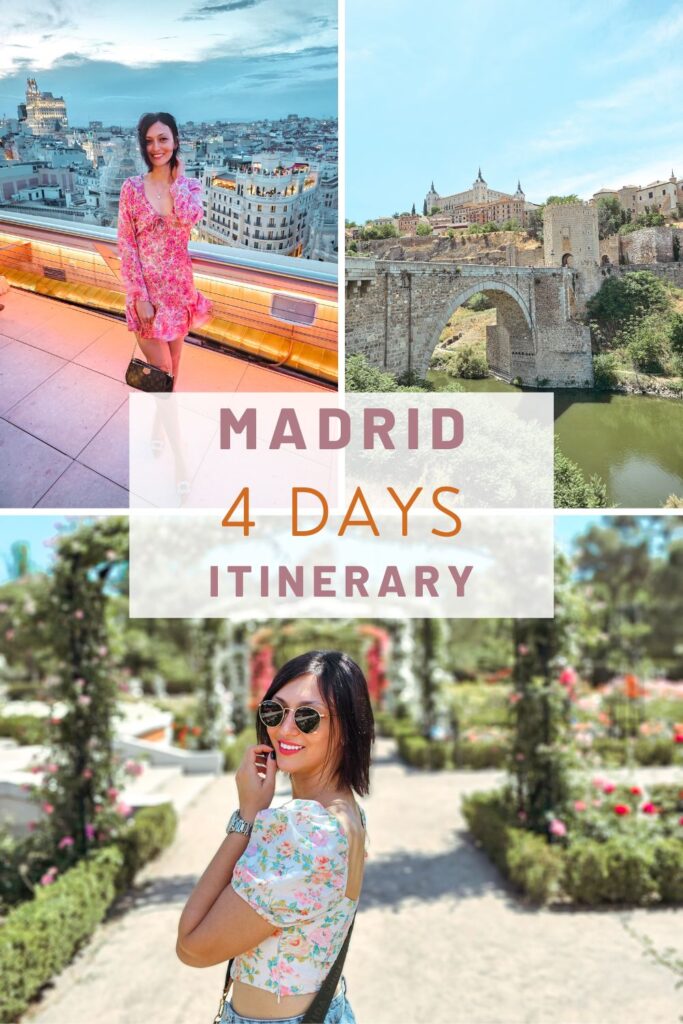
Madrid is one of the best places you can visit in Europe. It’s (almost) always sunny, it’s fun, a great foodie place and perfect for history and culture travellers. In this travel guide I am sharing with you my 4 days Madrid itinerary with best things to do alongside some general travel tips.
✅ If you’re looking for a custom travel plan, find out more about my personalised itinerary service here.
Heads up! Some links in this blog are affiliates. If you click and buy, I may earn a small commission at no extra cost to you. Rest assured, I only recommend stuff I’ve tested or trust. You can read more about our affiliate disclaimer here.
Short on time? See my favourite list of hotels and activities here:
Travel Resources for Spain:
How to Get to Madrid
Flying into Madrid is the most common and convenient option, with Adolfo Suárez Madrid–Barajas Airport serving as a major international hub. There are direct flights from numerous global cities.
Once you land, there are several options on how to reach the city centre.
By train: Head to Terminal T4 to catch the RENFE train. If you arrive at a different terminal, take the free shuttle to T4. Trains leave every 15 minutes and will get you to Atocha Train Station in about 30 minutes. Note that the service doesn’t operate at night.
By bus: The cheapest option is Bus Line 203, known as the Airport Express Aeropuerto. It runs 24/7 and takes around 45 minutes to reach Atocha Train Station. You can find the stops at the Departures and Arrivals levels of T1 and T2, as well as on the ground level of T4.
By metro: The Pink Metro Line 8 serves the airport, with stations at T4 and T2 (the latter also serving T1 and T3). You’ll need to transfer at Nuevos Ministerios to either Metro Line 10 or Metro Line 1. This option might be a bit more complicated but is also budget-friendly.
By private transfer/Uber: The easiest and most convenient option is to take a taxi or Uber, which will drop you right at your hotel. Taxis have a flat fee of about €30 to the city centre, while Ubers are generally a bit cheaper. Alternatively, you can arrange a private transfer for a more personalised service.
✅ Check the flight prices here.
How to Get around Madrid
Madrid is a pretty walkable city which is great! Additionally, you can use the underground from time to time, but you won’t need it often.
Where to Stay in Madrid
As already mentioned, Madrid is perfect for walking and exploring on foot, so I would highly recommend to stay in the city centre. My favourite neighbourhood is Argüelles which has a lot of budget-friendly and affordable luxury options and is within minutes distance from main attractions, such as the Royal Palace and Almudena Cathedral.
The other great neighbourhoods are Sol-Gran Via (the heart of Madrid) and La Latina (heaven for foodies).
I stayed at the Principe Pio and LOVED IT! Facing Madrid’s Royal Palace and Sabatini Gardens, the hotel is located in the city centre, just off Madrid’s Plaza de España Square. It’s a perfect place to stay because you are close to many main attractions. I had a beautiful direct view of the Royal Palace from my room!
Other great hotels:
- Pestana CR7 Gran Vía Madrid – a partnership between Cristiano Ronaldo and Pestana Hotel Group
- Porcel Ganivet – it has an amazing rooftop swimming pool
- Catalonia Las Cortes – 18th century palace, budget-friendly
📖 For more check my Guide to Madrid: 8 Best Areas and Hotels for Every Traveller blog post.
Additionally, if you’re interested in hotels with the pool, then check my Top 11 Madrid Hotels with the Pool: Best Rooftop Pools blog post.
When to Visit Madrid
Madrid enjoys around 350 sunny days per year, making it Europe’s sunniest capital!
Madrid’s climate is one of Europe’s best because the city gets fresh mountain air from nearly all sides, however, given it’s the 2nd highest European capital, that also means significant changes from season to season.
The hottest month will be July, the coldest month December and the wettest month November.
I was there in the first week of May and the weather was absolutely AMAZING!
Each day was sunny, with 30 degrees celsius (around 86 F), it was truly a proper summer time! Whereas during the evening, the temperatures would drop to 23-25 degrees C (74-77 F), but nonetheless you could still be in your summer dresses, it was actually very pleasant!
So, given all those facts you just read, personally I would say that the best time to visit Madrid is during spring. I even dare to say that May could be the best month because you will get plenty of sun, it will still be hot, but on the other hand you won’t experience an unbearable heat like you might in the summer months.
📖 Visiting Madrid in summer? Check my Europe Summer Outfits Ideas: What to Wear in Mediterranean blog post.
How Many Days in Madrid is Ideal
From my personal experience, certainly you need at least 3 days for Madrid only. Then you add 1 extra day for a day trip from Madrid because there are many great smaller towns very close to Madrid worth visiting. For example, my personal choice was Toledo and I’ll explain why later.
With that, 4 days are an ideal amount for your Madrid itinerary.
📖 Heading to Spain soon? Check my 16 Best Books to Read Before Visiting Spain: Fiction & Non-Fiction blog post.
Day 1 in Madrid
On your first day in Madrid of this Madrid 4 days itinerary you will check the main attractions of the Spanish capital and enjoy Iberian cuisine.
Mercado San Miguel
I don’t know about you, but I love to experience street food markets and local cuisine wherever I go, and all my trips to Spain started exactly there.
So, once you have left your bags and checked into your hotel, head to the Mercado de San Miguel. There are many great food options you can get, alongside some beer, sangria or fresh juices – whatever your heart desires.
Mercado San Miguel was originally built in 1916 and reopened in 2009 (so not that long ago!).

Plaza Mayor
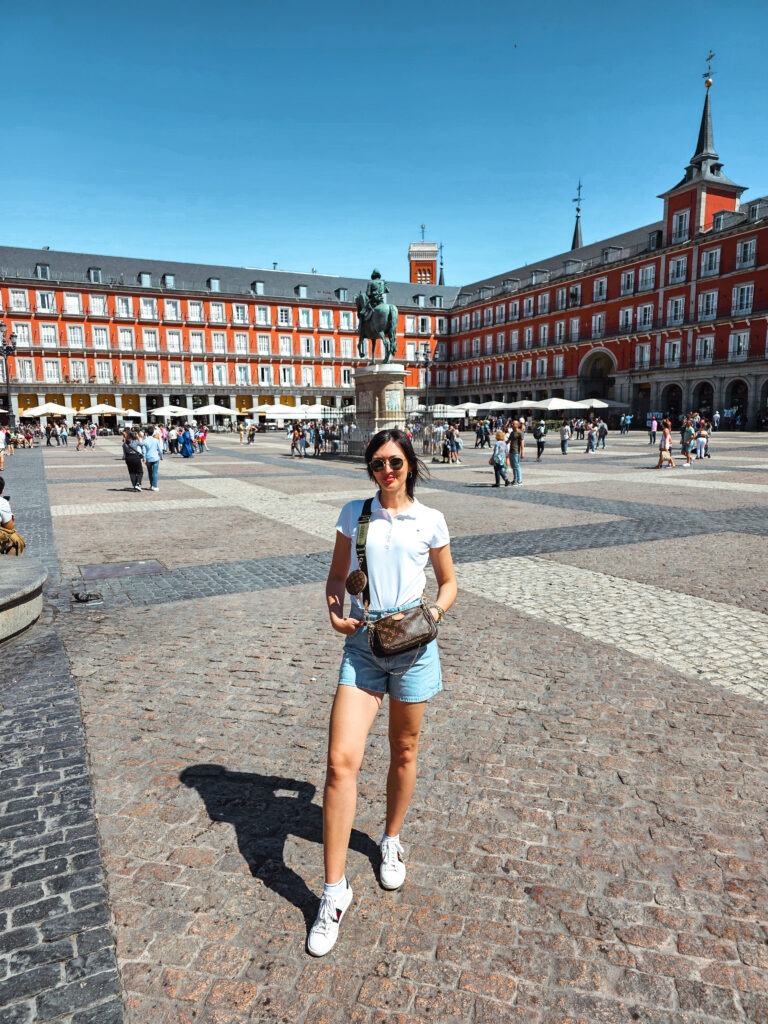
After you have fueled up, head to Plaza Mayor – the main square in Madrid. It was begun in the 17th century by King Philip III, whose bronze equestrian statue stands in the square. Officially opened in 1620, it is rectangular in shape and lined with pillars and arches.
There are a lot of cafes and restaurants here, but just beware that if it’s lunch time, no restaurant will serve you coffee/drinks only. We had to return after lunch to have our coffee there.
P. S. Food and drinks are a little bit pricier here, than at some other squares/places, but hey, you are sipping your coffee or having a meal with a dash of history!
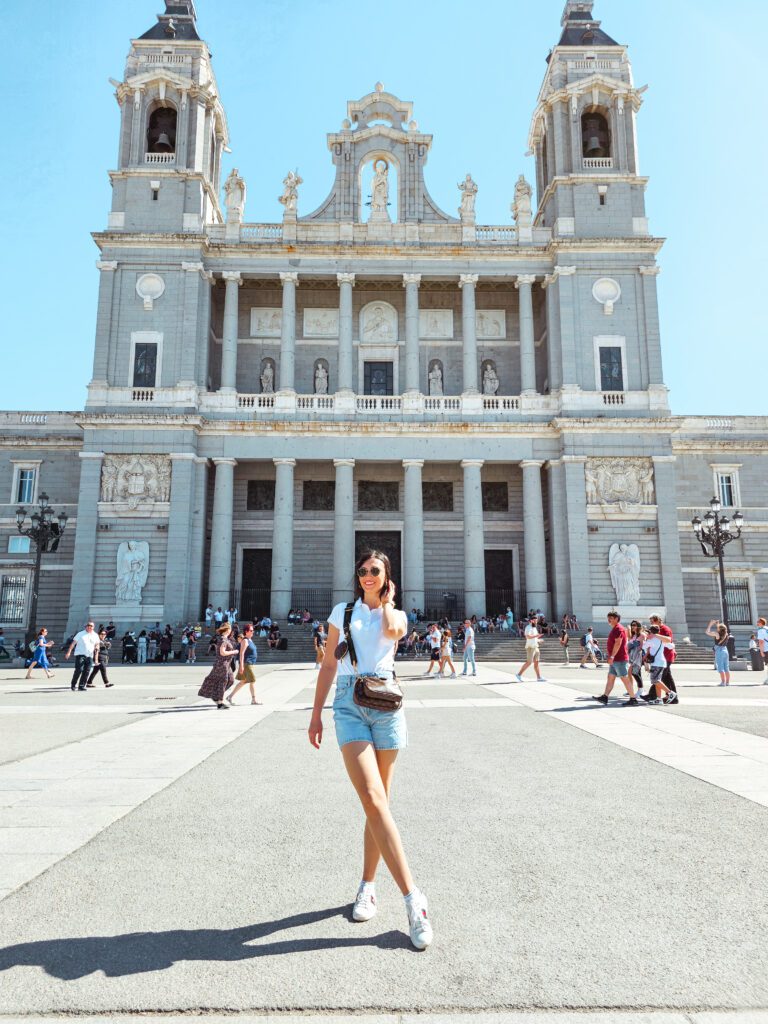
Catedral de la Almudena
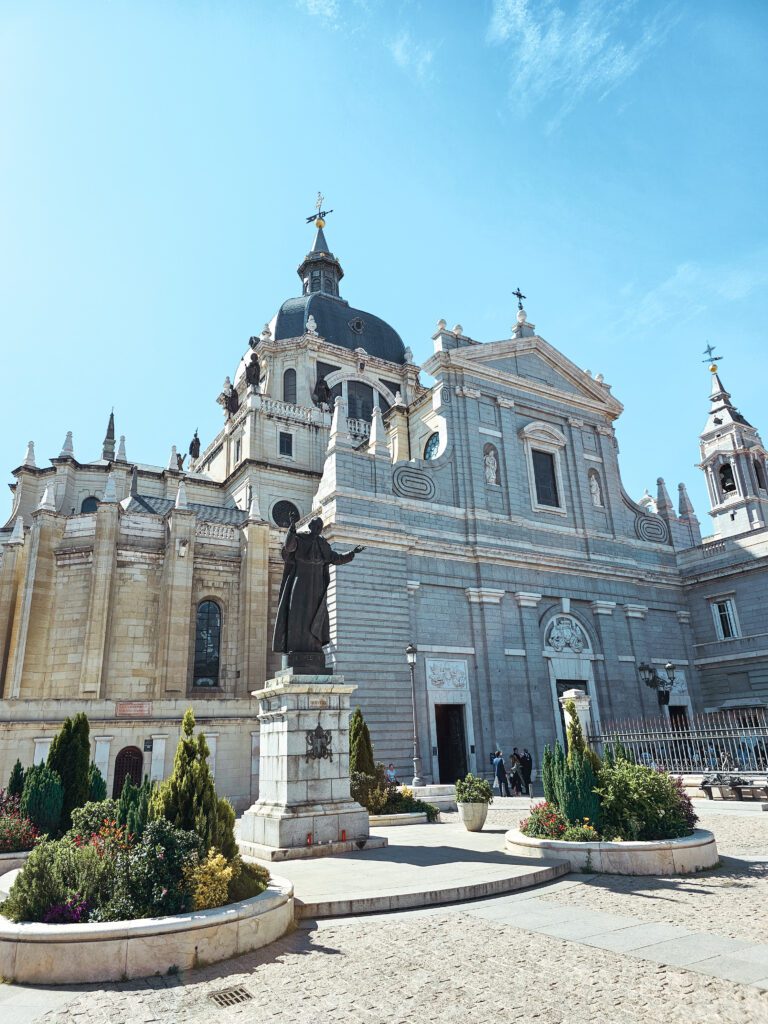
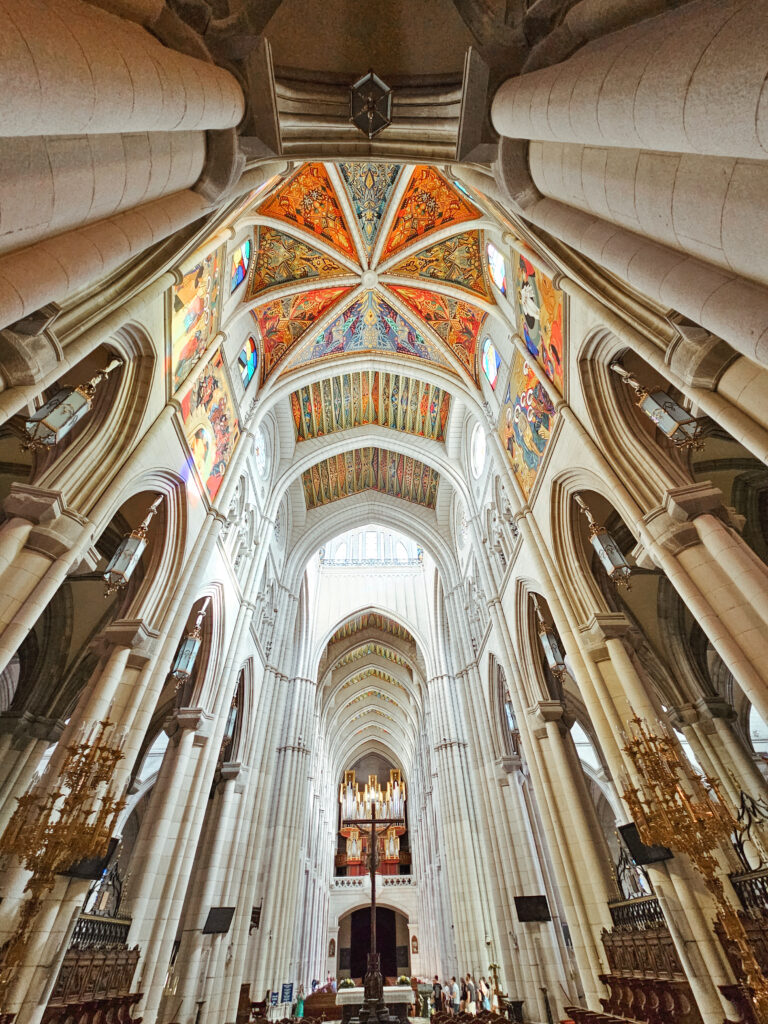
Next on your Madrid itinerary is La Almudena Cathedral. Its construction began in 1883 and finished over a century later when it was consecrated by Pope John Paul II in 1993.
While the visit to the cathedral is free, if you want to climb the dome, visit its museum, sacristy and chapterhouse, you’d have to pay about €7 for it.
Palacio Real
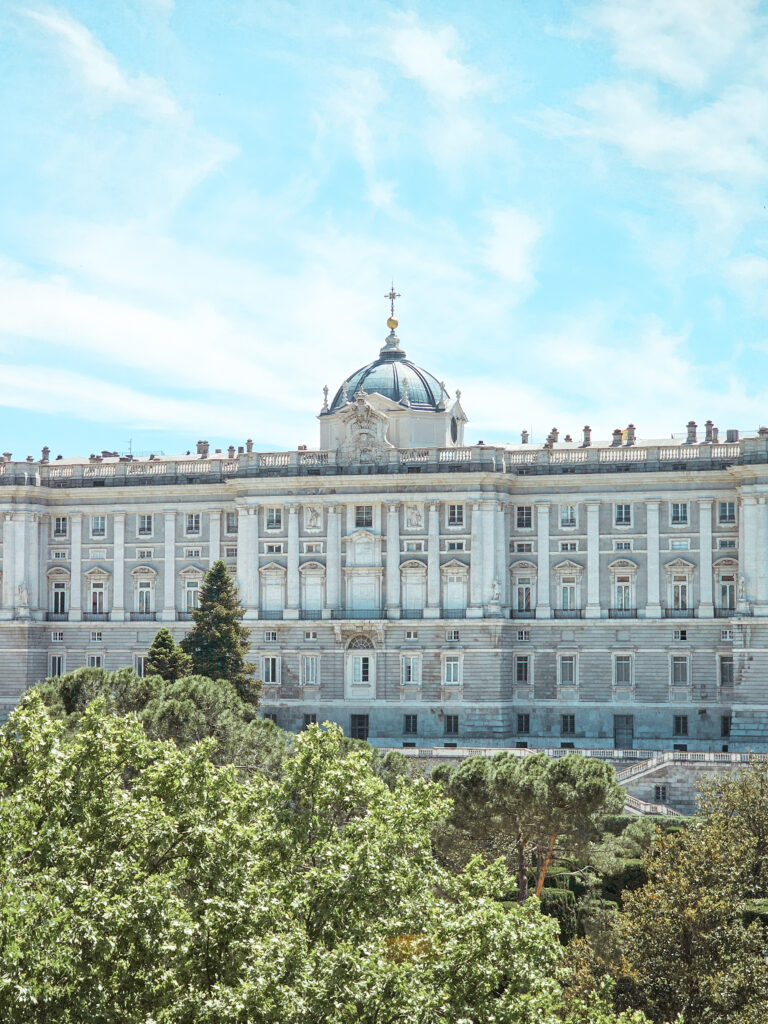
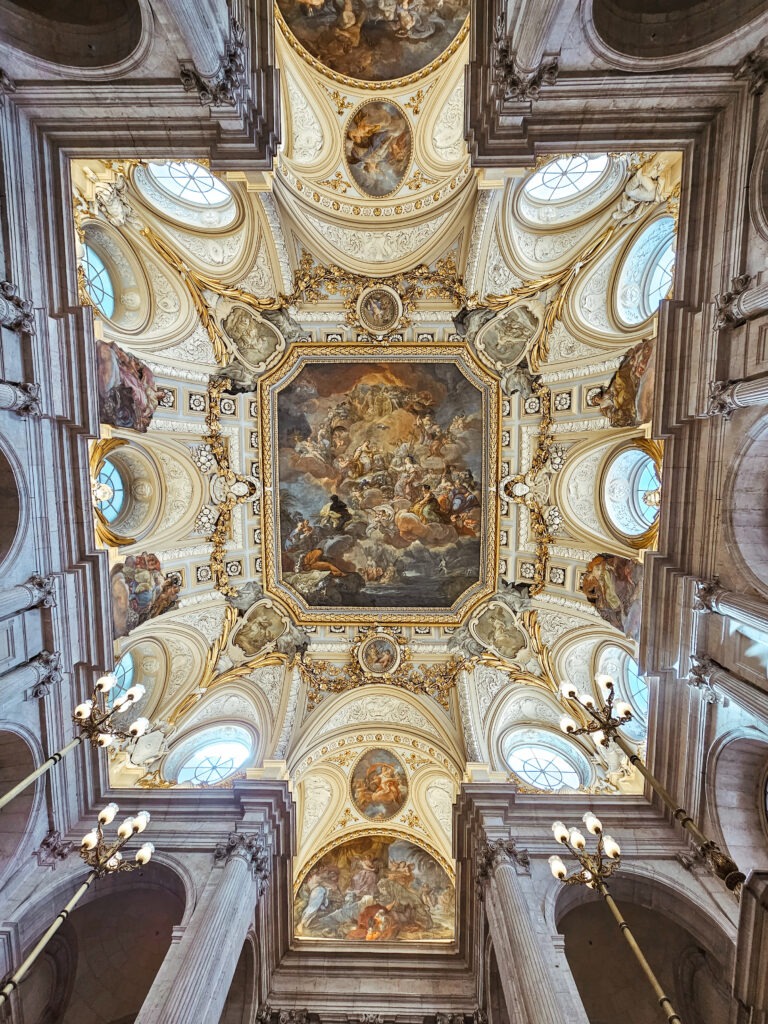
Finally is time for the best activity of the day – visiting the Royal Palace, which is the main attraction in Madrid.
I was blown away by its beauty! I loved it even more than Versailles in Paris & Dolmabahce Palace in Istanbul, which were my 2 favourite palaces before visiting Palacio Real.
The Royal Palace of Madrid is the largest royal palace in Western Europe and one of the largest in the world!
The Royal Palace was built in the 18th century right on the grounds of the old Alcázar fortress. After a fire broke out in 1734, King Philip V still decided to rebuild the palace. He brought in Filippo Juvarra to design the new palace, which was completed in 1751 under the supervision of Juvarra’s apprentice, Giambattista Sacchetti. Sacchetti made sure the palace was solidly built, using vaults throughout, emphasising its importance as the seat of power in Spain.
To this day it is the official residence of the Spanish Royal Family.
✅ I advise you to buy your tickets in advance to skip the queue.
If you’d love to learn more about the Royal Palace, then I recommend getting this highest rated guided tour.
Sabatini Gardens
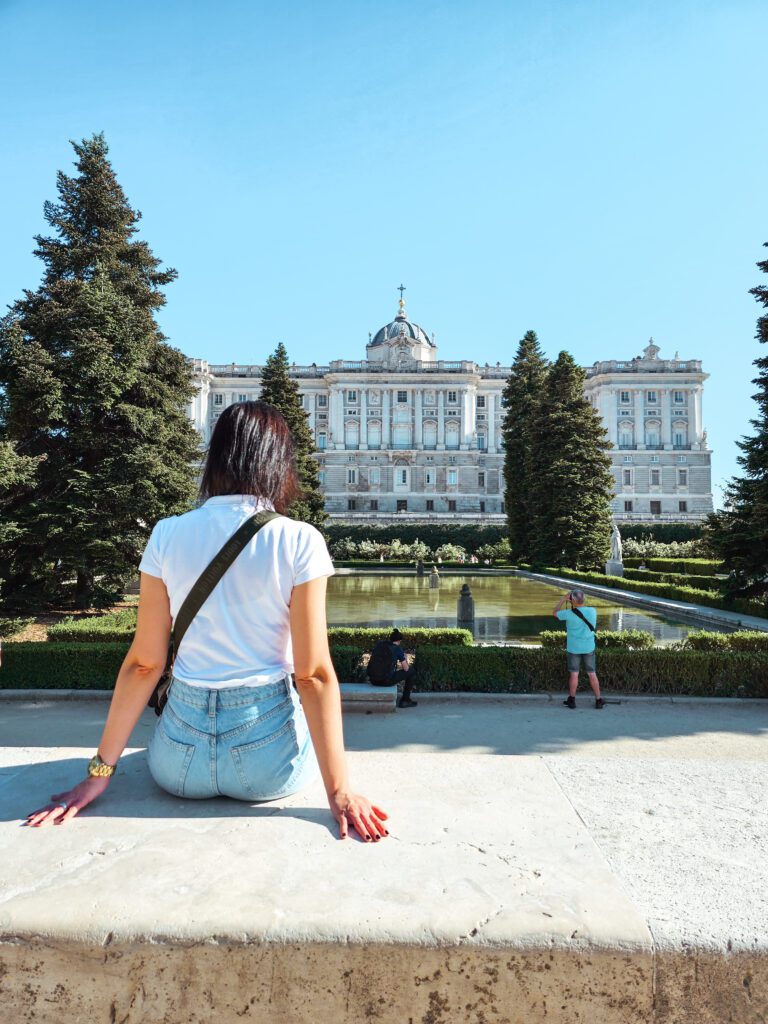
On your way out, make sure to check Sabatini Gardens. They are really beautiful, but rather small. What’s great is that they are free to visit!
Gran Via & Rooftop Bar
The main reason why we came to Madrid was to celebrate Slaven’s birthday (he’s my husband to those of you who don’t know him yet).
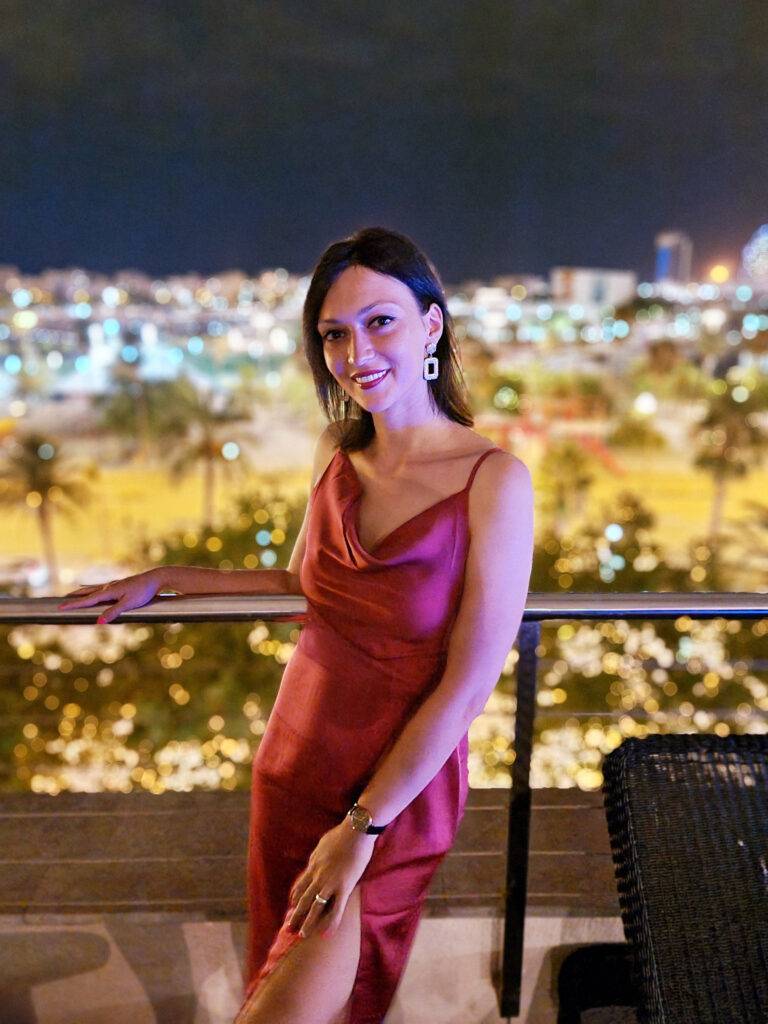
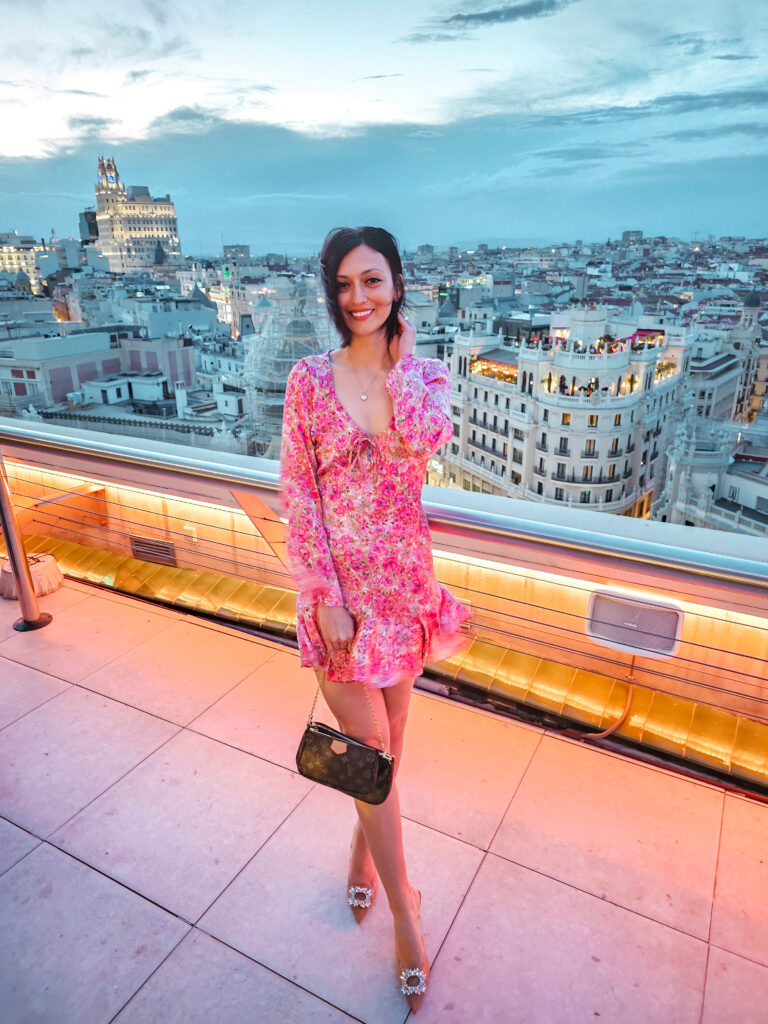
We wanted to have a nice dinner and drink at the rooftop bar/restaurant. So for that reason we chose Azotea Del Circulo.
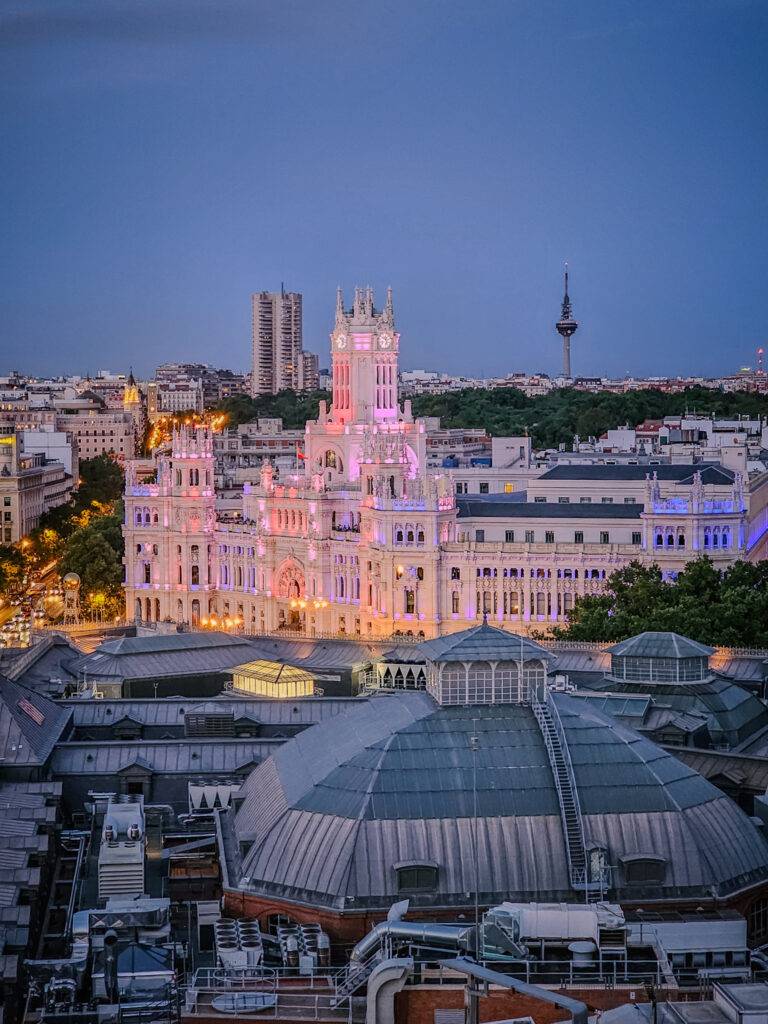
It is located at the top of the Circulo de Bellas Artes building, one of Madrid oldest skyscrapers, built in 1880. Today this is a privately owned cultural centre which offers almost 360° of panoramic views of Madrid.
You can come for drinks, or have food as well. Just don’t forget to make a reservation in advance as this place is super popular!
The views are really awesome and the best in the city, so definitely don’t skip this one!

Day 2 in Madrid
Your second day in Madrid will cover the most important museums, cultural activities and a nice walk in the park.
Puerta del Sol
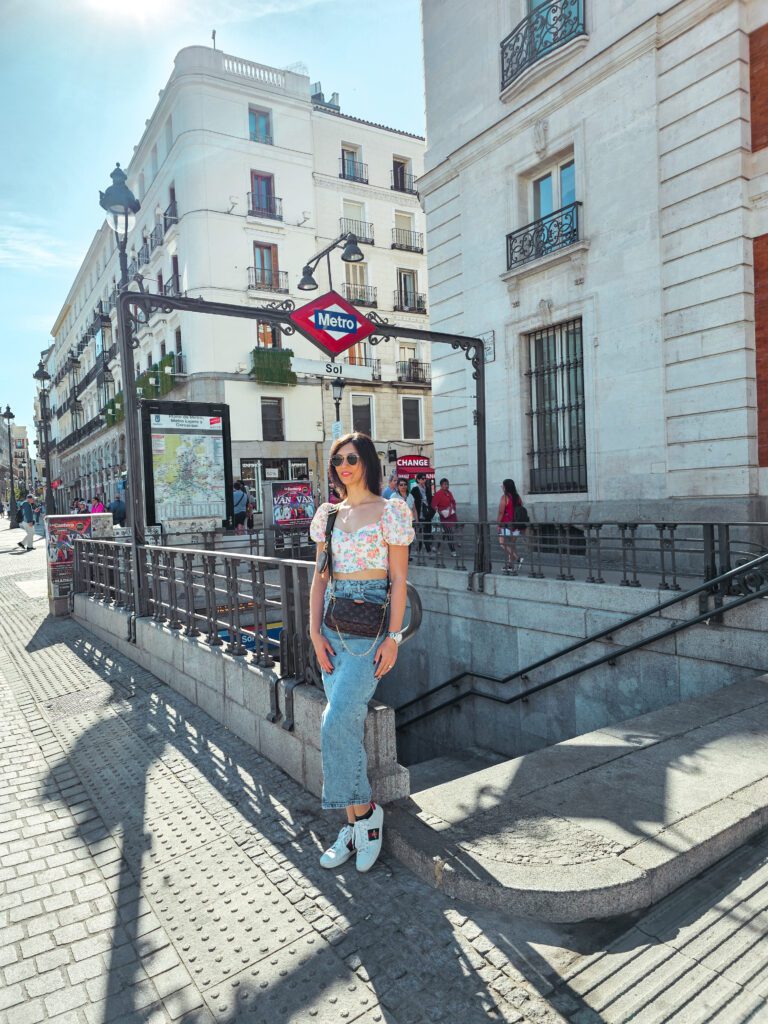
Puerta del Sol is the busiest square in Madrid.
The square is popular because it contains the famous clock whose bells mark the traditional eating of the Twelve Grapes and the beginning of a new year.
Cine Dore
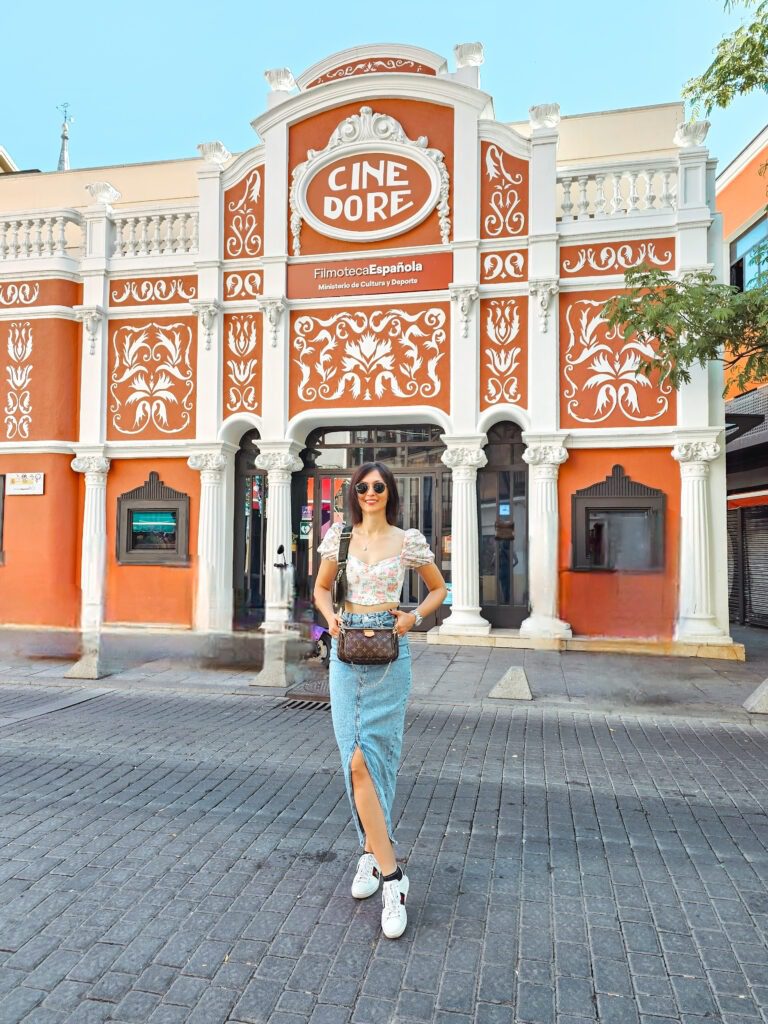
Cine Dore is the modernist cinema in Madrid that opened in the 1920s. With years it fell into decline, but fortunately the Spanish Ministry of Culture decided to renovate it. The cinema is operated by Filmoteca Nacional Espanole and features a mix of productions, from 1920s classics to international independent films.
It’s a really beautiful building which makes it a nice photo and Instagram spot.
Reina Sofia Museum
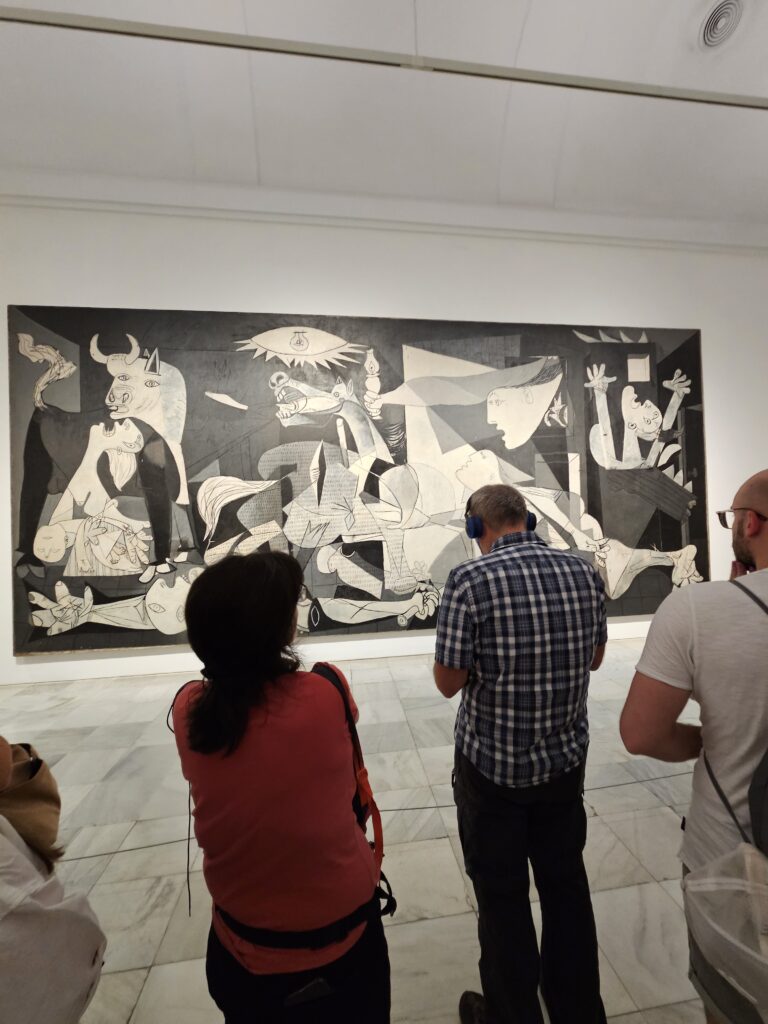
I have always wanted to visit Reina Sofia. Why? Because Picasso’s Guernica is being held there.
It was painted as an immediate reaction to the Nazi’s devastating casual bombing practice on the Basque town of Guernica during the Spanish Civil War.
Guernica shows the tragedies of war and the suffering it inflicts upon individuals, particularly innocent civilians.
I was surprised by its size and seeing it in person was an incredible experience and a must for every art history lover! I still remember those days from high school when I was learning about it, having exams on it and daydreaming about seeing it one day.
With this in mind, you can imagine my disappointment when I realised I am not allowed to take any photos! Given the fact that I was able to photograph many other paintings, not only in Madrid, but worldwide, this didn’t make any sense to me. Anyways, I think they may have changed the rule recently, but you’ll know for sure when you visit!
✅ I recommend to buy your tickets in advance.
P. S. But me being me, I snapped one anyways – sorry not sorry!
Beside Guernica, the museum has a great collection of modern art, so I definitely recommend checking it out!
Parque del Buen Retiro
I love parks! I enjoy taking long walks in Hyde Park, also, I couldn’t wait to visit Central Park, so of course I had to add Buen Retiro Park to my Madrid itinerary too!
It’s similar in size to Hyde Park and Central Park, but I found it more beautiful than these 2 (and they are very beautiful parks too!).
Covering over 125 hectares and comprising more than 15,000 trees, El Retiro Park is a green oasis in the heart of the city. It was recently named a UNESCO World Heritage Site.
Below are the best spots to check during your walk at El Retiro.
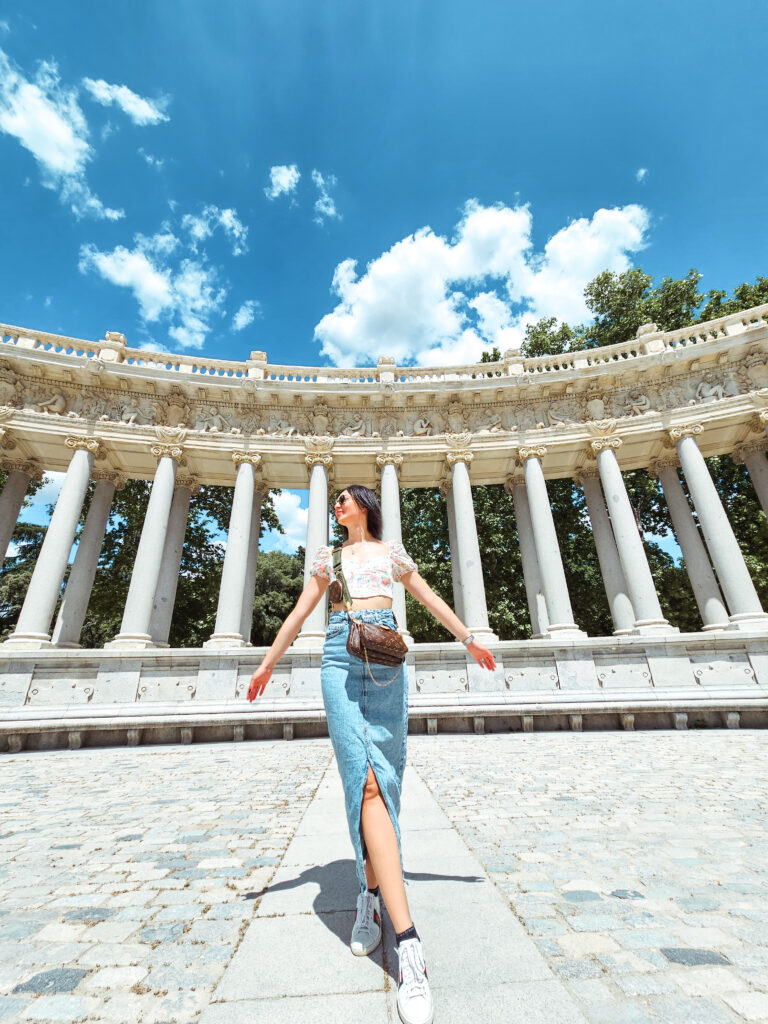
Columns of Alfonso XII Monument
The columns were erected to commemorate the short reign of Alfonso XII, known as The Peacemaker, who established the foundations for the final socioeconomic recuperation of Spain bringing an end to the political instability that lasted more than half a century.
It’s also one of the most instagrammable spots in Madrid.
Palacio de Cristal
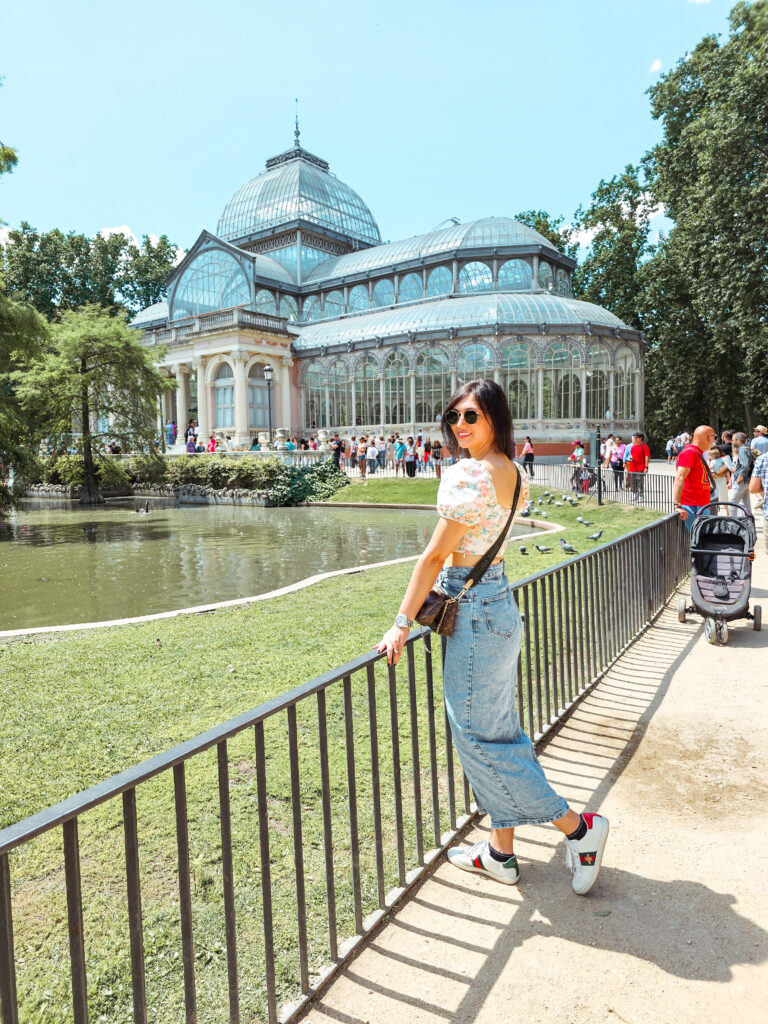
The Crystal Palace is a historic 18th-century building with unique architecture that serves as a conservatory with stunning iron, brick and glass construction and design. Today it is mainly used for art exhibits.
It’s a truly gorgeous spot in El Retiro. I loved the small pond in front of it a lot too. It makes for a really nice photo opportunity.
La Rosaleda
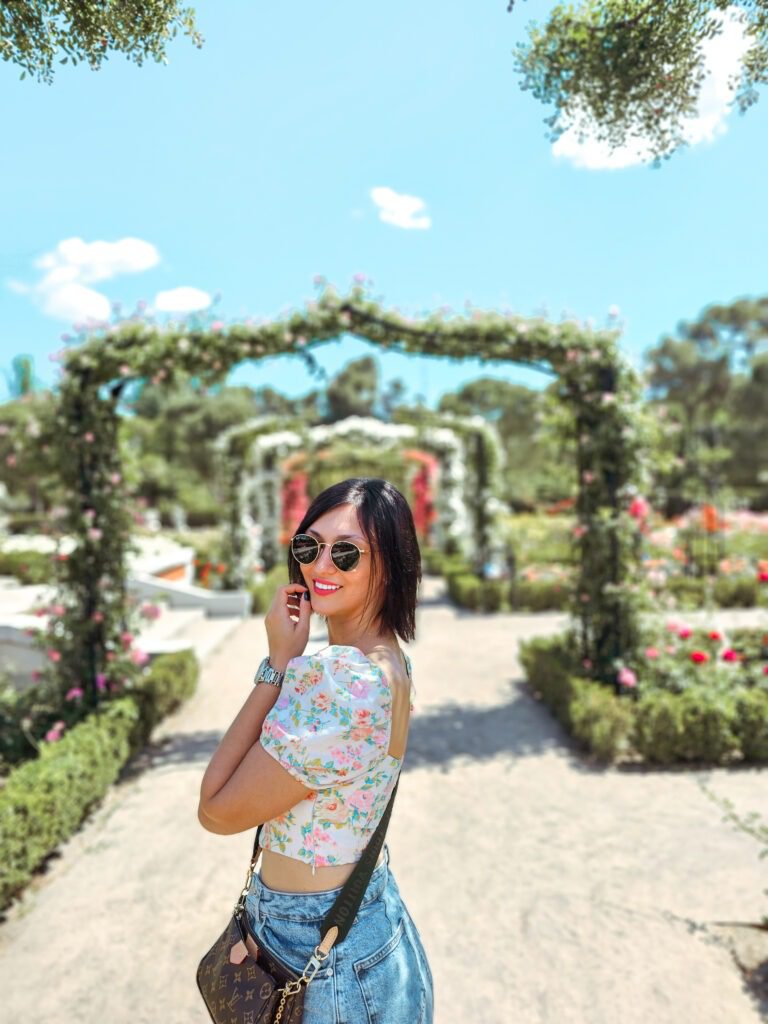
La Rosaleda is the Rose Garden with more than 4000 roses that bloom in May and June (all the more reasons why to visit Madrid in May!).
I love the rose garden of Regent Park in London, but here it’s brought to the next level. The aesthetics of the place is breathtaking. And yes, it is another perfect photo spot.
The Retiro Park Lake & The Monument of Alfonso XII
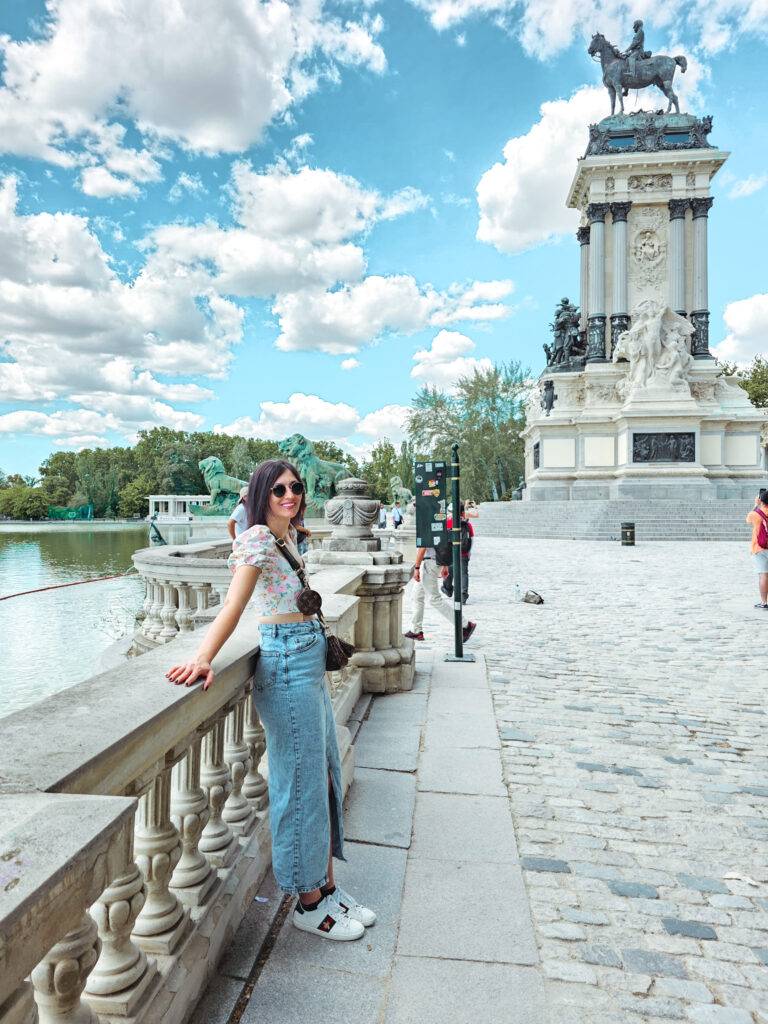
In the heart of the Retiro Park, you will find the lake, where you can sunbathe or rent rowing boats. It’s right next to the Monument of Alfonso XII, which is the most beautiful sight in the park.
Prado Museum
Right next to the park is the Museo Nacional del Prado.
The Prado Museum houses the most comprehensive collection of Spanish painting in the world, so it’s a must stop for all the art enthusiasts.
It has a great permanent collection of paintings of El Greco, Francisco Goya and Diego Velasquez.
✅ I recommend to buy the Prado Museum Tickets in advance.
💡I didn’t have time for the Thyssen-Bornemisza National Museum, but if you’d like to visit all 3 museums, the best is to buy the Madrid GoCity Pass to save the money.
📖 Are you a Hemingway fan? Read my Hemingway in Madrid: The Essential Books and Must-See Spots for Fans blog post. Prado Museum was one of the places he loved to visit.
Flamenco Show
Surely, there is no better way to end your day 2 in Madrid than to see a Flamenco show!
While Flamenco origin is not from Madrid, but from Andalusia, you will still find so many great Flamenco shows in Madrid because it’s the capital and cultural centre of Spain! I finally saw Flamenco in Madrid, and it was one of the best travel experiences I’ve ever had!
✅ I went to Las Tablas and cannot recommend it more! A great and moving show is GUARANTEED!

📖 Check my 5 Best Places to Visit in Spain for First Timers blog post.
Dinner
Before or after Flamenco, you’ll probably be hungry (in my case I had dinner before the show and then Iberian ham after the show lol).
I recommend these 2 places that are close to Las Tablas:
Restaurante Loredo
Las Delicias del Jamón

Day 3 in Madrid
Day 3 in this Madrid itinerary is reserved for a day trip.
I chose Toledo, so I will share what to do there, but Segovia, Avila, Cuenca, Salamanca could be other good options too!
You can take public trains and buses to these towns, or join a guided tour.
Day Trip to Toledo
Ah, Toledo! The ex-capital of Spain is often overlooked by Madrid. And what a shame!
If there is a one day trip you have to do from Madrid, it has to be Toledo!
The City of Three Cultures is 2000 years old and has had a turbulent history. From the rules of Ancient Romans, Visigoths, Emirate of Cordoba to finally becoming a Christian Kingdom in the 16th century. Because of its history, all these three Abrahamic religions Isla3m, Judaism and Christianity shaped Toledo which you’ll notice as soon as you approach the city.
✅ Consider taking this best rated Toledo Private Tour with Licensed Local Guide.
📖 Read my Guide to Toledo: A Perfect Day Trip from Madrid blog post for more.
Alcantara Bridge
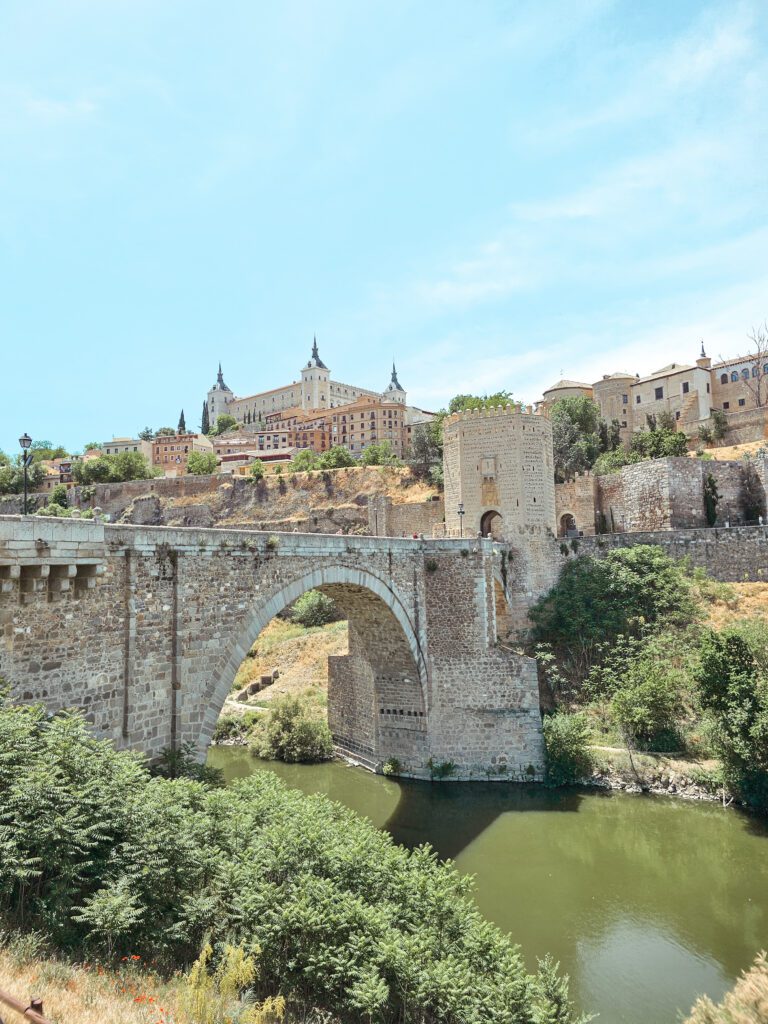
Alcantara Bridge is a Roman stone arch bridge built between 104 and 106 AD. When you’re approaching the entrance to the once completely walled city, this will be the very first thing you’d see.
This was the very first moment I fell in love with Toledo which still remains to be my favourite smaller town of Spain. The path towards the city makes a great photo spot as you can see below.
Monastery of San Juan de los Reyes
The Monastery of San Juan de los Reyes is one of the most beautiful sites you can visit in Toledo.
It’s an Isabelline style Franciscan monastery founded by King Ferdinand II of Aragon and Queen Isabella I of Castile to commemorate both the birth of their son, Prince John, and their victory at the Battle of Toro in 1476.
It reminded me a lot of Jeronimos Monastery in Lisbon.
✅ I highly recommend getting this Toledo Tourist Bracelet with Entry to 7 Attractions to save the money and skip the lines.

Synagogue of Santa Maria la Blanca
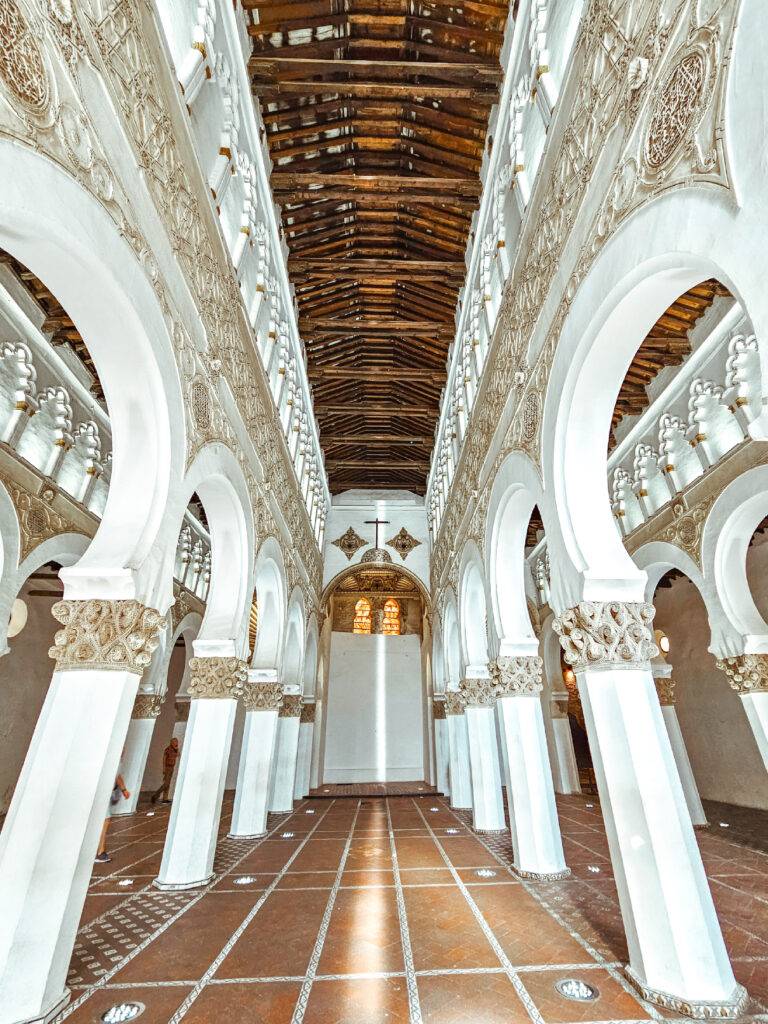
Also known as the Ibn Shoshan Synagogue, it’s a museum and former synagogue in Toledo. It was erected in the late 12th or early 13th century and is considered the oldest synagogue building in Europe still standing. The building was converted to a Catholic church in the early 15th century.
It is one of the best examples of how different cultures and religions shaped the history of Toledo.
What I loved about it was that the interior was completely white with some gold. It’s a really beautiful synagogue.
Calle de los Reyes Catolicos
Calle de los Reyes Catolicos is a beautiful street in Toledo where you’ll find the Synagogue.

Mosque of Cristo de la Luz
The Mosque of Cristo de la Luz is one of the ten mosques that existed in the city during the Moorish period. Originally known as the Mezquita Bab al-Mardum, its name was derived from the nearby city gate, Bab al-Mardum.
The mosque was built in 999 and is notable for remaining largely unchanged since its original construction.
In 1186 King Alfonso VIII granted the building to the Knights of the Order of St John, who repurposed it as the Chapel of the Holy Cross which is still well preserved today.

Puerta de Valmardon
Also known as The Puerta Bab al-Mardum is a city gate of Toledo. It was built in the 10th century and is one of the oldest gates in the city. Its name ‘mardum‘ is Arabic for ‘blocked up‘.
The views from there are amazing. The gate is right next to the mosque.

Catedral Primada de Toledo
I can’t even count how many churches and cathedrals I’ve visited, but I still get surprised and left in awe with some of them. The Toledo Cathedral was one of these.
Catedral Primada de Toledo is one of the three 13th-century High Gothic cathedrals in Spain.
While the exterior is quite ordinary, the interior was extremely gorgeous. You have to go there when in Toledo!

Statue of Cervantes
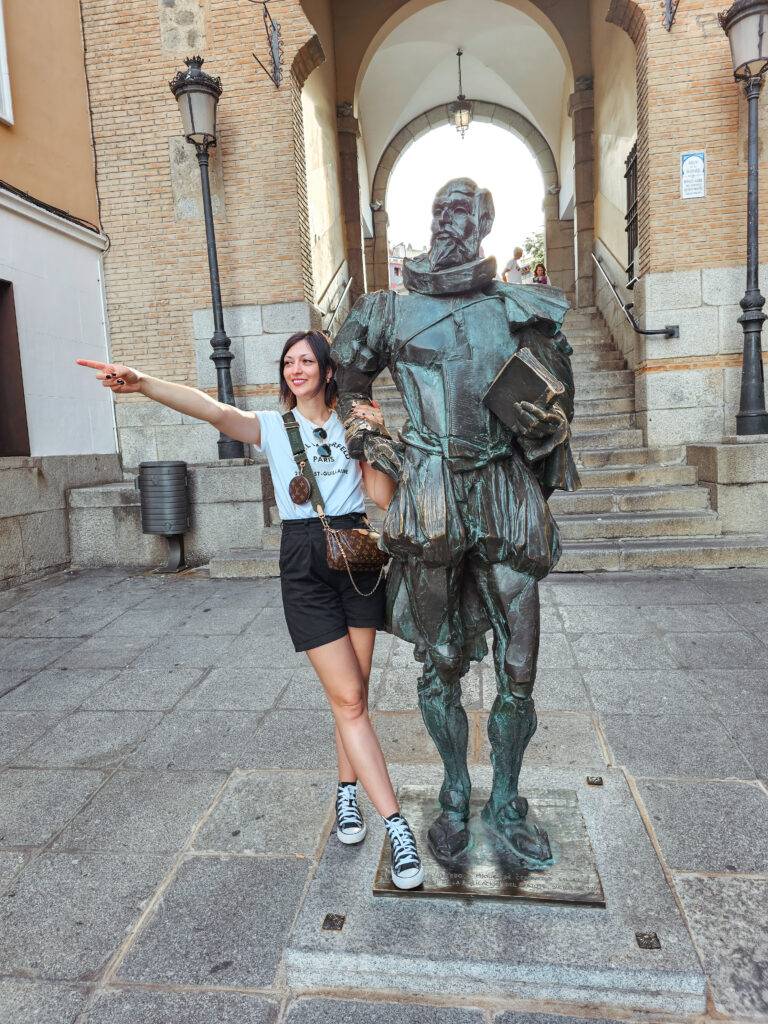
Miguel de Cervantes Saavedra is one of the most important Spanish writers, known for his book Don Quixote, which is considered to be the first modern novel.
He was born in Toledo province which also inspired his writings. So, it’s no surprise that you’ll find his statue there, which is 2 m (6.5 ft) high.
As someone who has a Master’s degree in Literature and is obsessed with reading, of course this was one of my favourite places in Toledo.
📖 Check my 16 Best Books to Read before Visiting Spain: A Reading Guide blog post.
Alcázar of Toledo
Toledo Alcazar is a fortress that dominates the views in Toledo.
It’s the first site you’d see as soon as you approach the Alcantara Bridge because it’s on the top of the hill, which means beautiful views are guaranteed from there.
Alcazar of Toledo was originally a Roman palace built in the 3rd century and then became a fortress in the 10th century under the rule of Caliph Abd ar-Rahman III of Cordoba.
It was later restored in the 1540s by Charles I and his son, Philip II of Spain.
During the Spanish Civil War, Colonel José Moscardó held the Alcázar against Republican forces, so it became a symbol of Nationalist resistance.
Today the Alcázar houses the Mancha Regional Library and the Museum of the Army which you can visit.

Day 4 in Madrid
And lastly, the final day of this 4 days Madrid itinerary is reserved for some unique experiences. Here are some of my suggestions.
Templo de Debod
Templo de Debod is an Egyptian temple from the 2nd century BC. The temple is installed in the Parc del Cuartel de la Montaña, near the Plaza de España. The temple was given to Spain by the Egyptian government after the construction of the Great Aswan Dam.
It’s a pretty cool place to visit, especially for sunset. What’s great is that it’s completely free to visit!

Santiago Bernabéu Stadium
If you’re into football, and especially if you’re a Real Madrid fan, then you can’t miss a visit to Santiago Bernabéu Stadium!
✅ The tickets sell out quickly, so it’s best to get them in advance.

Wine and Tapas Walking Tour
Having tapas in Spain is not only a culinary experience, it’s also a part of their culture.
I recommend joining this Wine & Tapas Walking Tour where you get to taste 12 different tapas at 4 different places with a glass of wine at each place. You will also get to check some of the oldest tapas places (some even over a 100 years old!).

Hemingway in Madrid Literary Tour
Ernest Hemingway is one of the most influential writers of the 20th century. He had a profound connection with Spain, especially Madrid which he called “the most Spanish of all cities”. So, it’s not a surprise that his experiences in the Spanish capital during key historical moments left a mark on his works, making Madrid a central location for all of us fellow Hemingway enthusiasts.
If you love Hemingway and you’re into literary exploration of places, then following the footsteps of Hemingway is one of the best activities you can do in Madrid.
📖 I wrote a detailed blog post on Ernest Hemingway in Madrid: Books to Read & Spots to Visit, so have a look there.
In the meantime, these are my top recommendations:
- For Whom the Bell Tolls – my favourite Hemingway book and a perfect example of his work in Madrid
- Restaurant Botin – Hemingway’s favourite restaurant
- La Venencia – Hemingway’s go-to bar
- Las Ventas Bullring – Hemingway loved bullfighting and often wrote about it
- Prado Museum – Hemingway loved the art collection there
- Tablao Flamenco 1911 – Hemingway’s favourite flamenco tablao
- Hostal Aguilar – Hemingway stayed there in the 1920s
- NH Collection Madrid Suecia – where Hemingway stayed during his last visits in the 1950s
- Tasting Tour Madrid Best Historical Restaurants and Bars – including Hemingway’s favourite bars
- Prado Museum Tour & Lunch at the Oldest Restaurant in the World – including Hemingway’s favourite restaurant Botin + guided visit to Prado Museum
Spanish Inquisition and Legends Evening Walking Tour
Every city has a dark history and Madrid is not an exemption. If you’re into ghost tours and legends, then I recommend joining this Spanish Inquisition and Legends Evening Walking Tour.
You will learn more about Spanish Inquisition, the mysteries and ghost stories of Los Madriles and of local superstitions.

Is Madrid Worth Visiting
Madrid is one of the best places you can visit in Europe. It’s almost always sunny, it’s affordable, beautiful with plenty of things to do. It’s a great base for exploring smaller towns and it offers some pretty unique experiences.
While Madrid is not my favourite Spanish City (I’m more in love with Barcelona), it is absolutely worth visiting. And I will 100% be back too.
My other Spain blog posts:
- Where to Stay in Madrid – 8 Best Areas and Top Hotels
- Top 11 Madrid Hotels with the Pool: Best Rooftop Pools
- Hemingway in Madrid: The Essential Books and Must-See Spots for Fans
- Guide to Toledo: A Perfect Day Trip from Madrid
- 16 Best Books to Read Before Visiting Spain: Fiction & Non-Fiction
- Barcelona 5 Days Itinerary: The Ultimate Guide
- Top 8 Gaudi Sites You Have to Visit in Barcelona
- Tips for Visiting La Sagrada Familia: Ultimate Guide
- 15 Best Barcelona Hotels with Amazing Rooftop Pool
- 5 Best Places to Visit in Spain for First Timers
- 12 Best Views in Barcelona: Most Beautiful Viewpoints
✅ If you’re looking for a custom travel plan, find out more about my personalised itinerary service here.
Like this post? Pin it!📍