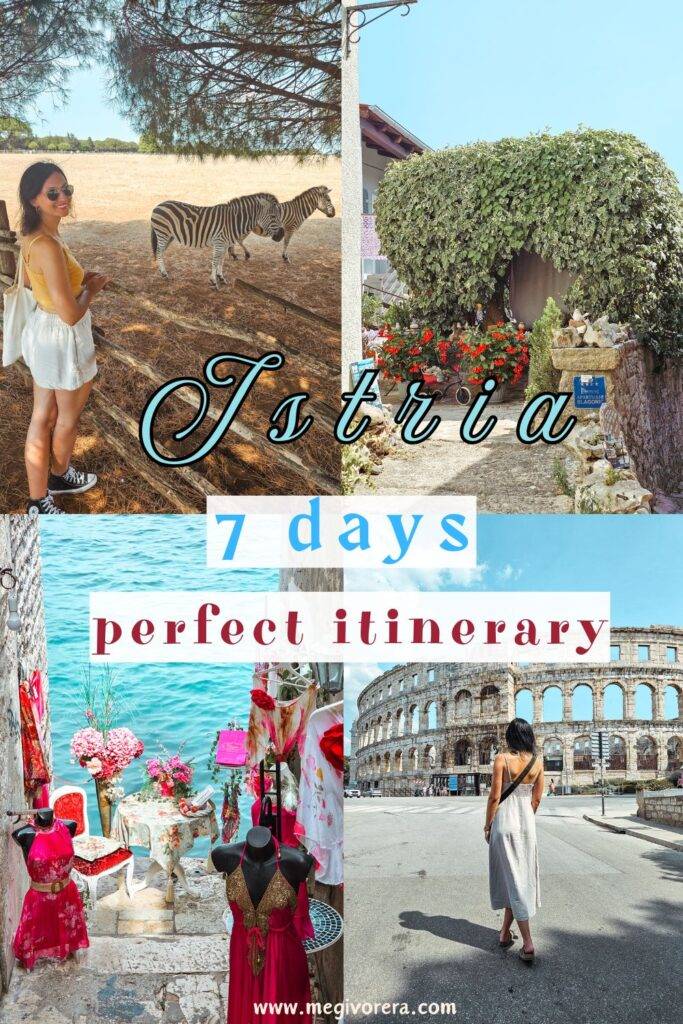
Istria Itinerary: How to Spend 7 Days in Istrian Peninsula

The Istrian Peninsula in Croatia is somewhat of a hidden gem of the Croatian coast, much less popular than the Dalmatian coast. As a Croatian, I guarantee you will fall in love with this beautiful part of Croatia. The Istria region looks like a heart-shaped peninsula and is divided into two parts: the first one is referred to as the Blue Istria with its main seaside towns, and Green Istria with its medieval hilltop towns. This Istria itinerary covers both Blue and Green Istria with top things to do in each in 7 days brought to you by a local.
✅ If you’re looking for a custom travel plan, find out more about my personalised itinerary service here.
Heads up! Some links in this blog are affiliates. If you click and buy, I may earn a small commission at no extra cost to you. Rest assured, I only recommend stuff I’ve tested or trust. You can read more about our affiliate disclaimer here.
Short on time? Here are my top recommendations:
Travel Resources for Croatia:
⭐️ Join my Croatia Travel Tips FB Group to ask questions, get advice and engage with our community.
📖 Check my Croatia Bucket List: 15 Best Things to Do in Croatia blog post.
How to Get to Istria
The easiest way to travel to Istria is by taking a flight to Pula Airport. However, you can only do that from certain European destinations, like London. Another relatively close airport to Istria is Rijeka Airport, but again, some airlines fly there and from within European cities.
If you’re coming from overseas, then the best and easiest way is to travel to Zagreb, the capital city of Croatia.
Now, here’s the tricky part – Croatia is NOT a public transportation-friendly destination. There are limited bus services, though they do increase in the peak summer season.
But even if you manage to get from point A to point B by a bus, or in our case let’s say from Zagreb to Pula or Rovinj (most popular seaside towns), it will still be very complicated to travel between the towns or go to the beaches. The bus may or may not come or can be super late, just because. Us Croatians just have a different way of dealing with time and our way of living is pretty slow and relaxed!
With that, I cannot stress more how renting a car in Croatia is very important. But don’t worry, the roads are great, fairly new and well connected, it really makes for such a nice road trip!
Alternatively, you can also book a private transfer.
✅ Check the flight prices here.
📖 Read my Is Croatia Expensive to Visit? (+My Cost Breakdown) blog post.
How to Get around Istria
Because of everything I said above, the best way to get around Istria is to rent a car. The Istrian highway is new and great for driving. From the very north of Istria to the very south, you can be in an hour, so everything is next to one another. That’s how we’ve done it and I would never do it any other way.
If driving is not your thing, then you can always opt for guided tours and have everything organised for you, especially if you’re visiting the hilltop towns which are not that accessible without a car!
Lastly, you can see what bus lines are connected and explore it this way, though you’d be limited to the main seaside towns mostly! But surely you can combine buses and guided tours if renting a car is not an option for you.
Where to Stay in Istria
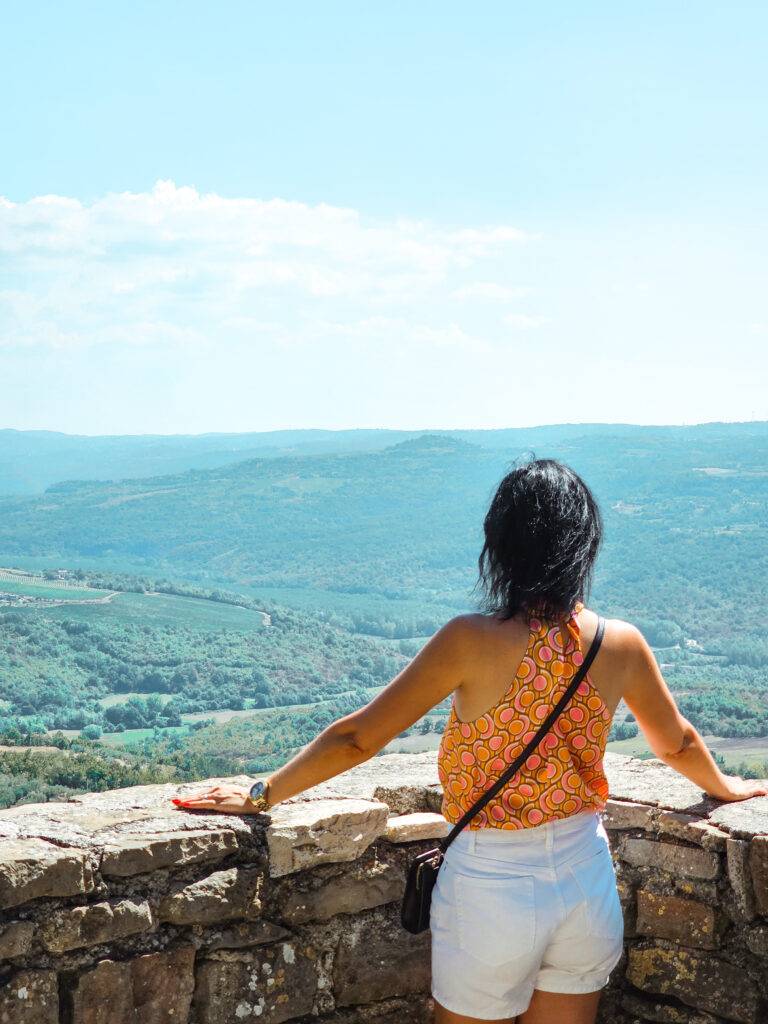
Even though I adore the hilltop towns in Green Istria, they are at the end of the day, on the hill and quite secluded from the coast. Therefore, my recommendation is to stay in Blue Istria aka the seaside towns, such as Pula, Rovinj, Novigrad, Porec or Umag.
Here are my top 3 hotel recommendations:
- Park Plaza Arena Pula – close to the Hawaiian Beach, one of the best in Istria
- Grand Park Hotel Rovinj by Maistra Collection – luxury hotel with the panoramic views of Rovinj
- Aminess Maestral Hotel – infinity pool on the sea
📖 For more, check my 10 Best Istria Hotels with the Pool You’ll Love blog post.
When to Visit Istria
The Istrian peninsula is on the Adriatic Sea, which is truly one of the most beautiful seas in the world. And no, I am not saying that just because I’m Croatian!
While winters can get cold (about 10 C or 50 F more or less) they are often sunny. However, I would not recommend you to go in winter because a lot of places are open only in the high season, plus it is not that enjoyable.
Also, it’s quite a shame to come all the way to Istria and not enjoy the Adriatic Sea. Therefore, my personal recommendation is to visit in the summer months, from the end of June to the beginning of September when the weather is the best. You can expect the temperatures to be at 30 C or 86 F, often even higher! The sea is also warm and pleasant for swimming with about 25 C (77 F).
📖 Visiting Croatia for summer? Check my Europe Summer Outfits Ideas: What to Wear in Mediterranean blog post.
How Many Days in Istria is Ideal
I’d say not to spend less than 5 days in Istria. However, because there are plenty of things to do and see, I would recommend between 7 and 10 days. The more the better!
In this Istria itinerary we will cover how to spend 7 days in Istria which is the optimal amount of days packed with lots of different activities and experiences.
Day 1 in Istria: Pula
You will start your first day of this Istria itinerary in Pula, the most famous town of the peninsula.
✅ If you’d love to learn about history of Pula, consider getting this highest rated walking tour.
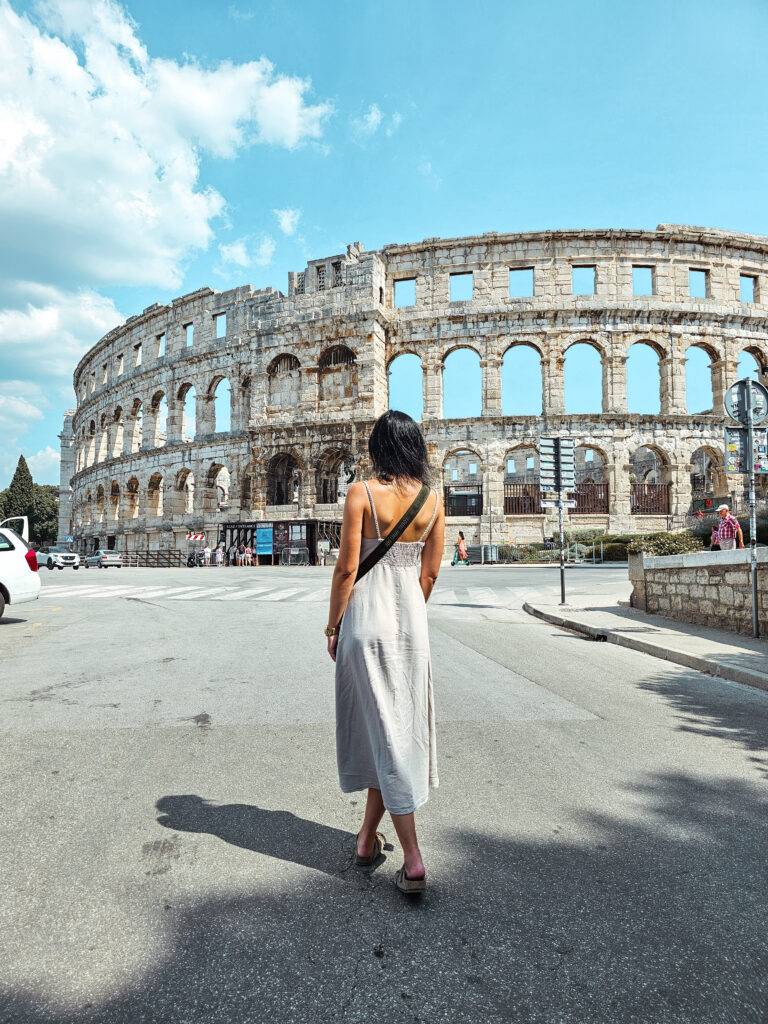
Pula Arena
Not only the best Ancient Roman monument of Croatia, but in general, Pula Arena is the Roman amphitheatre built between the 1st century BC and the 1st century AD during the reign of Emperor Augustus and completed under Emperor Vespasian.
Pula Arena is the only remaining Roman amphitheatre to have four side towers entirely preserved and is among 6 best preserved Roman amphitheatres in general.
So your visit to Pula is incomplete without checking the arena. Don’t worry, it is close to the town centre and easily spotted from the street.
While you can admire it that way, I highly recommend you to get your tickets and go inside Pula Arena. The tickets are inexpensive and the experience is great.
Also, if you happen to be in Pula during the Pula Film Festival or for some concerts, then you can visit the arena that way too.

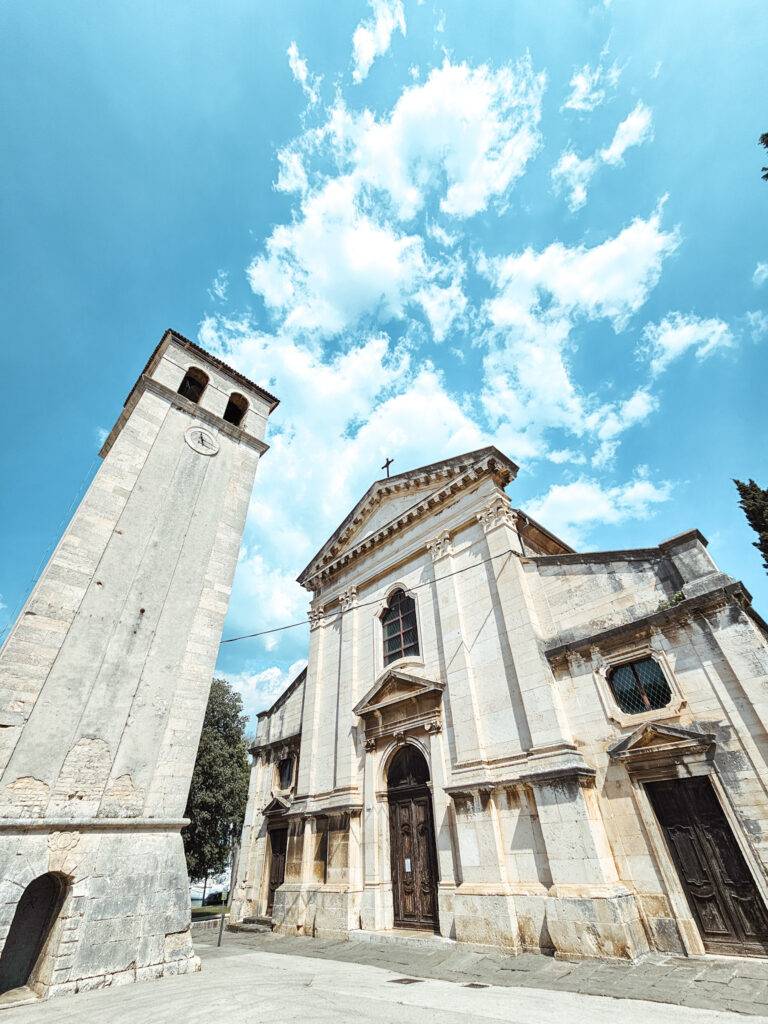
Pula Cathedral
Pula Cathedral was built on top of the ancient Roman temple and the first Christian churches of the 4th and 5th centuries (like many other churches and cathedrals of Europe).
Sadly, the cathedral was closed during our visit, but I recommend going inside if it’s open when you’re there.
The entrance to the cathedral is free, unless you want to climb the bell tower which comes with a small fee.
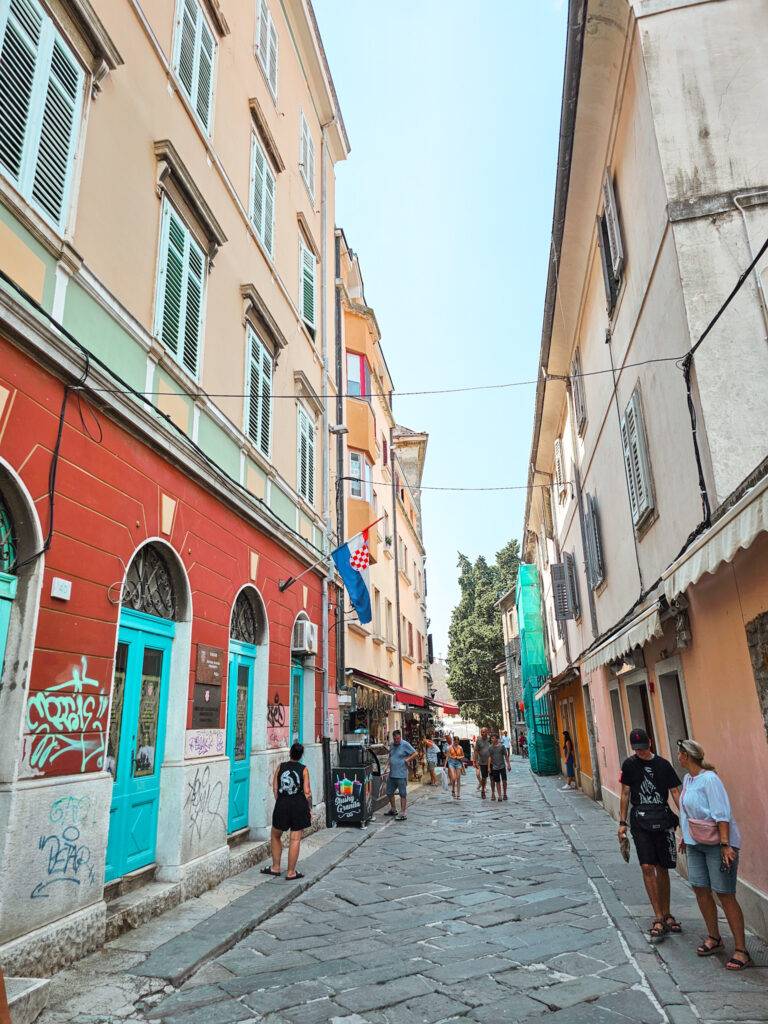
Kandlerova Street
Or in Croatian Kandlerova Ulica is the main street of Pula, stretching from the amphitheatre to the forum (main city centre).
It is full of shops, restaurants and bars.
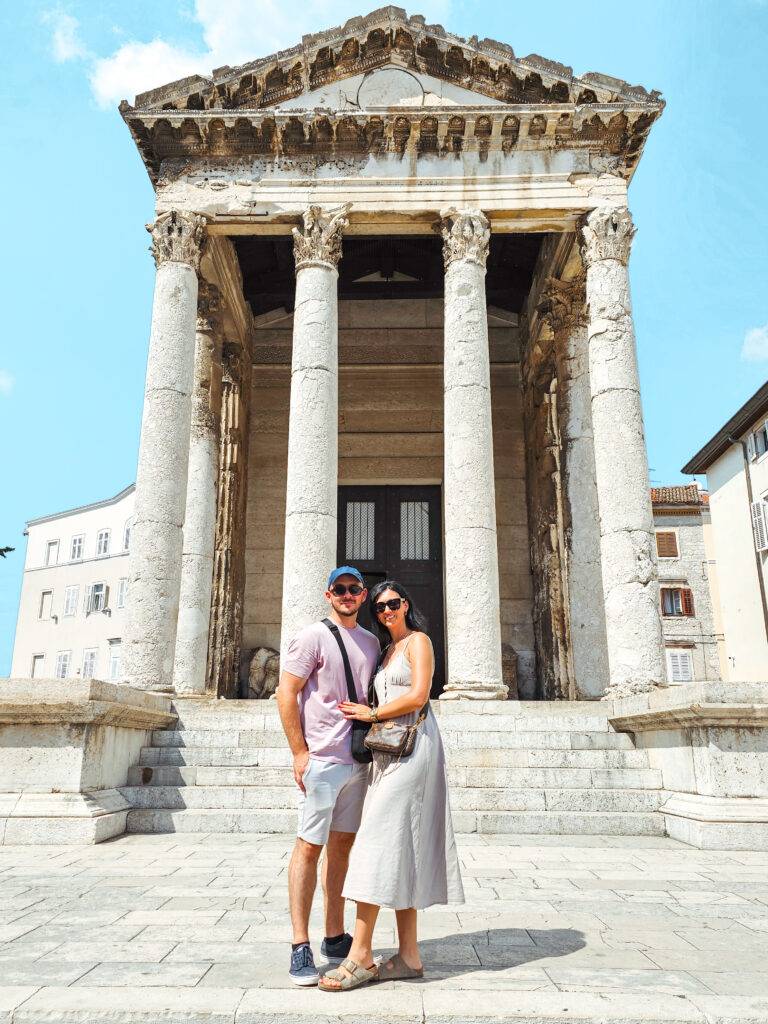
Temple of Augustus
On the main square, or what was once the Roman forum, you will find a Temple of Augustus, built in the 1st century AD during the reign of Emperor Augustus.
The temple was converted to a church and later grain storage in the medieval times and was sadly heavily damaged in WW2. Fortunately, it was rebuilt and is now one of the best preserved Ancient Roman sites.
Today, the temple functions as the museum that houses a collection of ancient Roman sculptures and artefacts from the region.
You can buy tickets on the spot if you’d love to enter.
🫶 After you admire the site, I recommend having a cup of coffee at one of the cafes on the main square. It’s what us Croatians love to do the most, so if you’d love to blend in, you now know what to do.
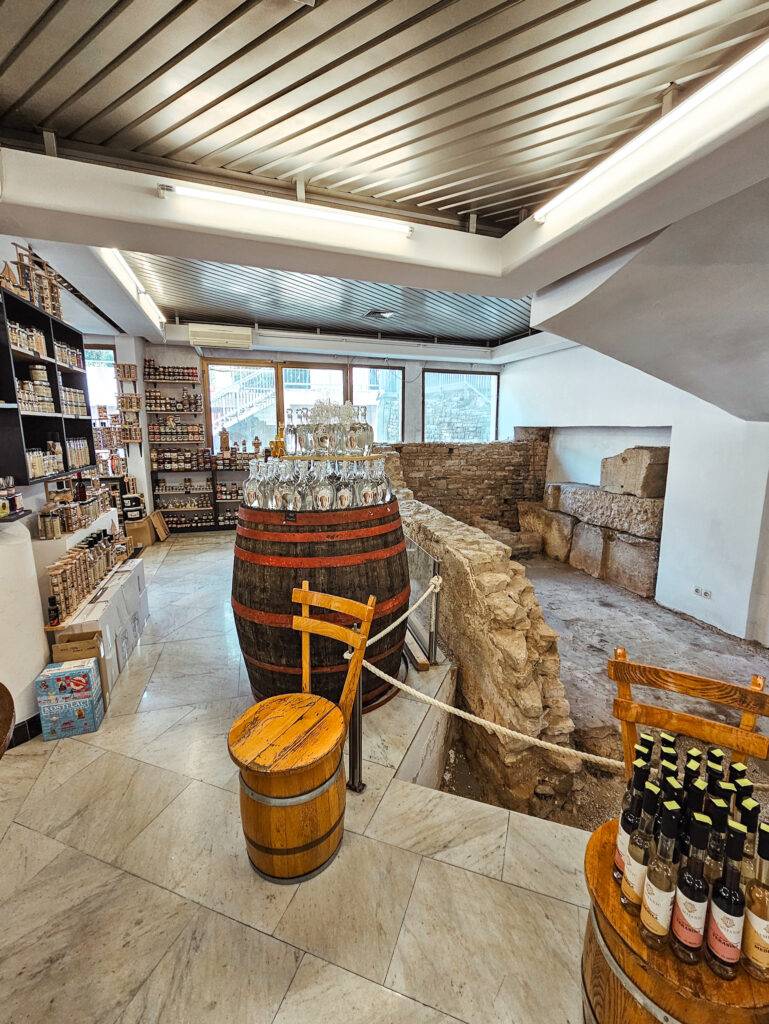
Aerarium Istrian Gastro Shop
So, not only you can buy some delicious Istrian produce here, but the shop is the former Agrippina’s House where you can see the excavated traces of the house and incorporated into the shop. There’s also a small garden area with the ancient remains.
✅ If you’re interested into tasting local Istrian produces, I recommend getting this House of Istrian Olive Oil Museum and Guided Tasting tour.
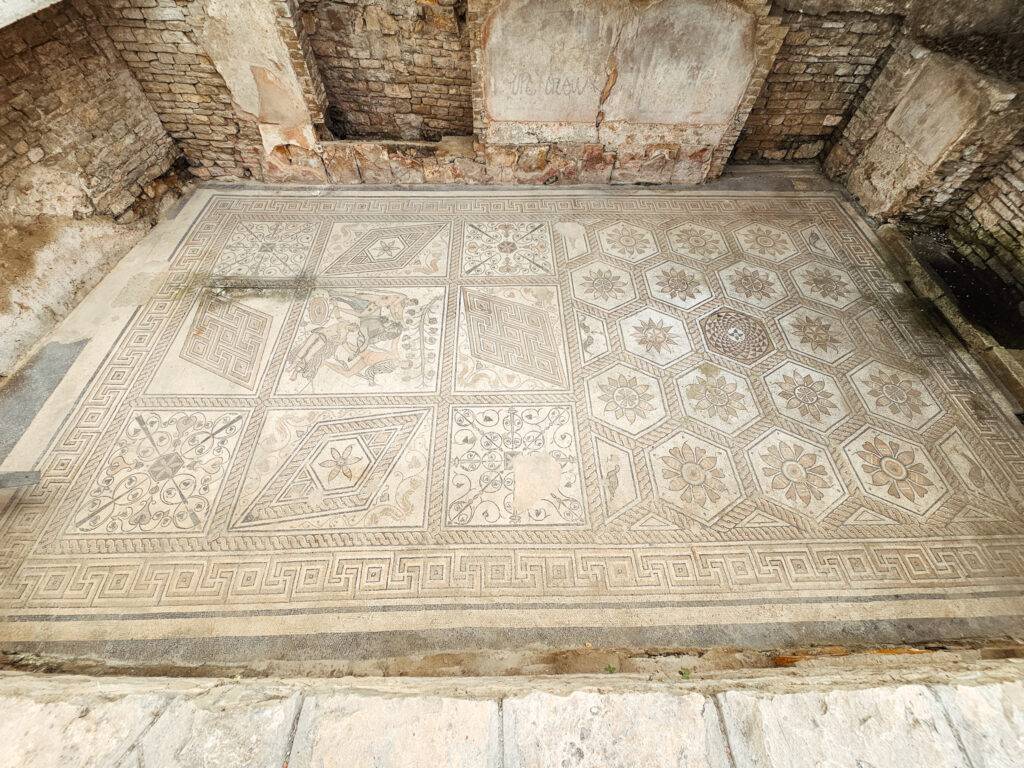
Mosaic The Punishment of Dirce
I think by now you’ve figured out that Pula or Pola in ancient times, was a really important ancient Roman town. The Istrian peninsula was conquered by the Romans in 177 BC, starting a period of Romanisation.
So, beside monuments, you can also find traces of residential houses, like this mosaic floor called The Punishment of Dirce.
It’s a bit tricky to find it because Google Maps is being funny with the location, plus, it may look like the street leads nowhere. But, you can always ask a friendly local who will point you into the right direction. The mosaic floor is close to the church of St. Maria Formosa, which is our next stop.
This is free to visit.
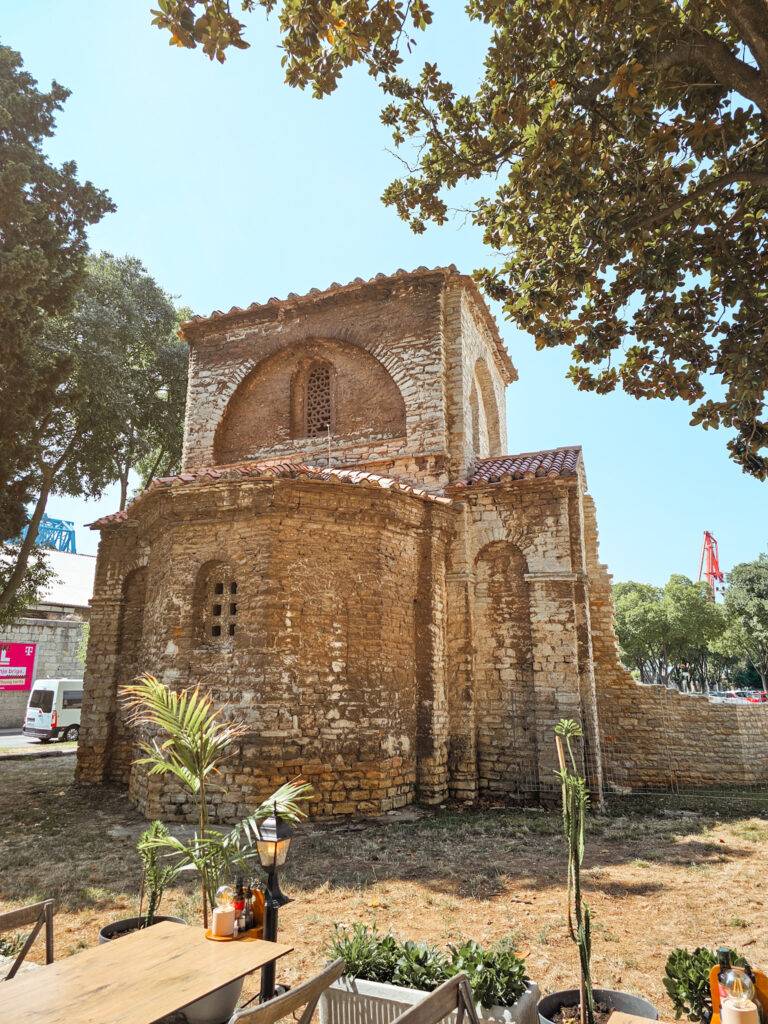
St. Maria Formosa Church
The Church of St. Maria Formosa was built in the 6th century and it speaks of the early Christian times.
It is mainly in ruins, but some of them are so beautifully preserved. There’s a nice cafe next to it – a great place for drinks!
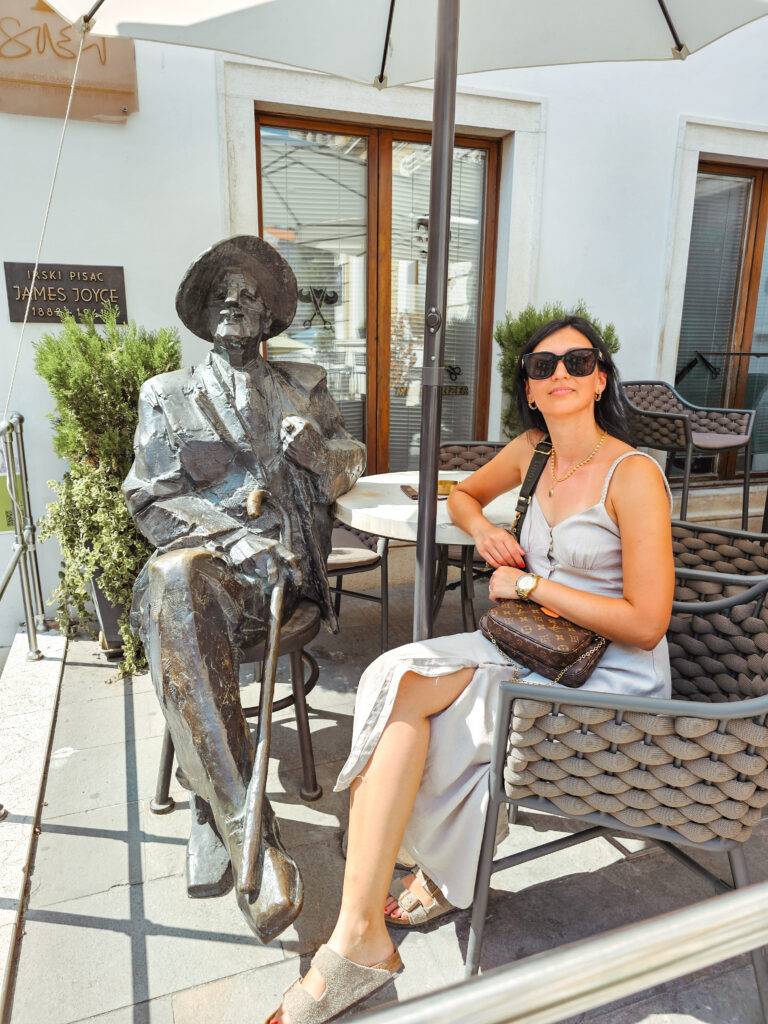
James Joyce Statue
💡FUN FACT: James Joyce and his wife Nora lived in Pula where he was teaching English to naval workers! He wrote Clay here, one of the short stories that made up Dubliners.
To honour him, Istrian sculptor Mate Čvrljak created a statue of James Joyce next to the Uliks (Ulysses) cafe. It is located next door to the language school where he taught, which is now a hostel. Joyce and Nora lived on the opposite side.
Sadly, the Café Miramar where Joyce loved to sip his coffee is long closed.
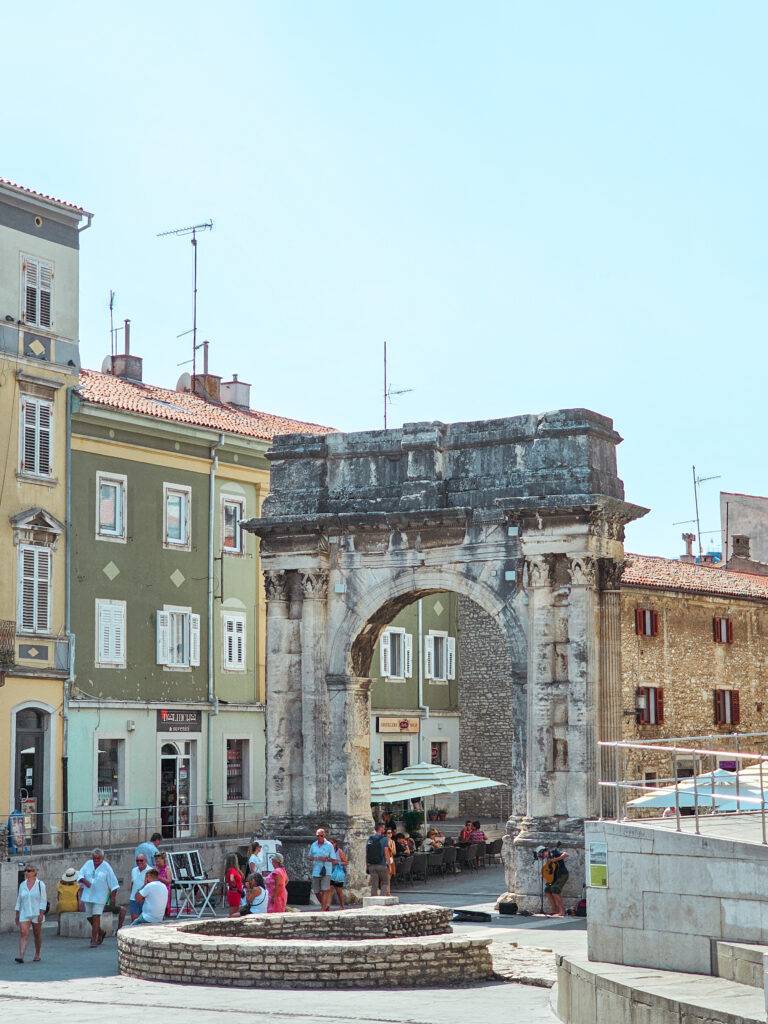
Arch of the Sergii
The Arch of the Sergii is the ancient Roman triumphal arch which was built in the 1st century BC.
It was commissioned after the Battle of Actium and was an emblem of Octavian’s victory over Antony and Cleopatra. Additionally, it also showcases the power and influence of the Sergii family.
It’s a really beautiful structure, so remember to look up and admire the details!
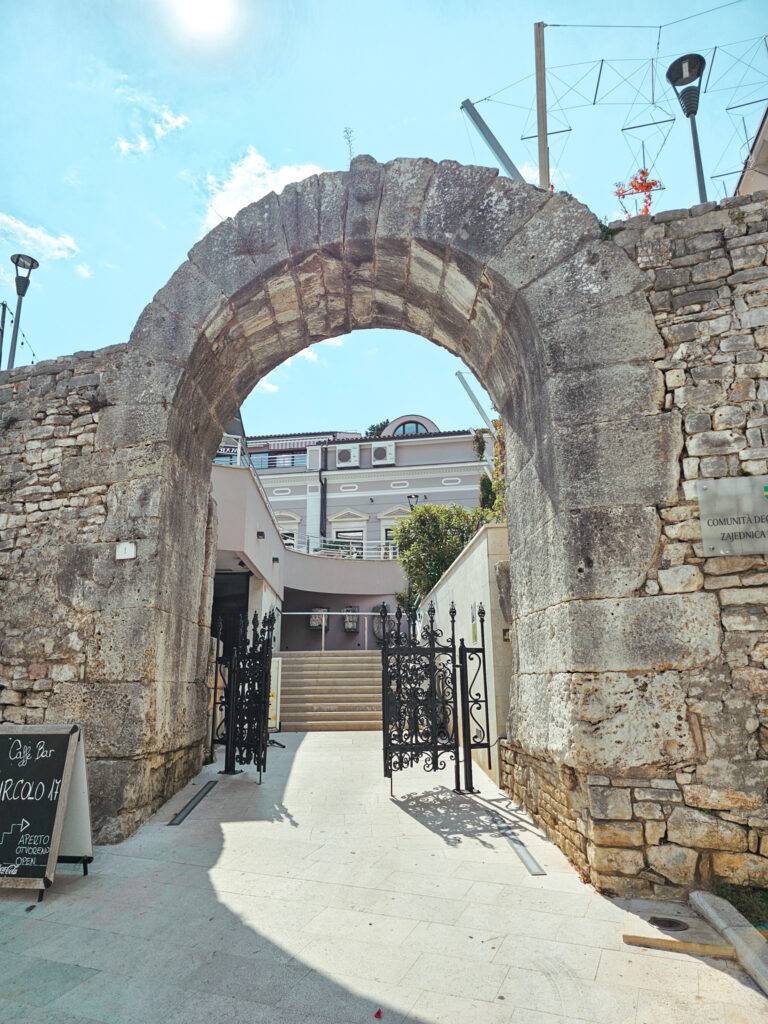
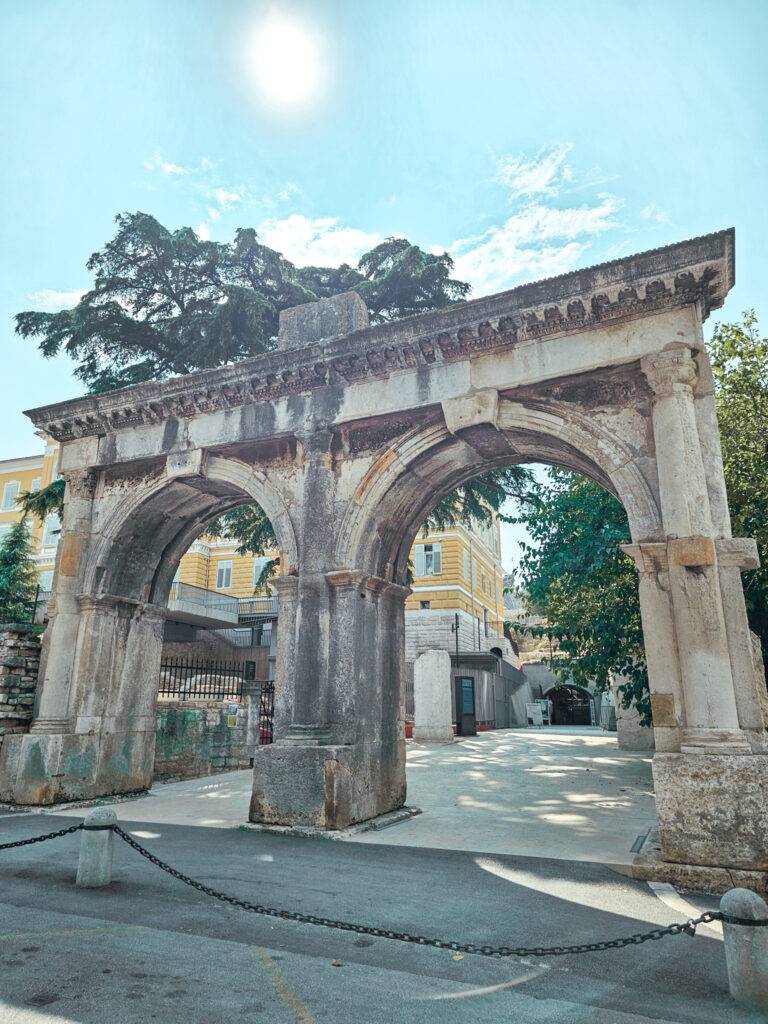
Gate of Hercules & Twin Gates
Relatively close to one another you will find the Gate of Hercules and Twin Gates. There were about ten gates proving the entrance into the town, these 2 are remaining now.

Gate of Hercules Twin Gates
Church and Monastery of St. Francis
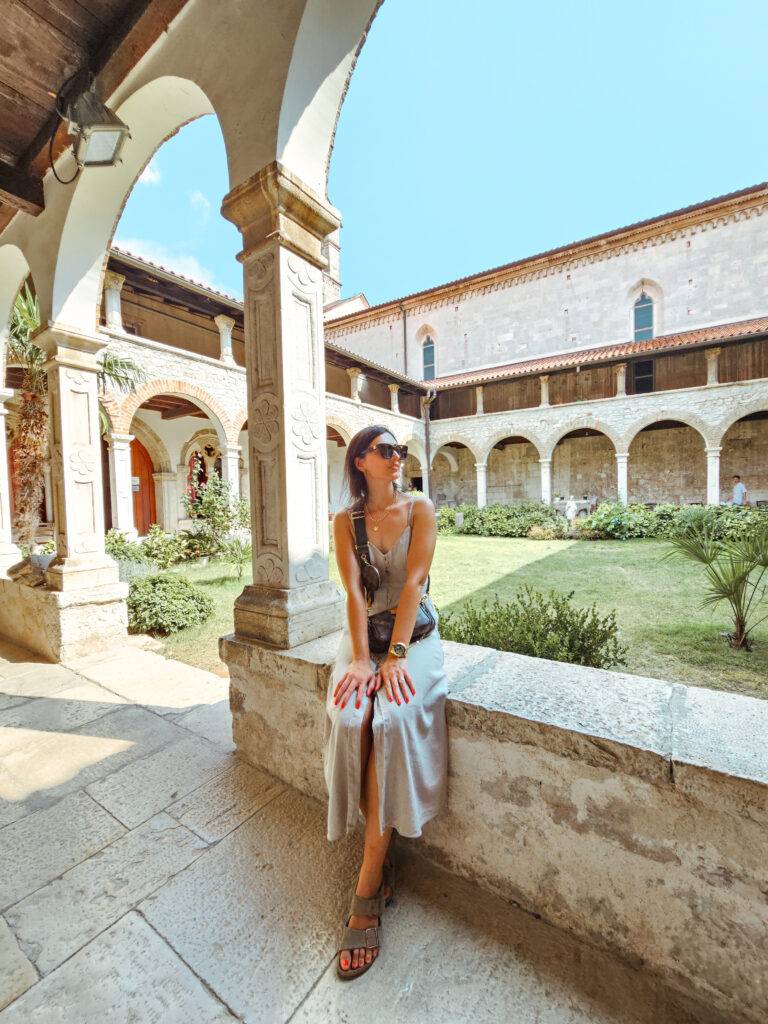
The Church and Monastery of St. Francis is one of the most beautiful religious sites in Pula, even of the whole of Istria. The monastery was founded in the 14th century.
The cloister is the most beautiful part. You can visit the monastery for free.
Pula Fortress Kastel
Pula Fortress Kastel is one of the top attractions in Pula with amazing panoramic views of the whole city and Adriatic Sea.
It was built in the 17th century during the Venetian rule (yes, Istria was for some time a part of Italy).
You need to buy the tickets to visit, but you can do it at the entrance.
It was on our plan to visit, but it got so hot that we decided to head to the beach instead!

Beach Time
The great thing about Istria is that wherever you go, the beach is nearby, so you can easily combine it with sightseeing.
Our initial plan was to go to Cape Kamenjak, particularly to Njive Beach, but we left it for another time because you can easily spend a day here.
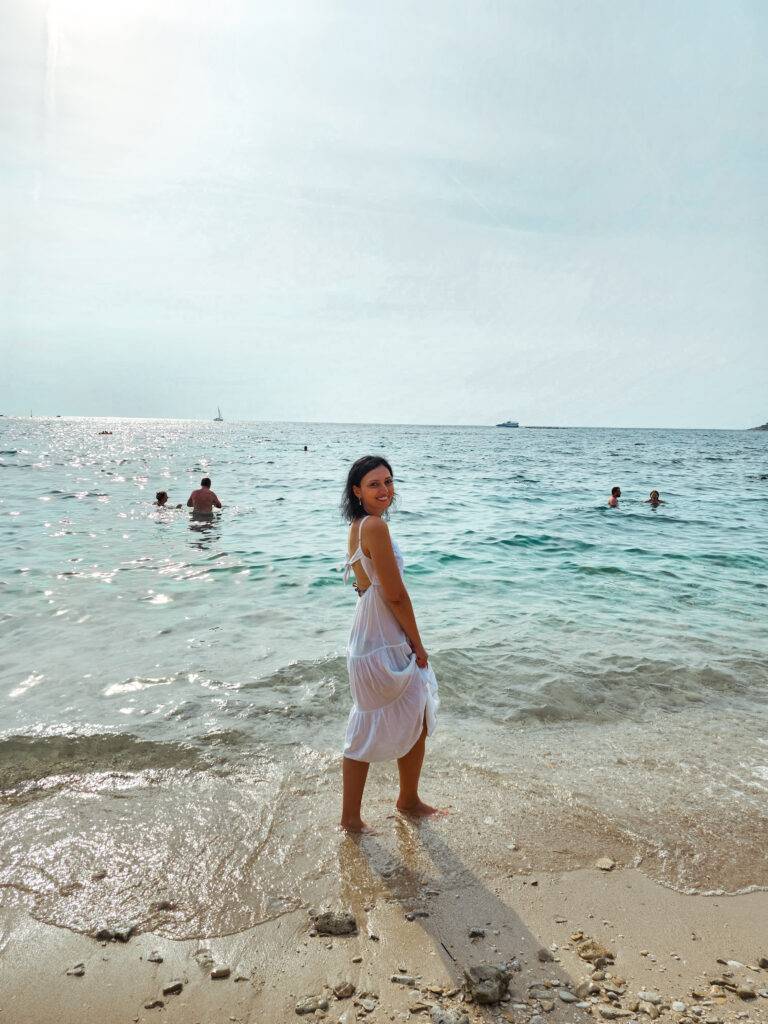
We went to Beach Fazana instead (a small town nearby Pula), though Hawaii Beach is another great choice because it is considered one of the most beautiful beaches in Istria.
💡Beaches in Istria are mainly rocky and pebbly, so if you’re not used to it, it would be very difficult to go into the sea. Us Croatians love to torture ourselves, so we never wear any water shoes, but if you don’t want to be foolish like us, here are some good ones you can get on Amazon.

Day 2 in Istria: Brijuni National Park
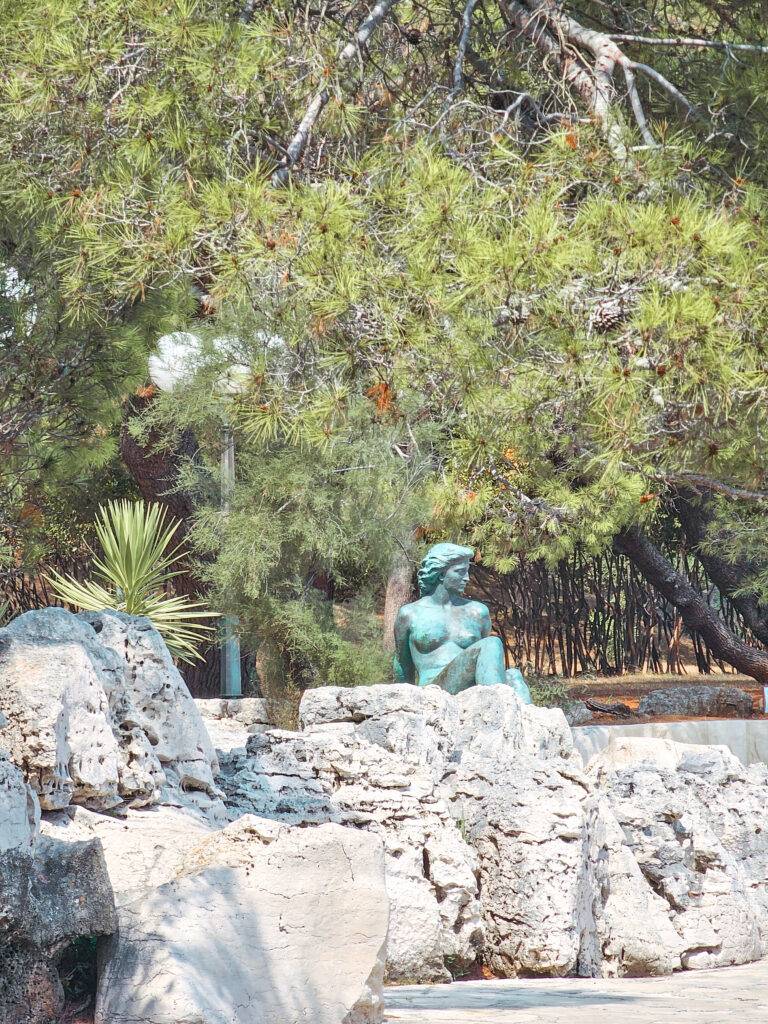
On your second day of this Istria itinerary you will go to one of the most beautiful National Parks of Croatia – Brijuni.
Brijuni is a group of 14 islands recognised for its rich flora and fauna and historical and cultural heritage, from dinosaur footsteps (which you’ll see!) to ancient Roman and medieval sites.
They became largely popular during the rule of Yugoslavian Dictator Josip Broz Tito who made the villa there and brought lots of exotic animals that were given to him as gifts (from zebras to elephants, some of them still inhabited there!).
With that, Brijuni is such an interesting place to visit and a must in Istria.
✅ You can only get the tickets online, with a guide or self-guided (what we did). The return ferry ride is included in the price and goes from Fazana Brijuni Port. If you have a day and you’ve never been to Brijuni before, I recommend getting the tickets to Veliki Brijun only, especially if you’re there in summer time, so you can swim and relax at some of the beaches.
You can also get a guided boat tour, though bear in mind that these do not offer exploring the island per se, you mainly pass by Veliki Brijun and other Brijuni islands, with some swimming and snorkeling spots.
💡You can also book a hotel stay in Brijuni! These are the best ones:
📖 Check my Croatia Bucket List: 15 Best Things to Do in Croatia blog post.
Church of St. Germain
Once you reach Brijuni, there are a few options on how to explore the island. You can rent a bike, a golf cart or walk.
Most people do the first two options, but we decided to explore the island by walking. Yes, we did make about 21k steps, but we walk a lot anyway, so we thought what’s the rush. And honestly, it was the best decision, because the island is actually big enough for you to be at peace and because no one else was walking, we felt like we were the only ones on the island.
Obviously, you’d decide what’s best for you. You can rent both bikes and carts on the spot right after you disembark the ferry.
Now, let’s go over the spots you can visit on the island.
The first one is right at the entrance called Church of St. Germain, the largest sacred medieval building in Brijuni and built in the 15th century.

Tito’s Cadillac
Tito’s Cadillac is one of the most popular attractions of Brijuni. It was given to Tito in 1953 as a gift from Croatian immigrants in Canada.
You can actually rent a car and drive through the island, but bear in mind that this activity will cost you about €700 for a 30 min drive!
If you’re interested, then check the official website to make the reservation.

Safari Park
The best part of Veliki Brijun is the safari park! For a moment you’d feel like you’re somewhere in Africa, not on a small island in Croatia.
As mentioned previously, Tito was an important political figure, mainly because he was a co-founder of the Non-Aligned Movement alongside Jawaharlal Nehru of India and Gamal Abdel Nasser of Egypt.
Which is why he was given many gifts at the time, including the exotic animals. Decades ago this looked very different, but even today you’d find zebras, an elephant Lanka, Llama and some ostriches.
Rest assured the animals are very well taken care of here and no touching is allowed, only observing them from a distance!

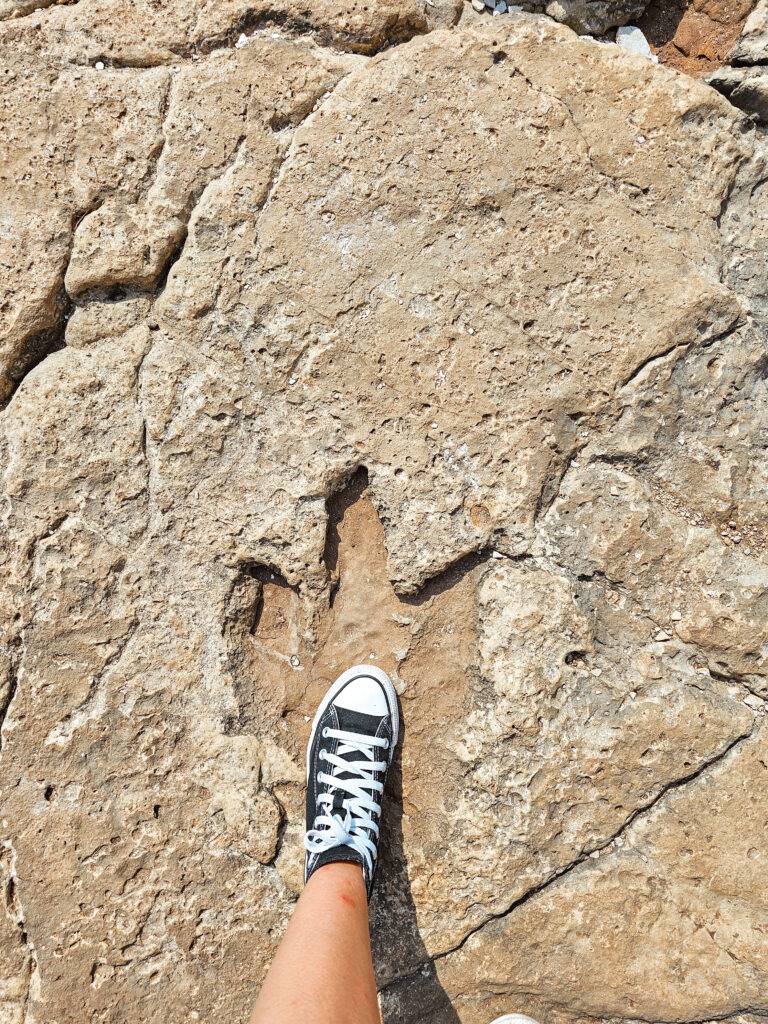
Dinosaurs’ Footprints
Okay, so this one is pretty cool – there are actual dinosaurs’ footprints in Brijuni!
More than 200 dinosaur footprints have been discovered and it is estimated that they were inhabited here 130-100 million years ago.
I can bet you didn’t expect this to be found on a small island of Croatia!
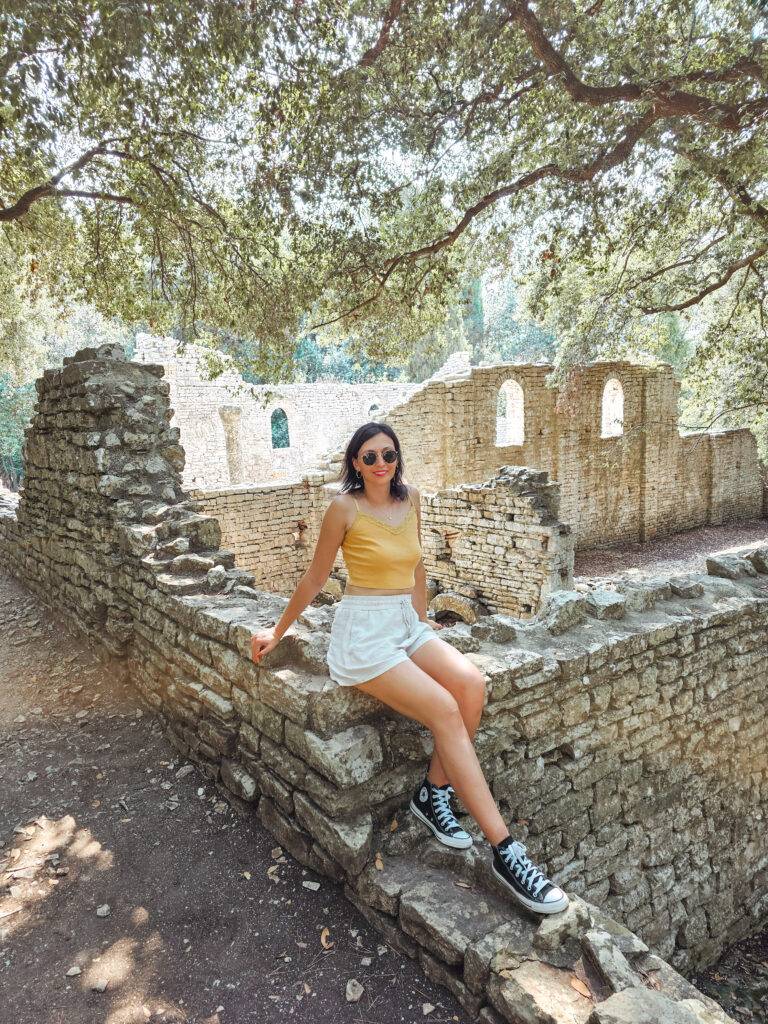
St. Mary’s Basilica
St. Mary’s Basilica was one of my favourite sites in Brijuni. It felt so magical being in the middle of the forest, surrounded with church ruins and completely alone.
The church was built in the 6th century.
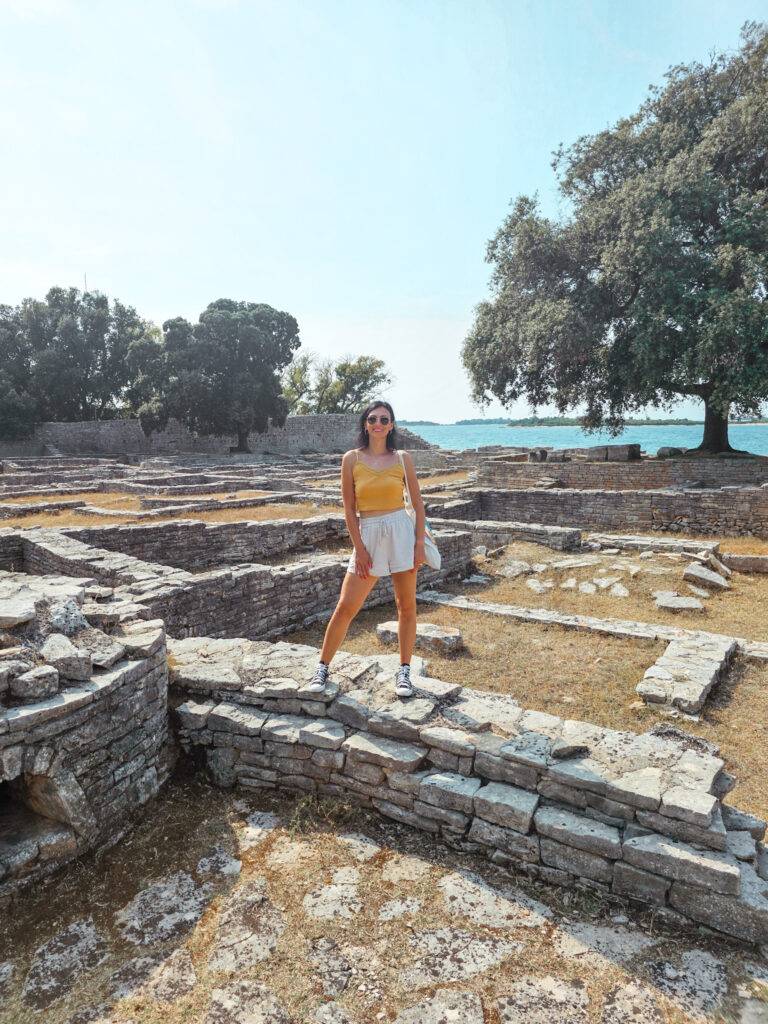
Byzantine Castrum
The first Roman villa was built here in the 1st century BC. Towards the end of the 4th century due to social changes, the existing villa gradually developed into a concentrated settlement with new houses, spaces for processing olives and grapes, storage rooms, workshops etc.
It’s in ruins today, but it’s still a cool site to check!
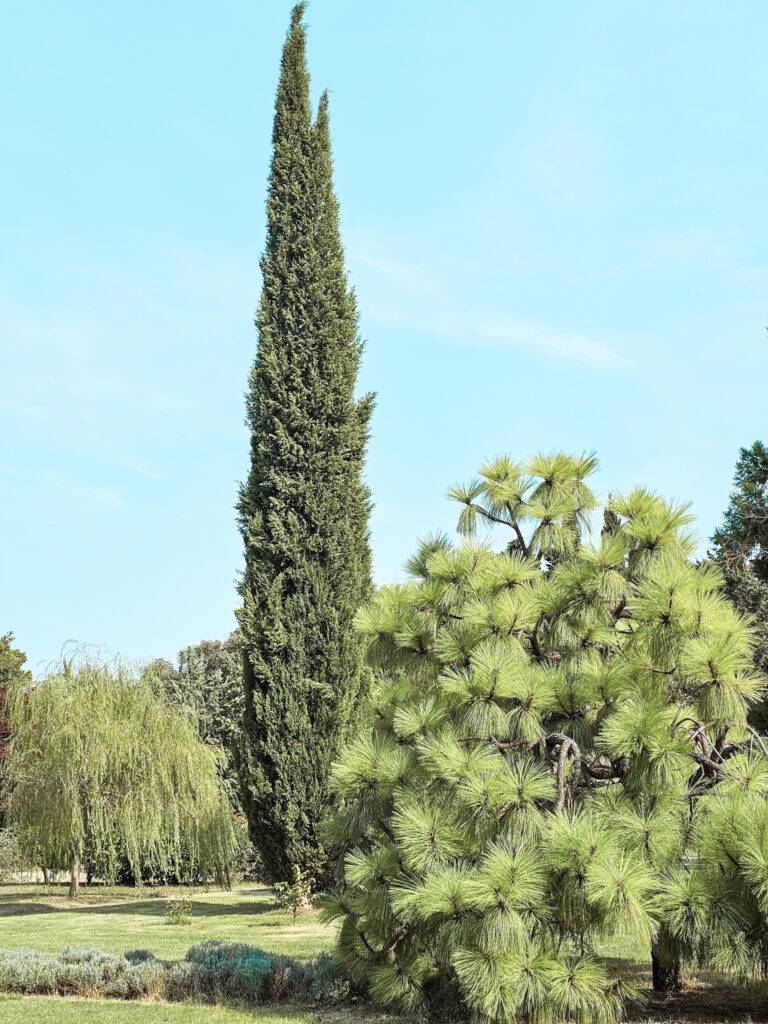
Mediterranean Garden
If you love botanical gardens, then definitely check out the Mediterranean Garden in Brijuni. It has about 170 plant species and their pollinators.
I have personally preferred the nature of the island itself rather than the garden, but as everything is anyway included within the price, it’s worth making a stop there too!
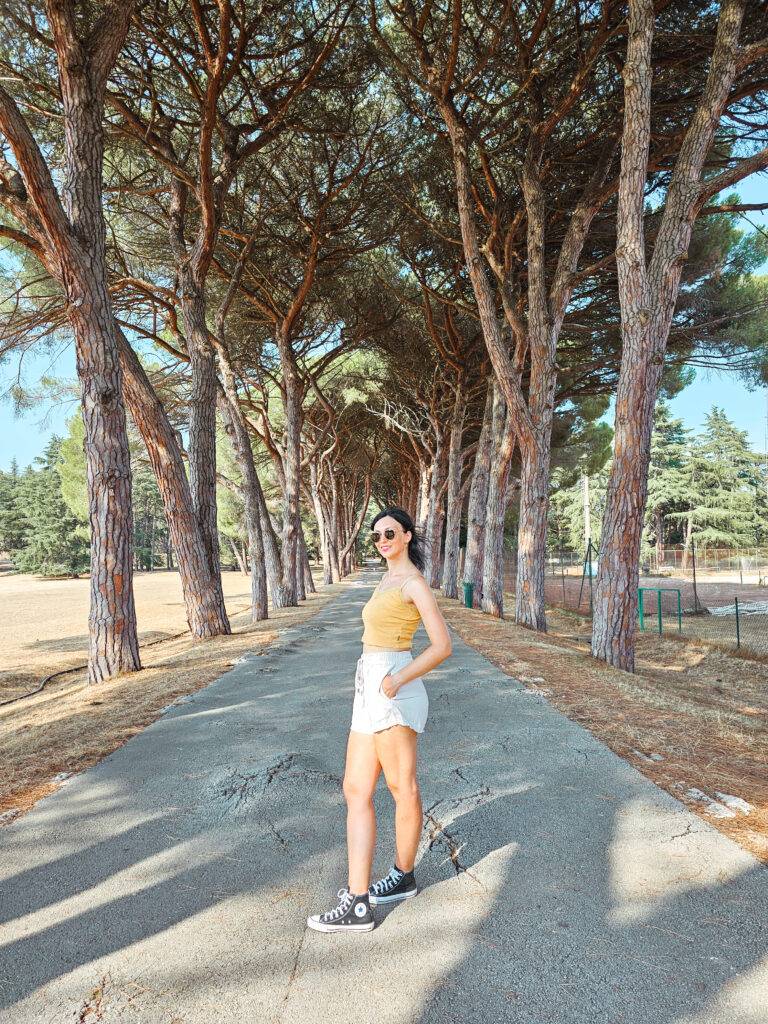
Pine Alley
Pine Alley is one of the most instagrammable and popular places in Brijuni. It’s a pedestrian-only alley completely surrounded by pine trees from both sides.
It is not to be missed!
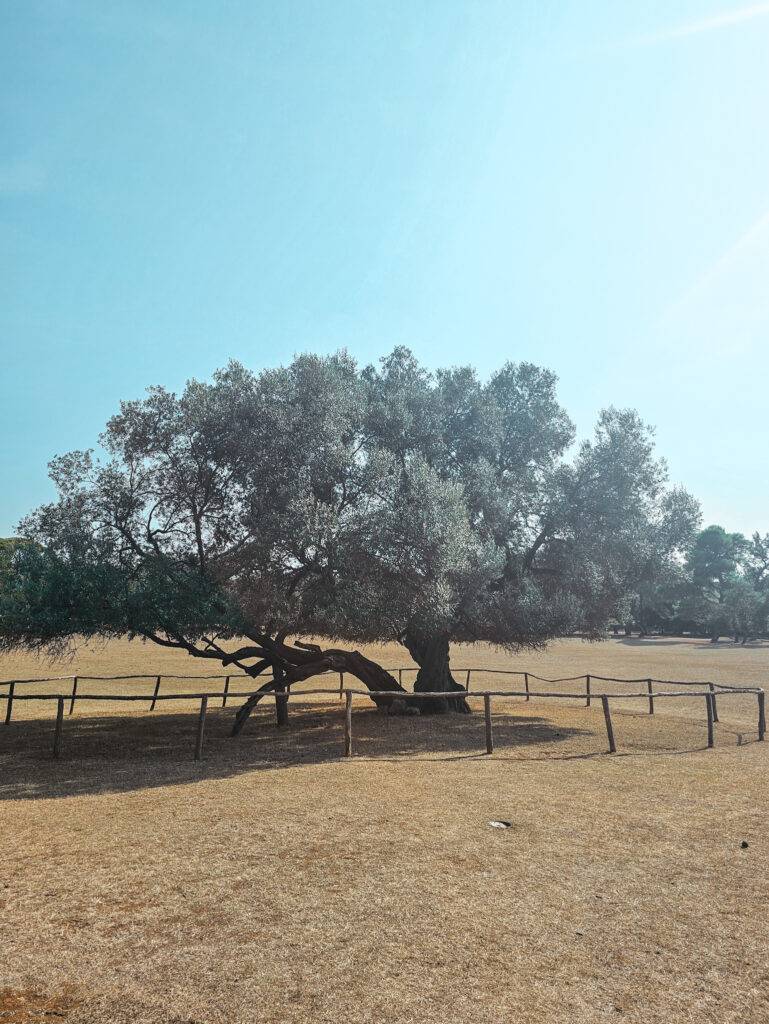
The Old Olive Tree
The olive tree in general is due to its economic, cultural and even religious and mythological significance, the most important tree in the Mediterranean cultural circle. It’s been a crucial factor in the development of civilisations living in the Mediterranean.
The Old Olive Tree of Brijuni was estimated to be around 1600 years old!
Roman Villa & Temple of Venus
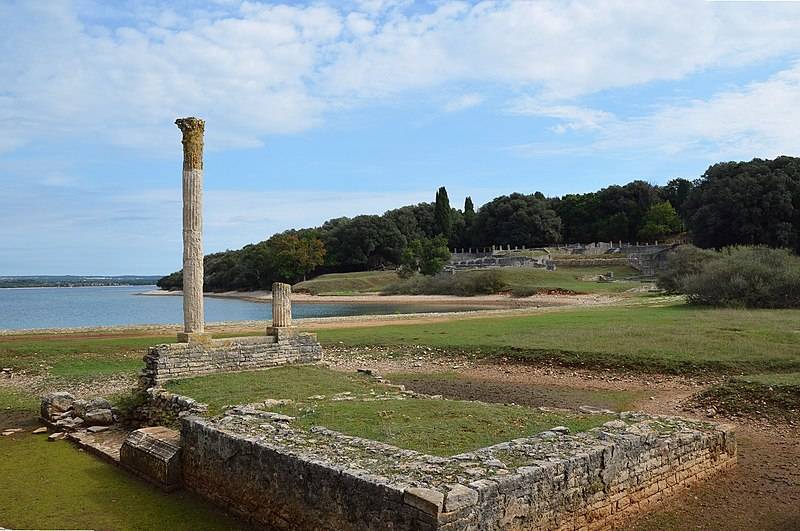
The only thing left to see for us was the Roman Villa & Temple of Venus, which we planned to see, but in the end we decided to refresh and swim at the beach because it was so hot outside!
It’s definitely easier to see everything if you rent a bike or cart because we spent about 3-4h on walking, so just something to bear in mind. If it weren’t in the middle of summer, then we would have made a lunch break and checked these two spots too, but we were really craving some beach time.
Anyways, the Roman villa was built in the 1st century AD and used all the way to the 6th century. Next to it, you’d also find the Temple of Venus.
Beach Time
Firstly, even though you’re on the island and there’s water everywhere, it doesn’t mean that you can swim wherever you like!
Because Brijuni is a National Park, there are only 3 public beaches allowed for swimming. There’s one called Jupiter Beach, one Bistro Beach and the one doesn’t have a name yet on Google Maps, but it is close to Sonny & Lanka Cafe (nearby safari).
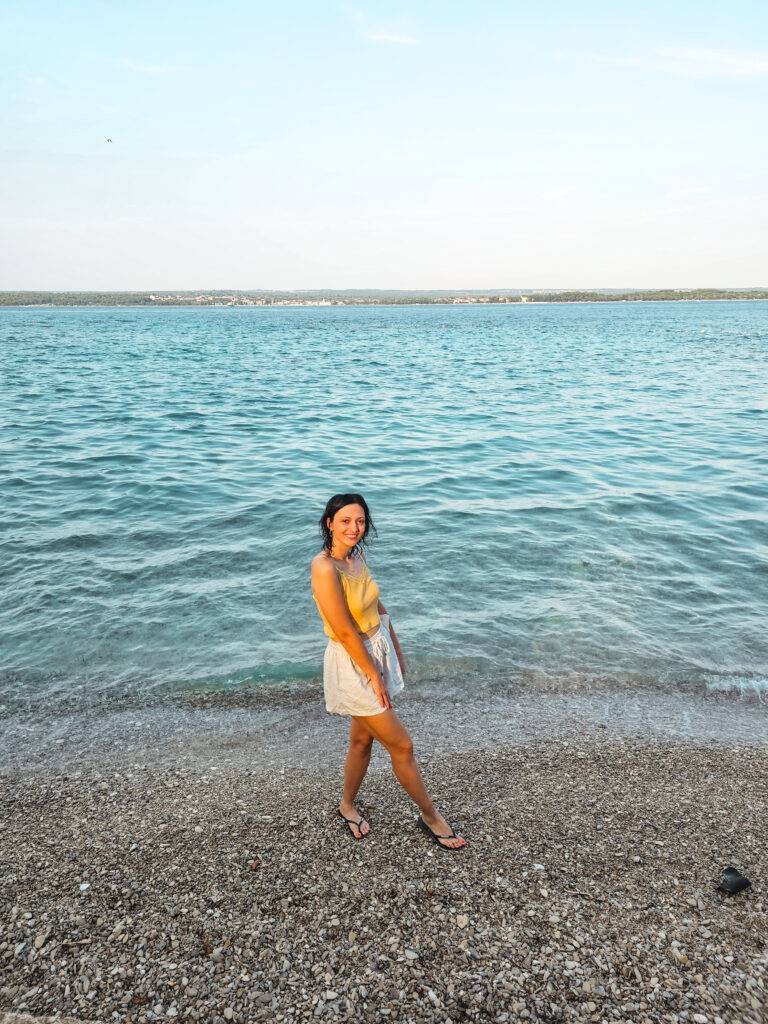
Even though the no-name one looked most beautiful to me, we ended up relaxing at Bistro Beach which is the biggest. And in the end it was a good decision because beside the entrance to the sea which is pebbly, the rest of it is sand. The sea is calm for swimming, clear and turquoise.
There’s a bar and restaurant next to the beach too.
P. S. You can bring your own food and drinks to Brijuni.
Day 3 in Istria: Buje, Groznjan & Motovun
On your third day of this Istria itinerary is finally time to go and explore the small hilltop towns of Green Istria. You will visit Buje, Groznjan and Motovun.
If you didn’t rent a car, then this is the best tour which includes Groznjan and Motovun, but sadly not Buje (it’s a little hidden gem!), though there are some other great places you’d visit on this tour too.
📖 Check my 5 Charming Istria Hilltop Towns You Have to Visit in Croatia blog post.
Buje
Buje is a small town of about 4,000 people in Istria which to this day preserves the unique stone-buildings architecture. There’s not a lot to do there, but to wander through its cute cobblestone streets, enjoy the views and check some of the sites.

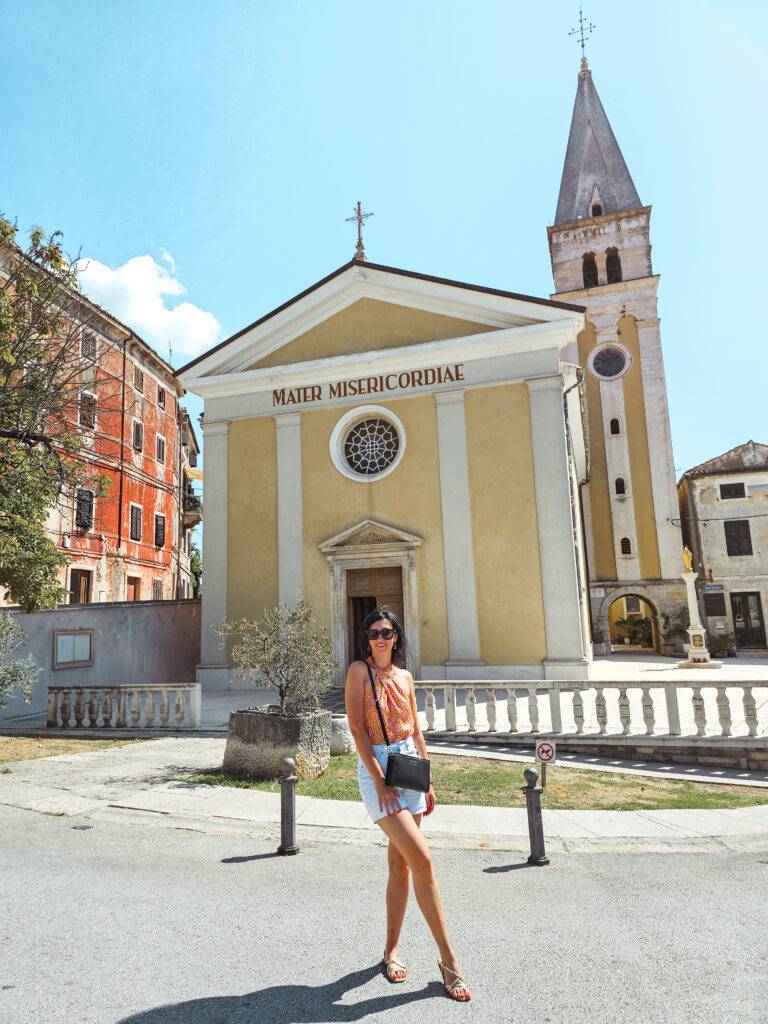
Church of the Mother of Mercy
Church of the Mother of Mercy is the first sight you will see in Buje once you arrive. It was built in the 16th century with a bell tower added in the 17th.
There was a Sunday mass when we got there, so we didn’t go inside, otherwise it’s free to visit.
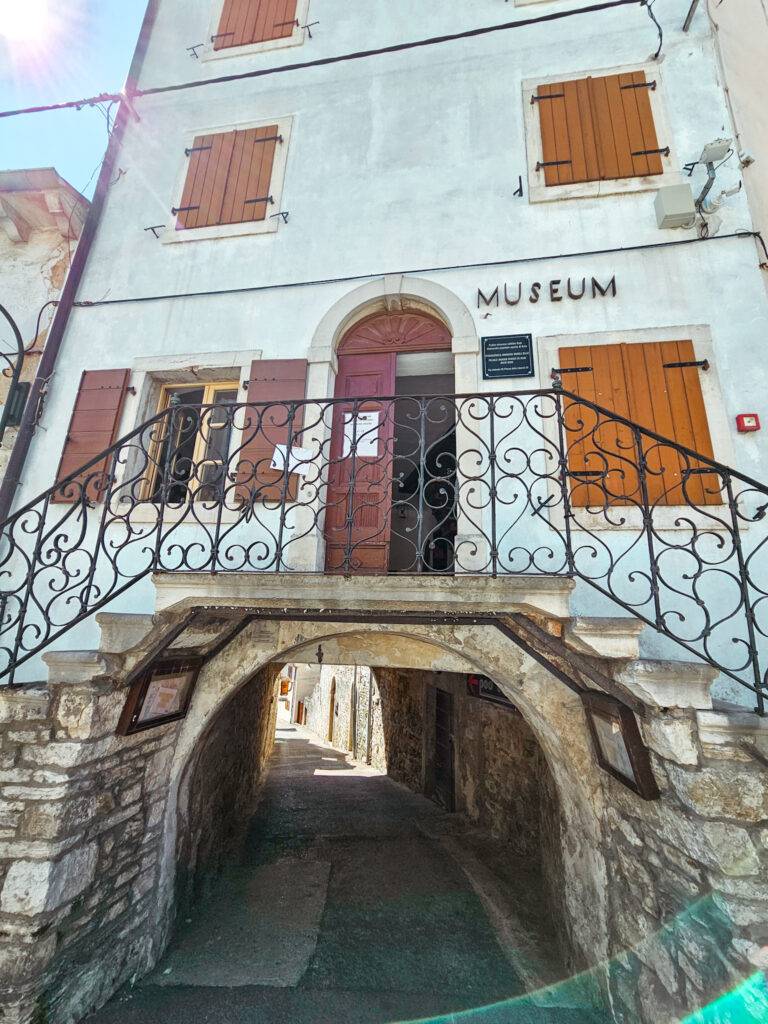
Etno Museum
On the other side of the street from the church, you’ll find the Etno Museum where you can go to learn more about Buje history and material culture.
Church of St. Servulus
Church of St. Servulus is an 18th century baroque church on the main square of Buje. Inside there’s beautiful artwork you can see, but sadly it was closed for visit when we were there.
However, even from the outside, I loved it a lot! It truly speaks of the Istrian history and architecture style.

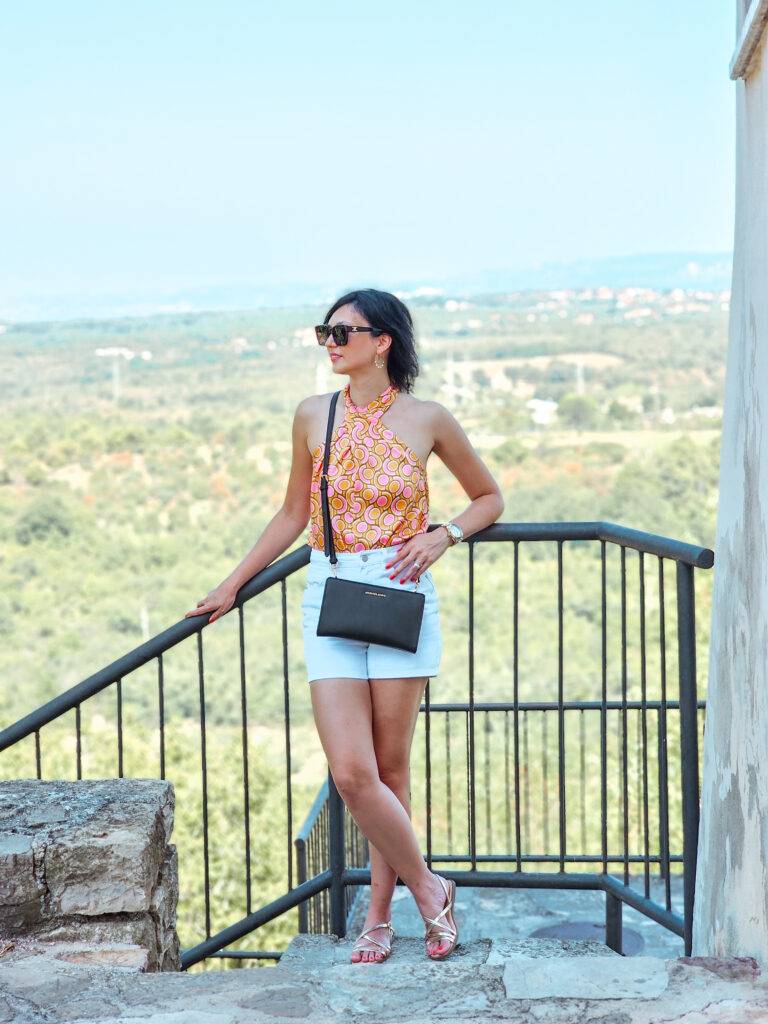
Viewing Point
As you head towards the Fortress of Buje from the Church of St. Servulus, you will stumble upon a viewing point (I self-deliberately named it like that lol). The views are really nice from there.
✅ As there’s no official name to it, I’m linking here the coordinates for you.
Fortress St Martin & Buje Graveyard
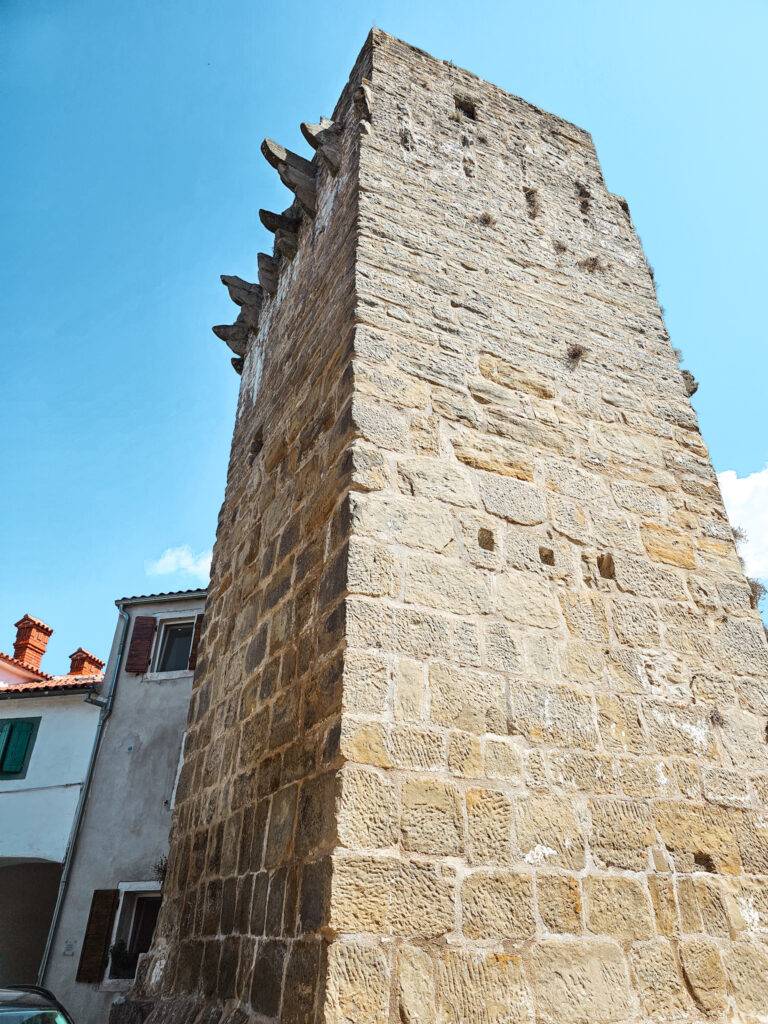
Initially we wanted to climb the Fortress St Martin, but the older man who was working there was so annoying with his talk (we literally couldn’t stop him even to ask about the price!), that we gave up because it looked like he was never going to leave us alone.
I don’t mind speaking with locals, quite the contrary, but some people just don’t know where to draw the line. The family before us also turned around and left. Also, I am not sure how safe it is to climb it.
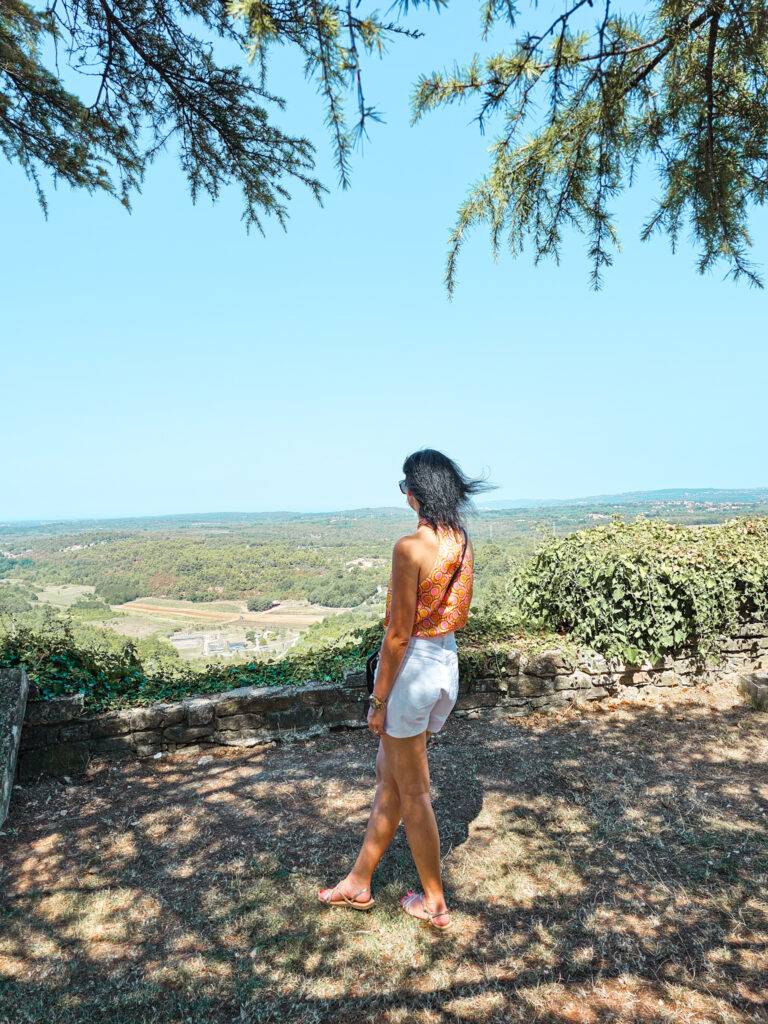
Anyways, in all his speech he pointed us towards the graveyard which is next to the fortress, and honestly, I think it’s an even better place for soaking up the views, and it’s free! I know it may sound weird, but graveyards bring some inner peace to me, and of course, mixed with the beautiful views, it’s a nice place to check in Buje.
Buje Graveyard St Martin Fortress
Groznjan
If you’d ask me to tell you my favourite hilltop town of Green Istria, I’d say instantly – Groznjan!
This beautiful small town is such an artistic place full with galleries, souvenir shops and many instagrammable stops. Oh, and gorgeous views!
You cannot miss it when in Istria!
Viewing Point
As soon as you enter the town, you’d be grated with wonderful views and a viewing point.
✅ Sharing the coordinates here on the link.

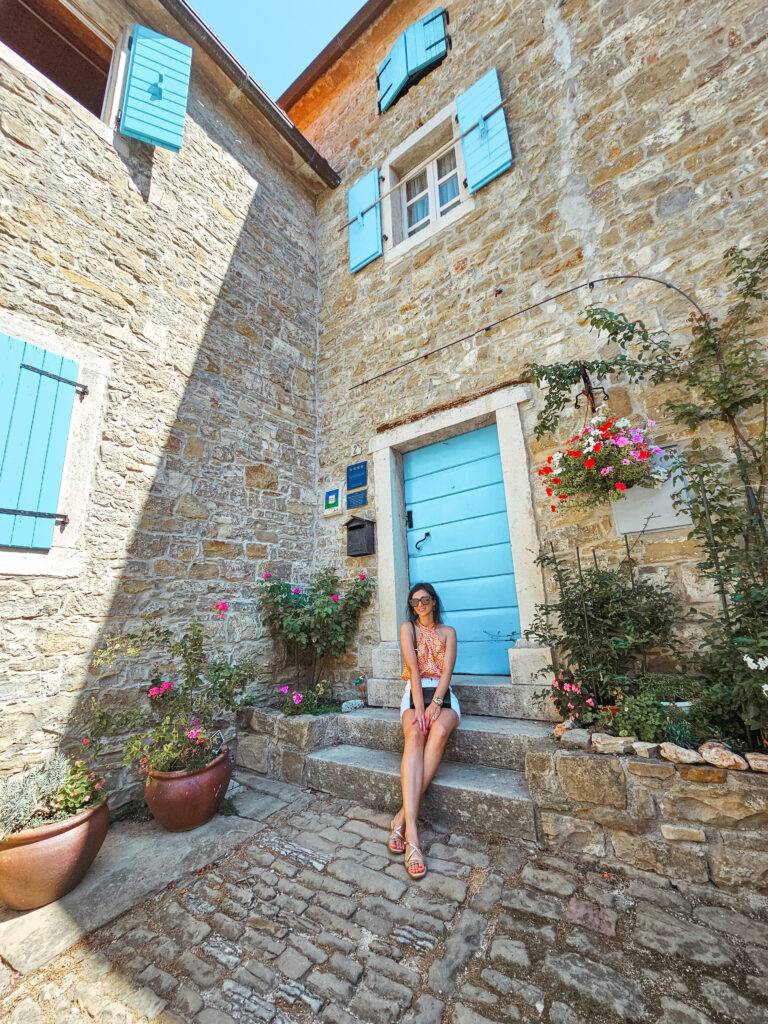
Old Town
Similar to Buje, there’s not much to do in Groznjan, but to wander around the old town. It is so picturesque as you can see!

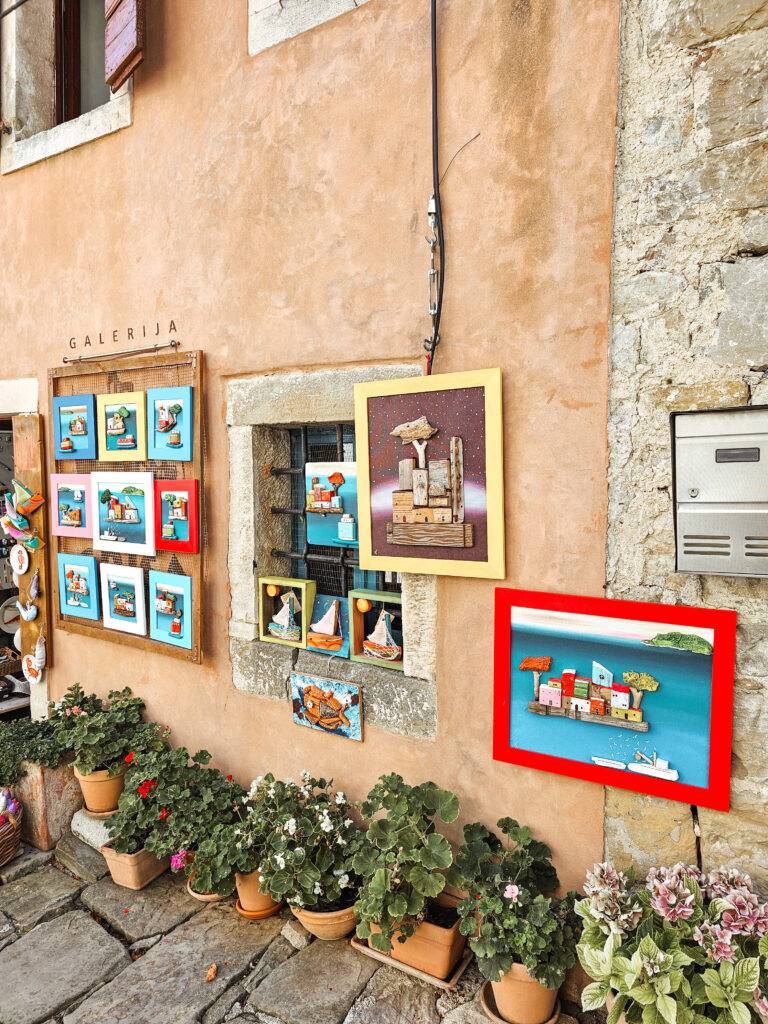
Galleries & Shops
Groznjan is famous for its art galleries and hand-made products. If you’re looking for some unique Istrian shopping, this is your stop.
Even if you’re just browsing, don’t skip checking out some of them because they’re all so cute and very instagrammable.

Viewing Point 2
To no surprise, we’ve come to another viewing point. This one was one of my favourites!
✅ It’s next to Truba Bar, but sharing the exact coordinates here.

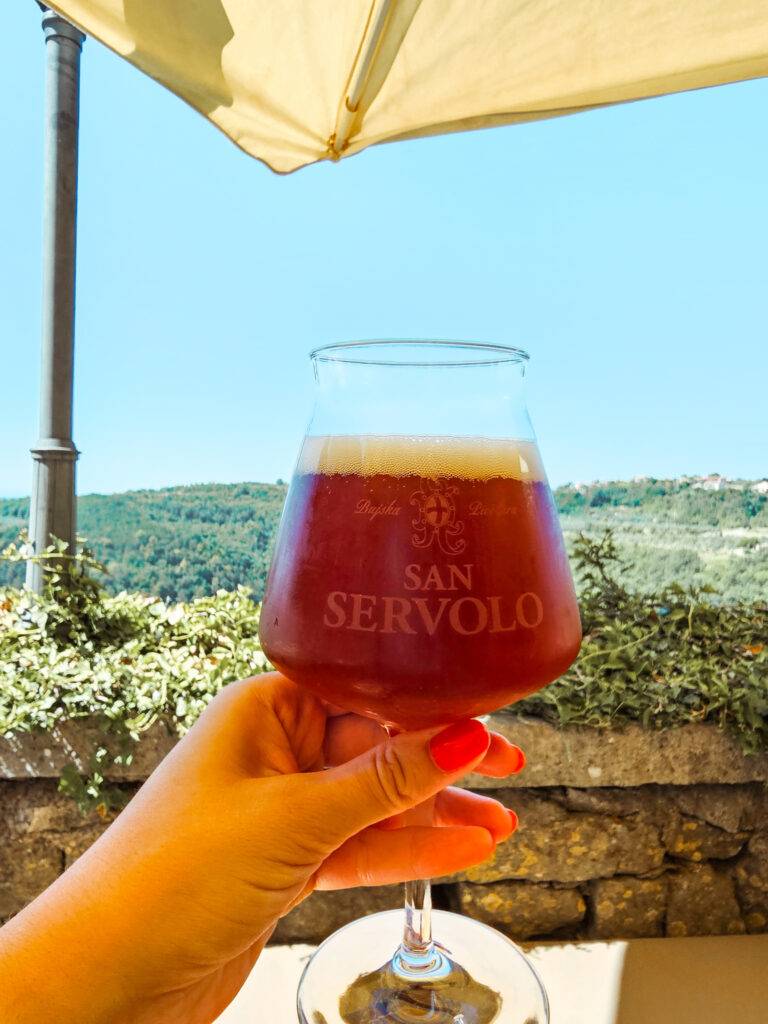
San Servolo Beer
So, on your way from Buje to Groznjan, you can make a stop at San Servolo Brewery to try Istrian beer!
Or you can enjoy the beer with the views in Groznjan, which is what we did in the end. We found a nice outdoor terrace with the views at B&B Artegnana 1798 where you can stay as well. Beside awesome reviews on Booking, their food and drinks are great too, but the views are the best part.
Motovun
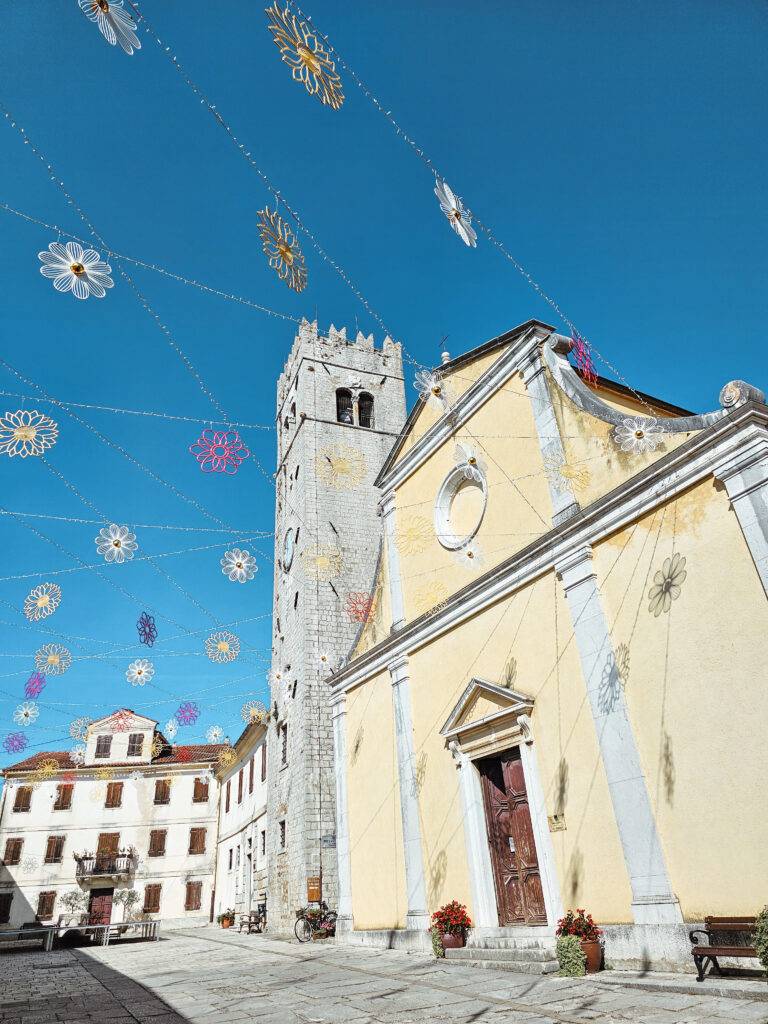
Motovun is the most famous Istrian hilltop town and surely one of the best ones you can visit.
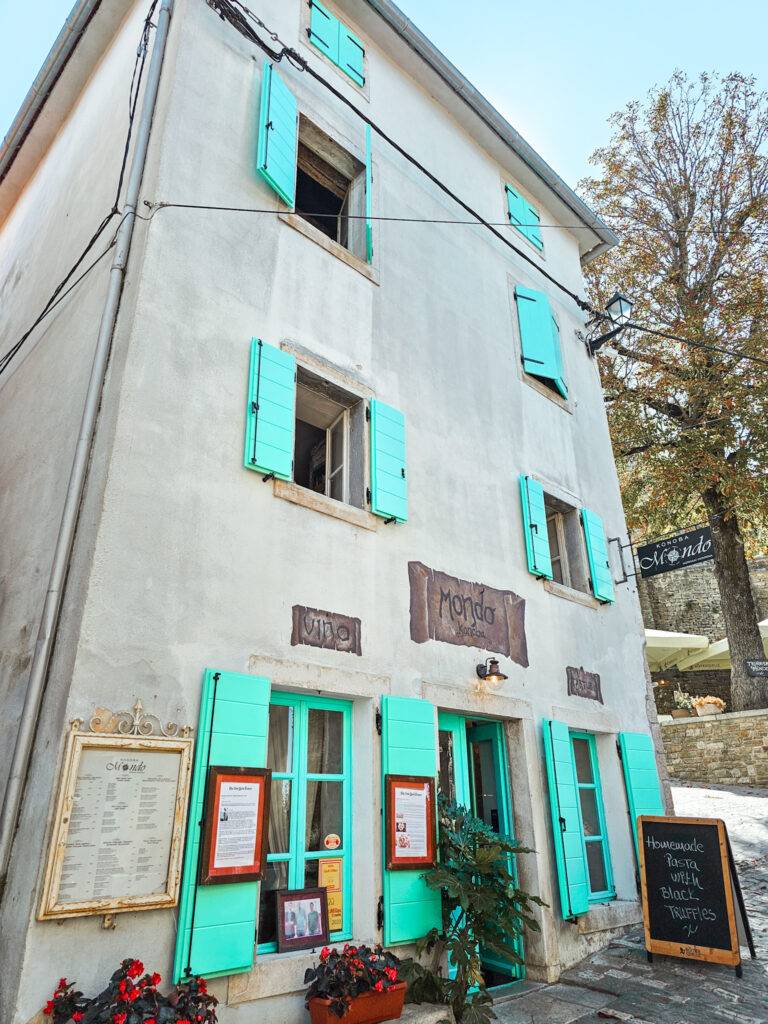
Konoba Mondo
By now you must be starving, so I recommend Konoba Mondo for your lunch break.
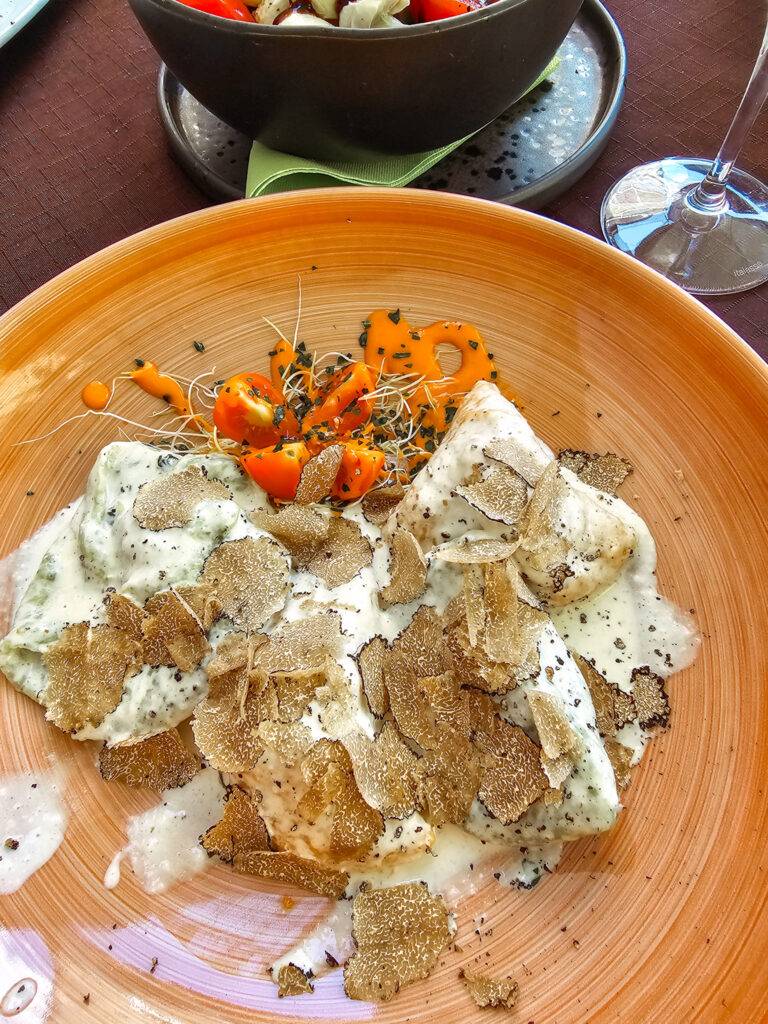
If you didn’t know, Istria is famous for its truffles, which are one of the best in the world. Most likely whenever you eat truffles in a restaurant around Europe or the US, they’ve come from Istria.
✅ Interested in truffles? This is the best and highest rated Truffle Hunting & Cooking Tour.
Konoba Mondo is one of the best places not only in Motovun, but in the whole Istria to try and eat delicious pasta truffles!
Fakin Winery
You cannot come to Istria and not to experience the Istrian wine tasting!
While you can actually visit the Fakin Winery in the footsteps of Motovun, you can also find their wines in Motovun and do the tasting in their shop.
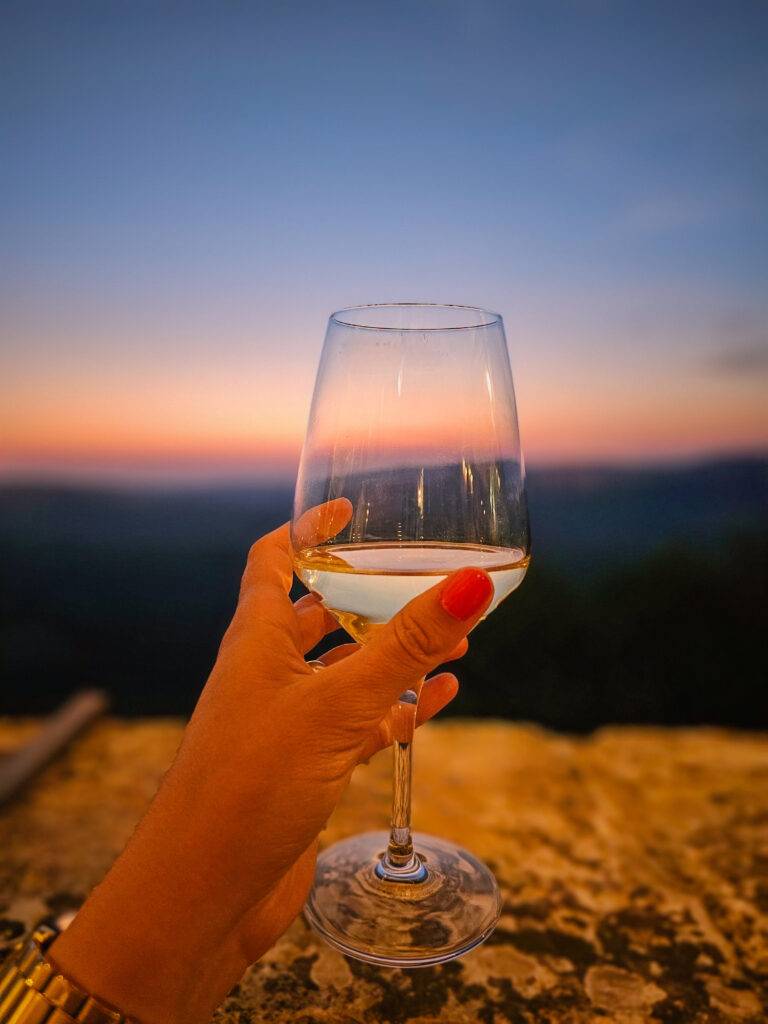
My recommendation is to try Muskat, a sweet white dessert wine which is my favourite! Other great Istrian wines are Malvazija and Teran (you have to try teranino, a sweet liquorice drink too!).
✅ You can also consider joining this best selling wine tasting with 4-course dinner tour where you’d visit 3 different wineries.
Fakin Winery makes some of the best Istrian wine, I cannot recommend them more!

City Walls
Motovun was once a walled-city and while the city walls are not preserved as those in Dubrovnik, they are still cool to check!
You can pay to visit them, but they are anyway all around the old town, so I skipped paying for a small fraction of the wall that is reserved as a tourist attraction and wandered around for free.

St Stephen’s Church
St Stephen’s Church is a cute little church in Motovun, built between the 16th and the 17th century, with final shape getting in the 18th.
It’s beautiful inside and free to visit.
Montona Gallery
So, we actually reserved a table with the view for my birthday dinner on another day, however, as it is in Motovun, I wanted to include it here to make the list of things to do in Motovun more comprehensible. Whether you dine there on your first visit to Motovun or you come back later on another day, this place is not to be missed!
Not only enjoyed by me, but also by Anthony Bourdain, Montona Gallery not only has the great food, but also the views, especially for sunset!
Which is why I recommend dining there during the sunset because it is just so magical. If you want to have a table next to the walls to enjoy the views, you must make a reservation.

Day 4 in Istria: Beach
Your 4th day in Istria will be relaxed after all these walking and sightseeing on your first 3 days.
Beach Time
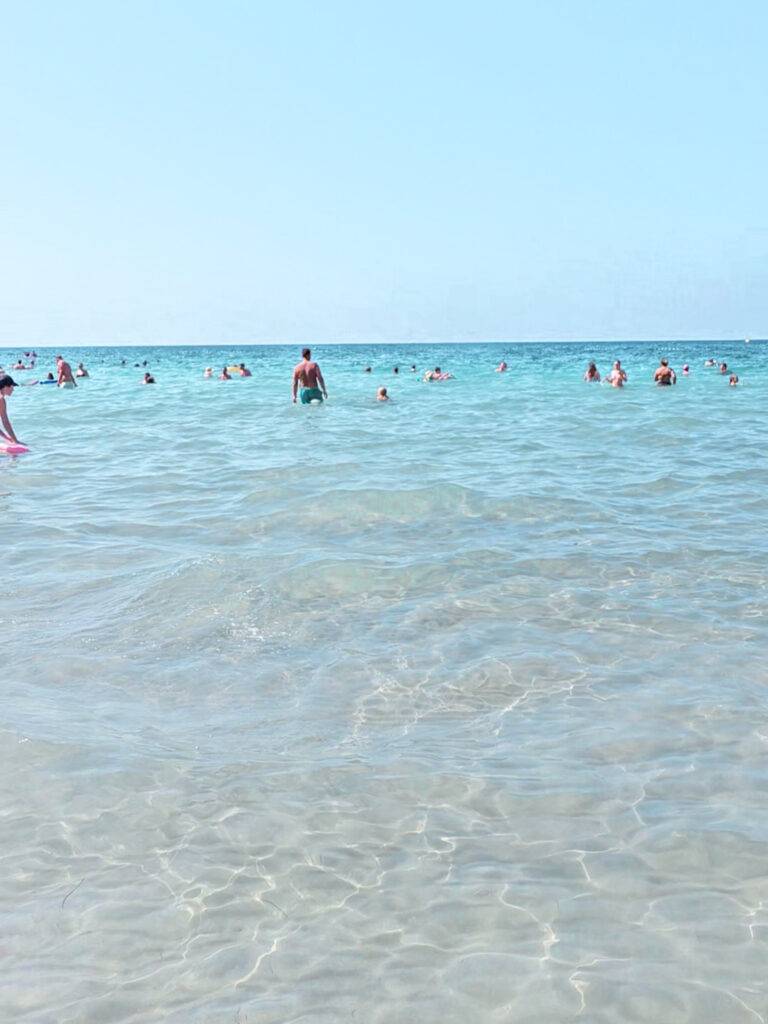
I recommend spending a day at the beach because the Croatian Adriatic Sea is gorgeous, clear, clean and turquoise. It’s also so calm and perfect for swimming and snorkeling.
Here are some of my favourite beaches in Istria:
💡Beaches in Istria are mainly rocky and pebbly, so if it’s not stated on the list above that the beach is sandy, then it means it isn’t!
✅ Consider getting these water shoes if you can’t handle rocks and pebbles.
Day 5 in Istria: Rovinj
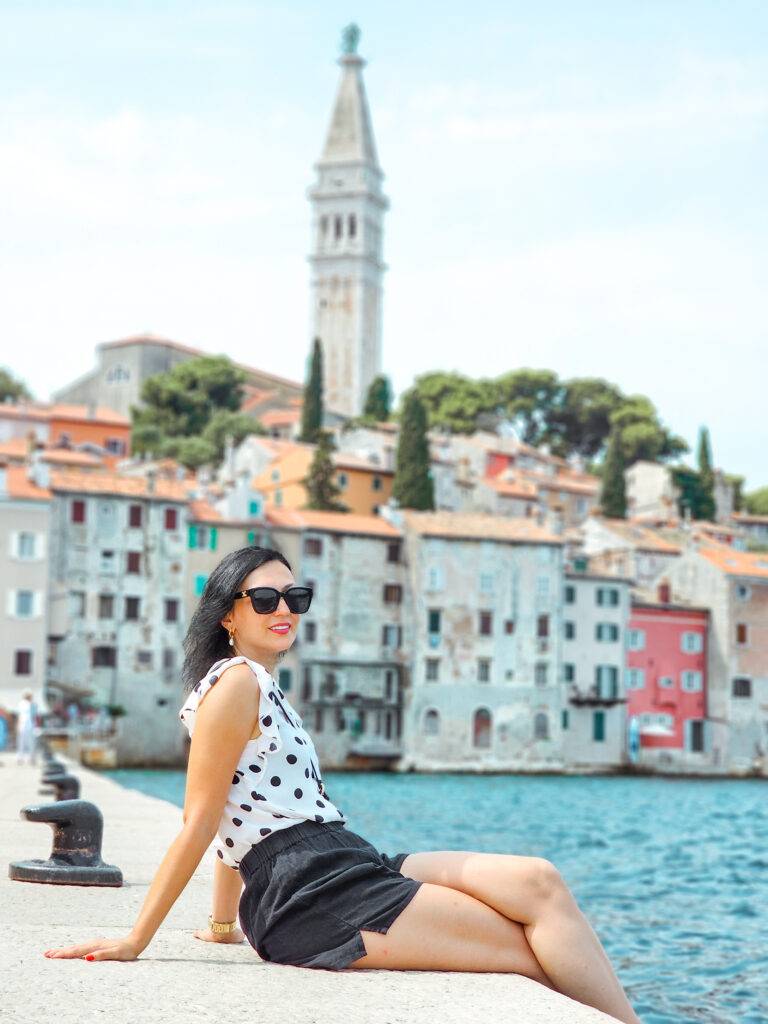
On your fifth day of this Istria itinerary you will visit what is considered to be the most beautiful Istrian town – Rovinj.
Rovinj View Point
As soon as you arrive in Rovinj, you will get to the view point which is next to the little port and offers great views of Rovinj. If you want to snap that postcard photo, this is your place.
Local Street Market
Very close to the view point, you’ll find a local street market with home-made Istrian produce. We got ourselves olive oil with rosemary and garlic and truffle paste, which we later enjoyed for breakfast and dinner.
It’s a great place for shopping with affordable prices.

Old Town
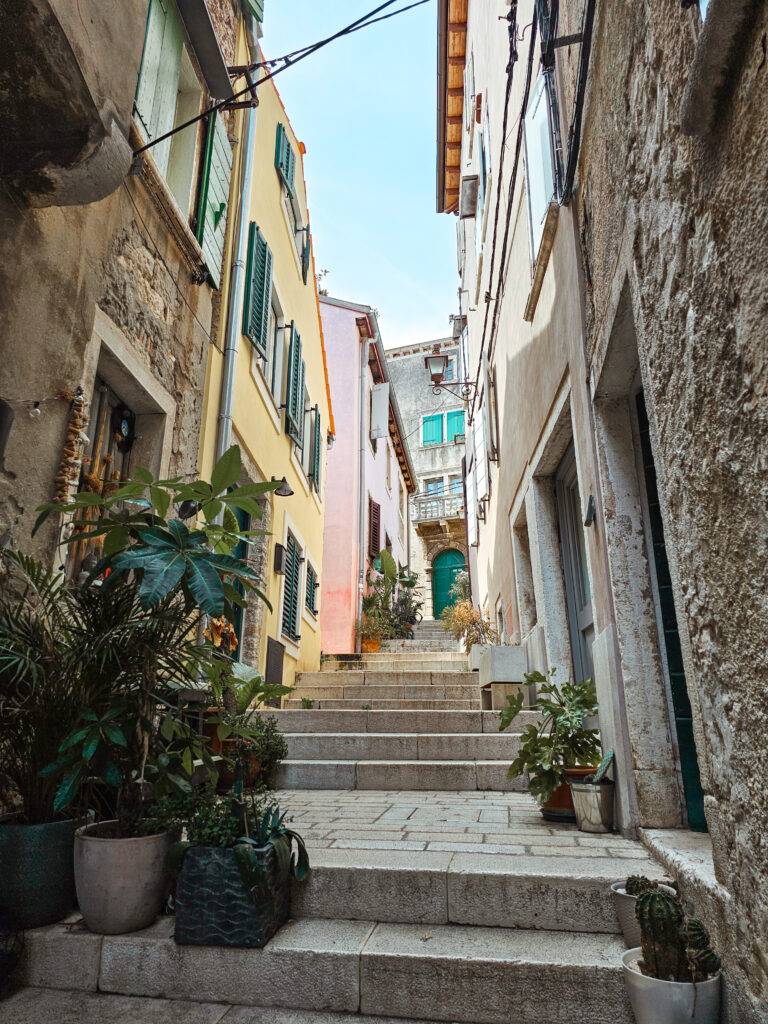
The Old Town of Rovinj is quite hilly, but it’s super cute. Definitely wander around its cobblestone streets and get lost in them.
Church of St Euphemia
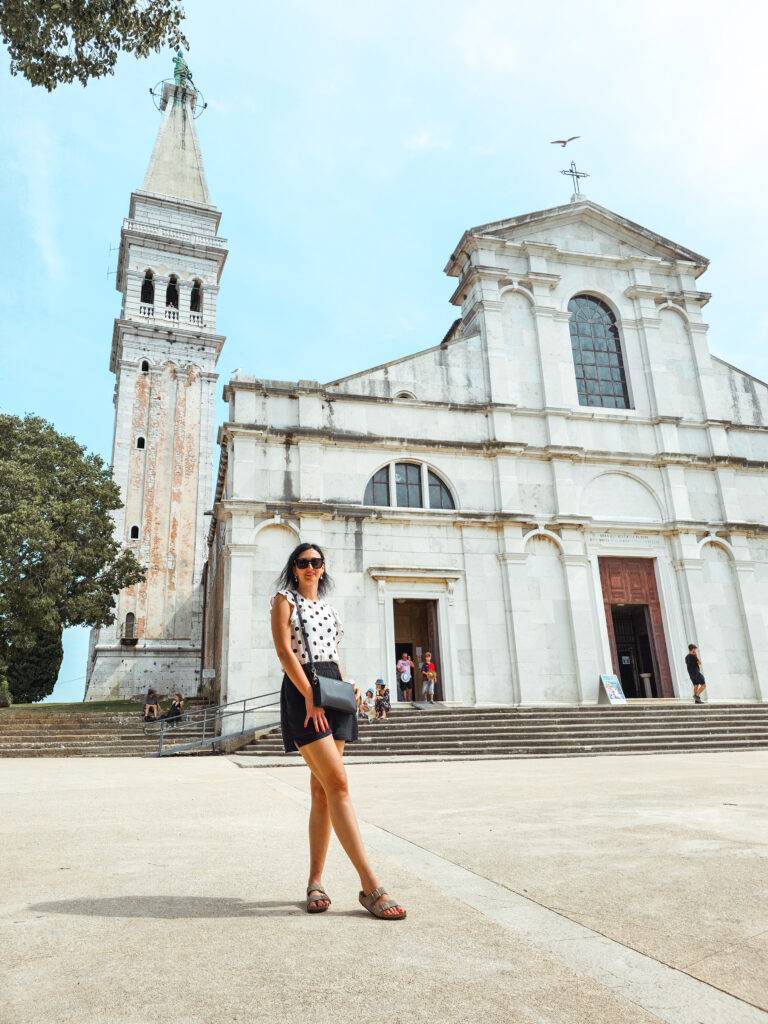
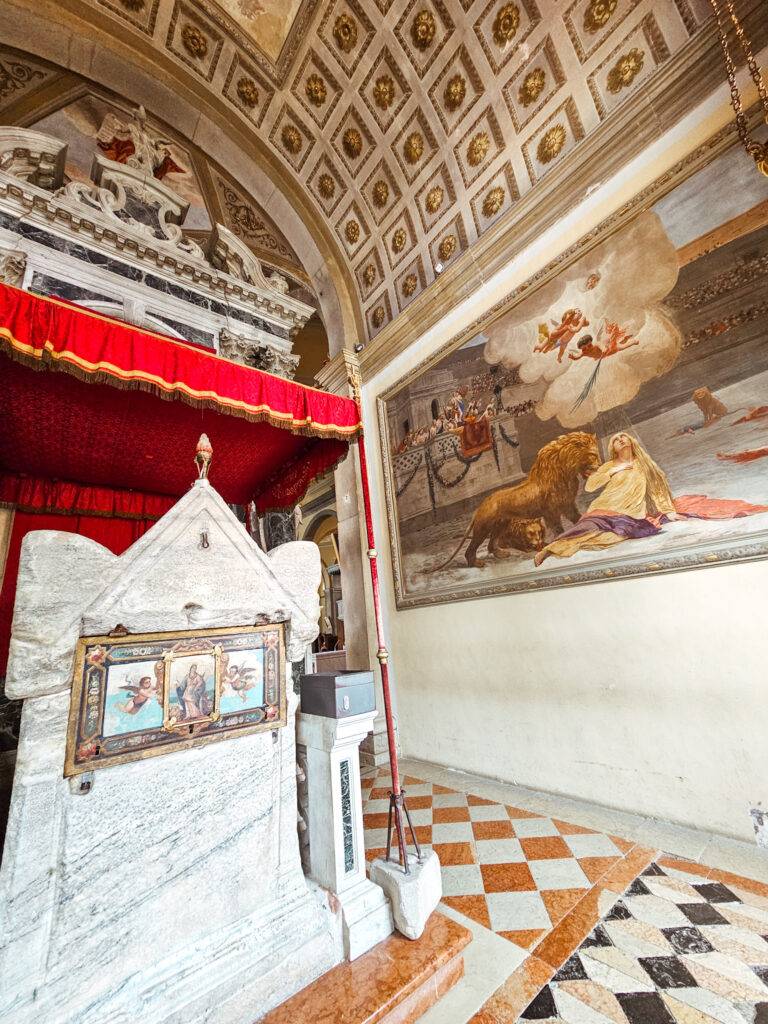
Church of St Euphemia is a baroque church built in the 18th century. The relics of Saint Euphemia are preserved in a Roman sarcophagus from the 6th century (but adapted in the 15th).
The church is free to visit unless you want to climb the tower, which I don’t recommend. We tried to, but the wooden stairs that looked more like ladders didn’t look safe at all. With each step we took, we could feel the bending. Honestly, I don’t know why it is even allowed and even more, why don’t they renovate the stairs.
It’s really up to you, but bear this in mind. I couldn’t do it and after a few steps, we gave up. The looks are supposedly nice, but I love my life more than the views. And maybe I’m exaggerating here, but even my husband said he was glad I told him I’m going back because he was panicking a bit too (and he’s a very rational mathematical person!).
Nevertheless, it is definitely worth going inside the church. It’s not as grandiose as the churches in Italy, but it’s a beautiful one. Plus, if you’re religious and a Christian, then obviously you need to go inside for the relics of St Euphemia.
Atelier Charm Rovinj
So, this boutique clothing shop is the ultimate Instagram place in Rovinj. And yes, you can sit on the chair and take photos, just bear in mind that you’d most likely have to wait in the queue for your turn because it’s a very popular place.
And if you’d like, you can do some shopping afterwards because they have beautiful dresses.

Balbi’s Arch
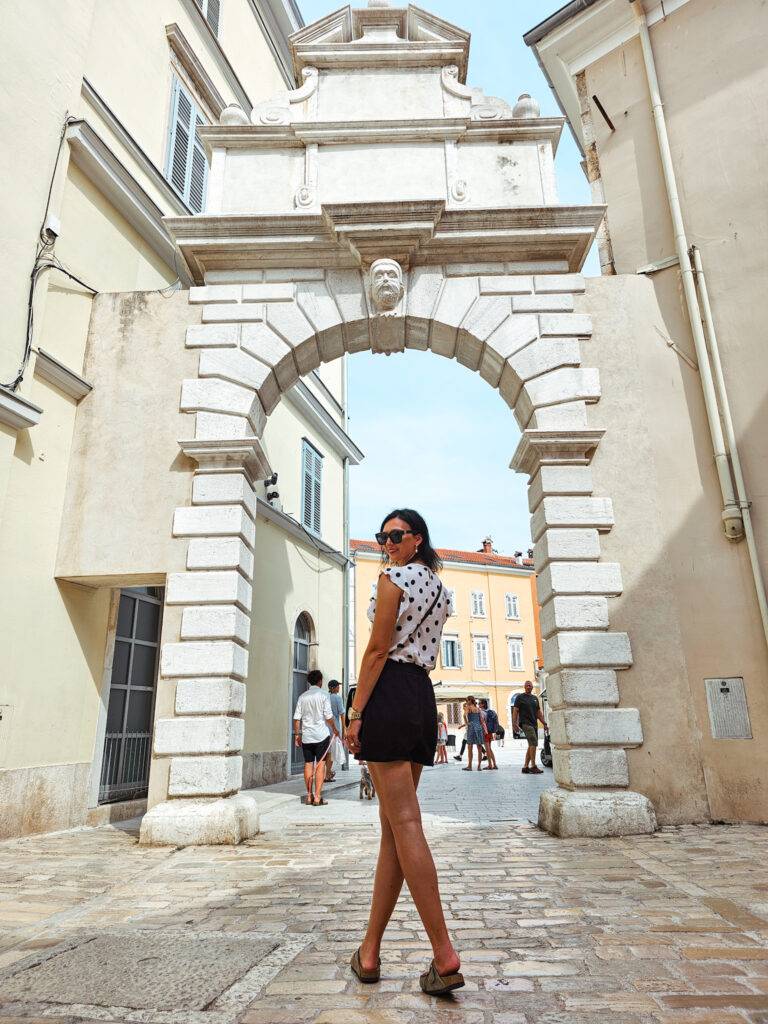
Balbi’s Arch was built in the 17th century as a main gate into the town. The top of the arch is ornamented with a Turkish head on the outside and a Venetian head on the inside.
Golden Cape Forest Park & Punta Cabana Beach
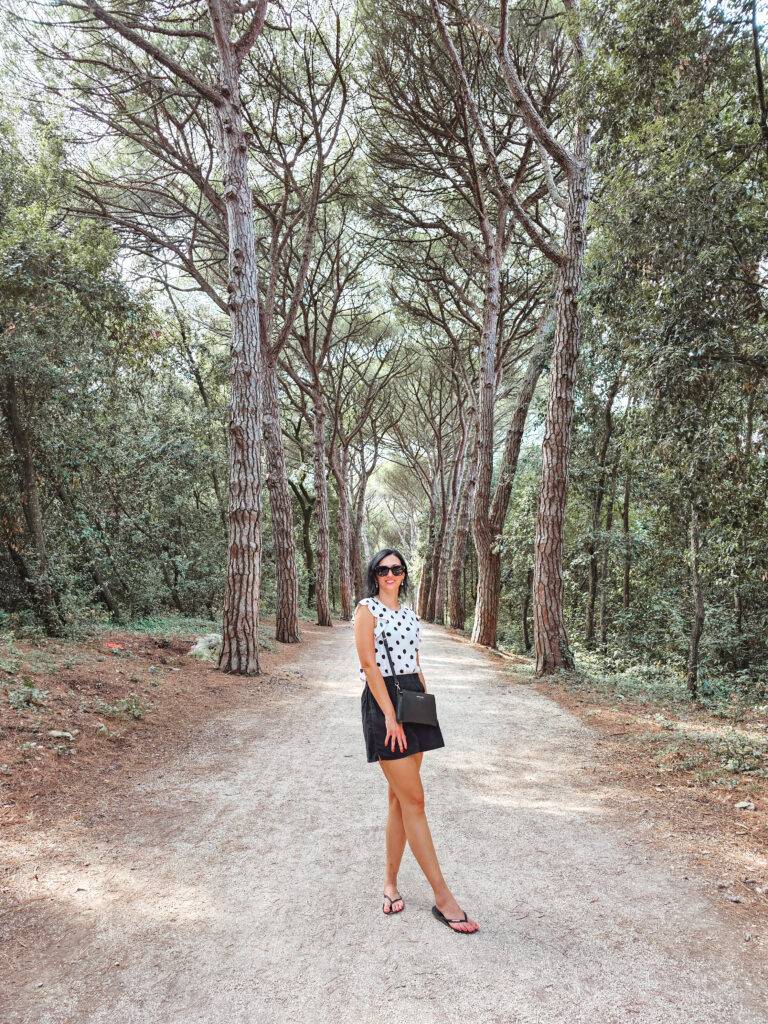
Now is the time to enjoy the beach and I recommend going to Punta Cabana Beach which is in Golden Cape Forest Park, a recognised nature park.
So, to reach the beach, you need to walk about 30 min through the forest. Many people come here for running, cycling and other sports activities.
Honestly, approaching the beach has never been more beautiful to me.

Day 6 in Istria: Glagolitic Alley, Hum & Kotli
Your 6th day in Istria is reserved for the remaining hilltop towns and some cool sites there. You’ll visit Hum, the smallest town in the world, Kotli, natural pools and Glagolitic Alley, a road of 11 monuments which commemorate rich Slavic cultural heritage.
💡For this you need to rent a car, it’s impossible to do it otherwise I’m afraid.
✅ Alternatively, you can explore Hum and Motovun on this joint tour.
📖 Check my 5 Charming Istria Hilltop Towns You Have to Visit in Croatia blog post.
Glagolitic Alley
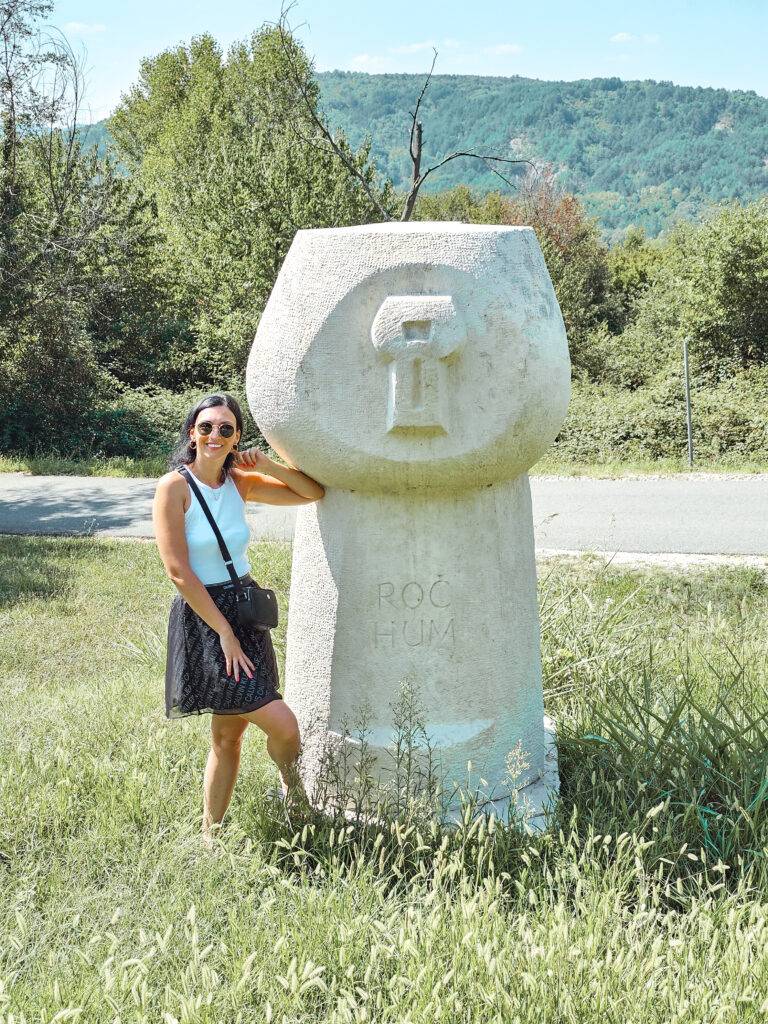
Glagolitic Alley is a memorial composed of 11 monuments dotting the road between the villages of Roc and Hum. Sculptures were erected between 1977 and 1985 to honour the historical Croatian scribal tradition in Glagolitic script.
The road is 7 km (4.3 mi) long and honestly, it was such a fun activity. It felt like we were in a video game driving our car on a quest to find all these monuments along the road. They are not that easily spotted, so sometimes we had to drive back and forth to find some of them.
Here’s the list of monuments as you drive from Roc to Hum (recommended way):
- Pillar of the Cakavian Parliament – in the form of Glagolitic letter S symbolising logos, mind, reason
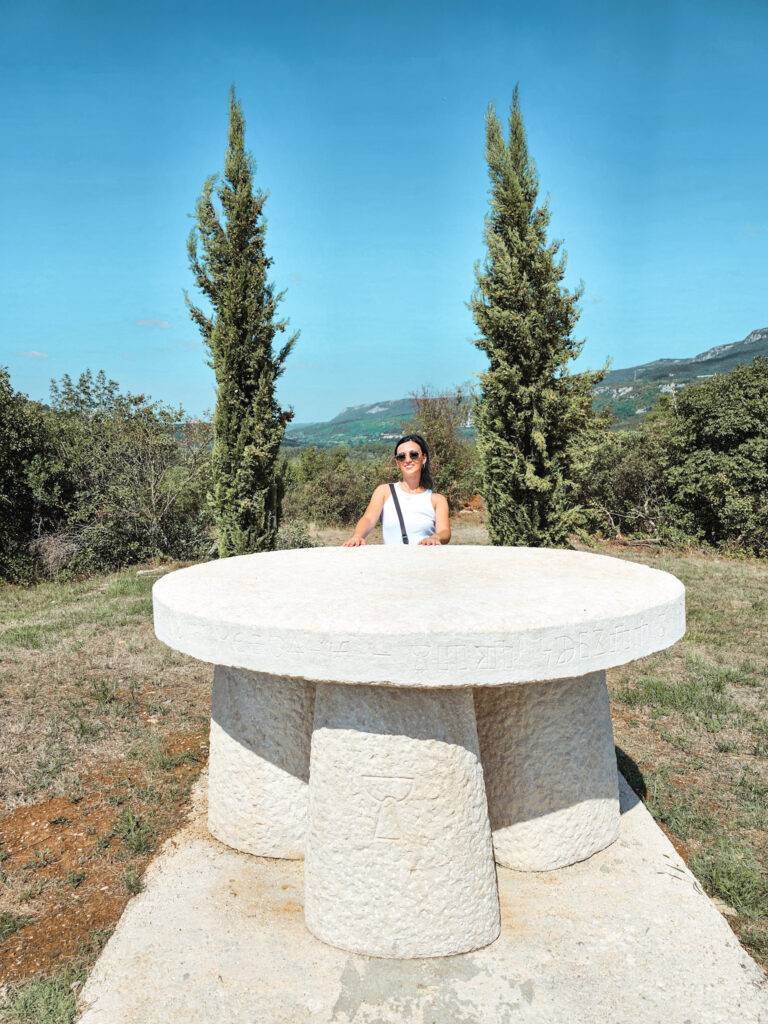
- Table of Cyril and Methodius – a table before two cypresses which symbolises the two brothers
- Assembly of Clement of Ohrid – representing the first Slavic literary school
- Glagolitic Lapidarium – copies of the most important Glagolitic monuments from regions of the former Yugoslavia
- Gorge of Croatian Lucidarius – symbolising the Istrian Mount Olympus: Ucka
- Belvedere of Grgur Ninski – a stone book with Glagolitic, Cyrillic and Latin letters inscribed
- The Rise of the Istrian Demarcation – a stone door in the form of Glagolitic letter L, through which a road runs and around which stones are scattered forming Glagolitic letters, spelling the words of Istrian Demarcation
- Wall of Croatian Protestants and Heretics – a stone clepsydra with names of Croatian Protestants
- Resting Place of Zakan Juraj – commemorating the first Croatian printed book in seven stone chairs forming the letters that spell the name of Zakan Juraj
- Monument to Resistance and Freedom – three stone blocks representing the Antiquity, Middle Ages and Modern Period
- Hum City Gates – a copper door with bucrania, knocker and a calendar, showing the work in the field for each month of the year
Pillar of the Cakavian Parliament Table of Cyril and Methodius Assembly of Clement of Ohrid

Hum
As you get to the 11th and final point of Glagolitic Alley, you will reach Hum, the smallest town in the world of only about 50 people!
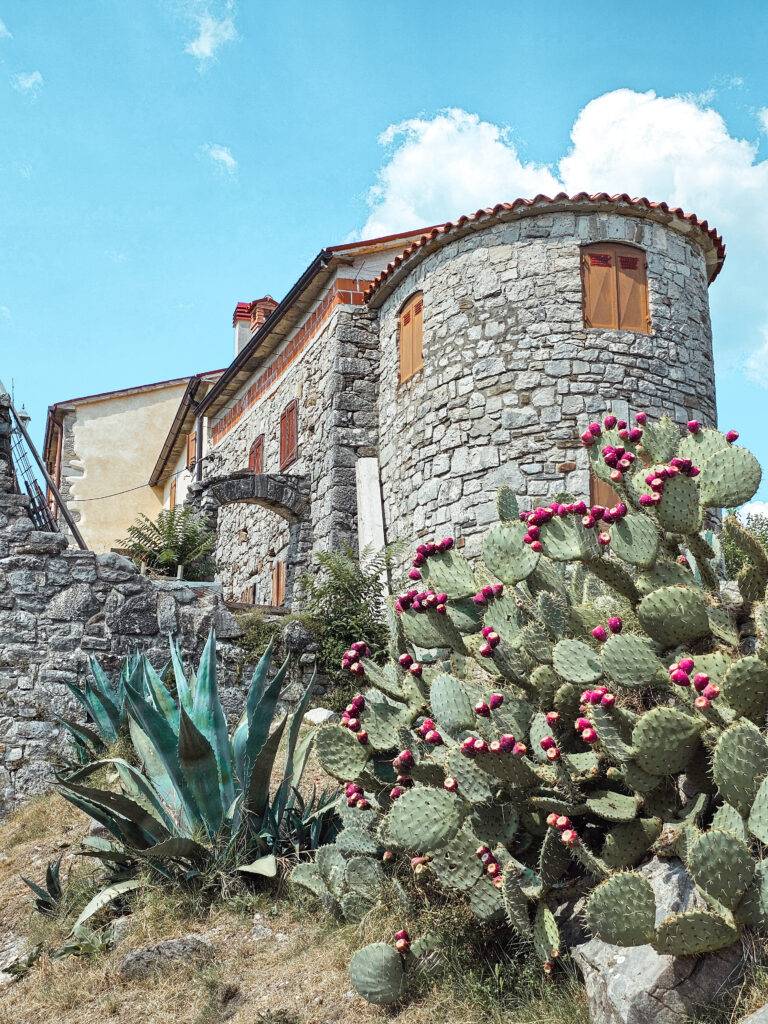
Rest assured it’s the cutest place on Earth and despite the size, you can easily spend an hour or two there just soaking up the views and unique architecture.

Church of the Assumption of Mary
It’s a cute little church built in the 19th century. It’s the first and only site to check in Hum.

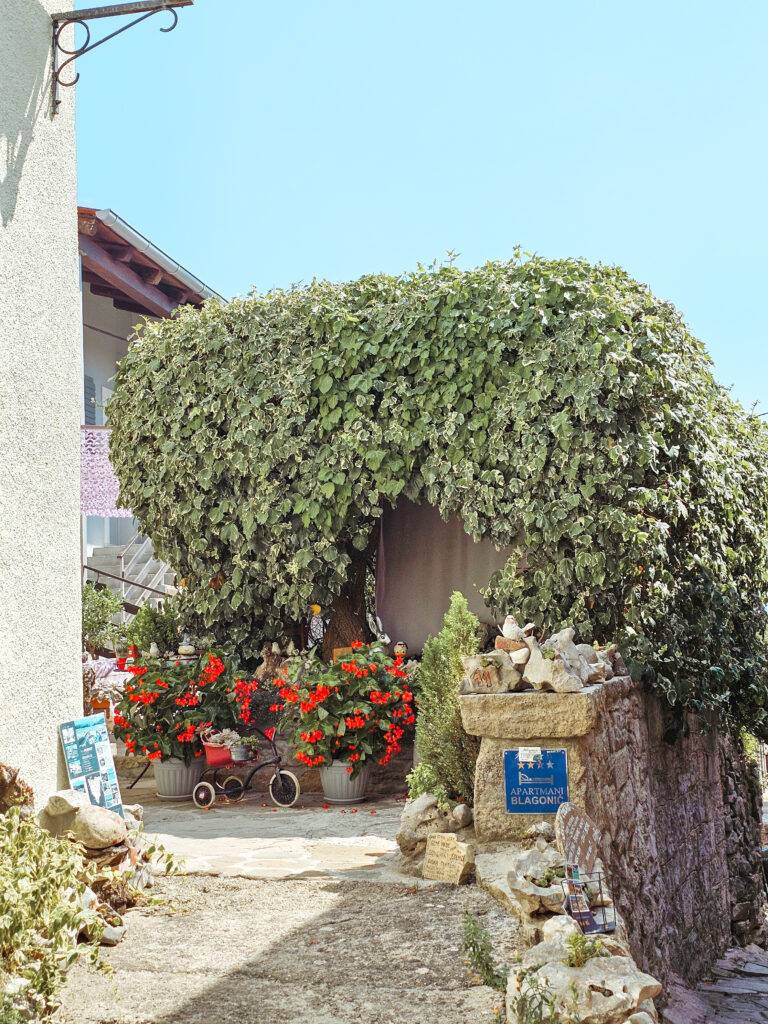
Streets of Hum
The streets of Hum are so picturesque and instagrammable, I couldn’t put my phone down.
Souvenir Shop COLMO
Souvenir Shop COLMO is not only a great place to buy souvenirs, but they also have a wonderful outdoor terrace with a view. They’re also selling coffee and drinks, so it’s a perfect place for a short break.

Kotli
Kotli is a small village famous for its natural pools (Croatian version of Pamukkale) where you can bathe. However, this will largely depend on the time of the year. In summer time it is highly unlikely you’d be able to do it because the pools are mostly dry.
This was sadly the case for us. The locals have told us that the spring time is usually the best for that. Either way, it’s a cool nature place to check.

This is how it can look like:
Day 7 in Istria: Porec & Unique Activities
On your last day in Istria, you can sightsee a few more towns, go on some interesting tours or just relax at the beach.
Below are my favourite options.
Porec
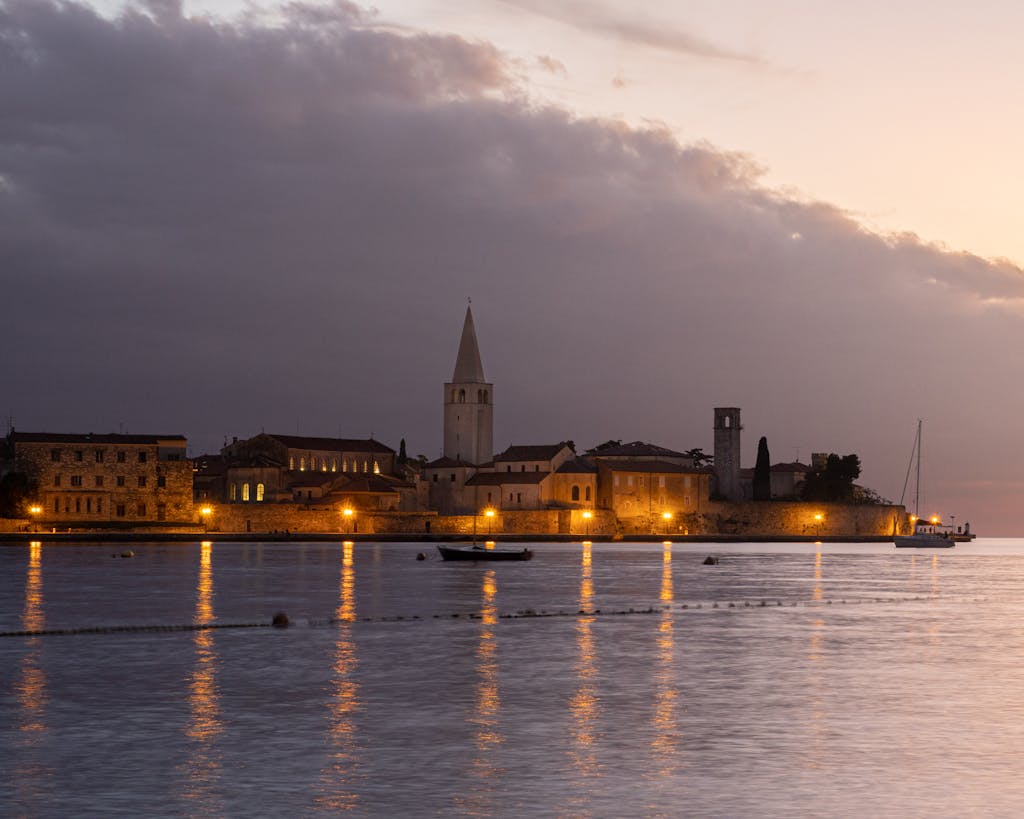
Porec is one of the most beautiful towns in Istria. I’ve been there several times over the years and next time I’m definitely going back there!
Here are some of the things to do in Porec:
- Euphrasian Basilica
- Main Square & Church of Our Lady of the Angels
- Main Street Decumanus
- The Towers of Porec
- Venetian Zuccato Palace
- Romanesque House
- Park Jurja Dobrile
- Island St Nikola
- Sandy Beach Lanterna (at Lanterna Premium Camping Resort)
Truffle Hunting & Cooking Tour
As Istria is super famous for its truffles, one of the unique experiences you can have here is to go on a Truffle Hunting and Cooking Tour.
You will go on truffle hunting with dogs specifically trained for that. Afterwards, you will enjoy a 3-course meal with truffles.

Wine Tour
Istrian wines are so delicious, so if you’re a wine enthusiast, then this is a must activity for you!
On this wine tour you will visit 3 different wineries, taste 5-8 wines in each winery and then you’ll finish this amazing tour with a 4-course dinner.
Kamenjak Boat Tour
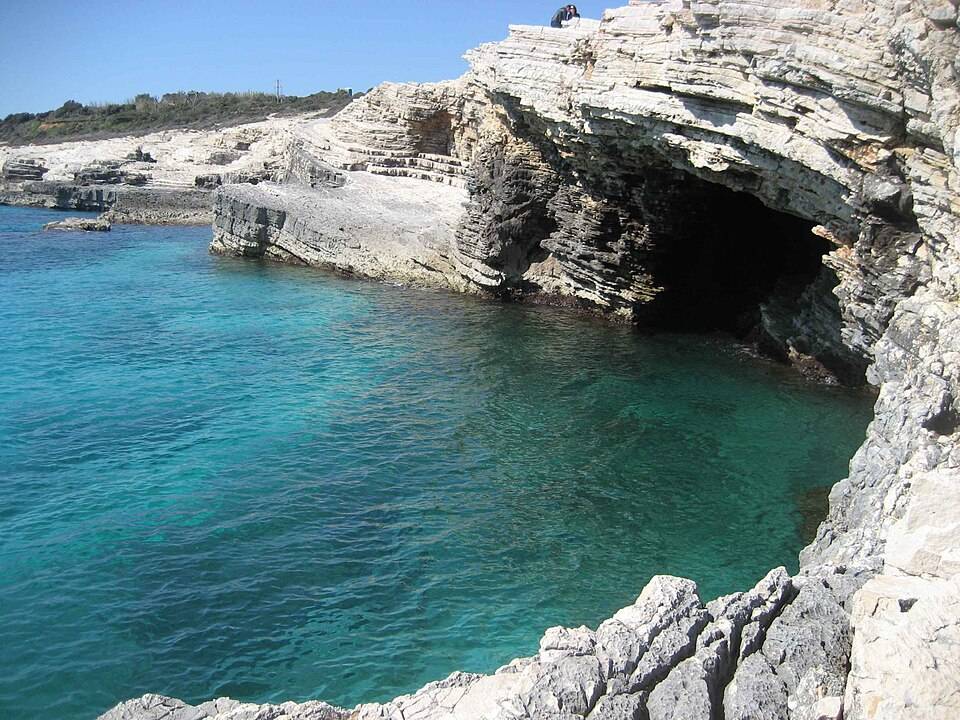
Cape Kamenjak is a nature park in Croatia, very close to Pula.
It has stunning nature, beautiful beaches and it’s truly one of the most beautiful nature places in Istria. You can visit it independently or you can join this highest rated boat tour with multiple stops and lunch and drinks on the boat.
You will also swim in caves and on secluded beaches. It’s a great day trip you can do in Istria.
Pula Kayak Adventure
Pula Kayak Adventure is a great tour where you’ll explore bays on kayaks, snorkel in caves, cliff-jump and learn about Pula history.
Authentic Istrian Olive Oil, Wine & Local Food Experience
Istrian olive oil is so delicious, especially because the producers play with flavours and variations.
On this Authentic Istrian Olive Oil, Wine & Local Food Experience you will visit family-owned olive groves where you’ll taste olive oil, wine and local food. You will also learn about the process of making olive oil.
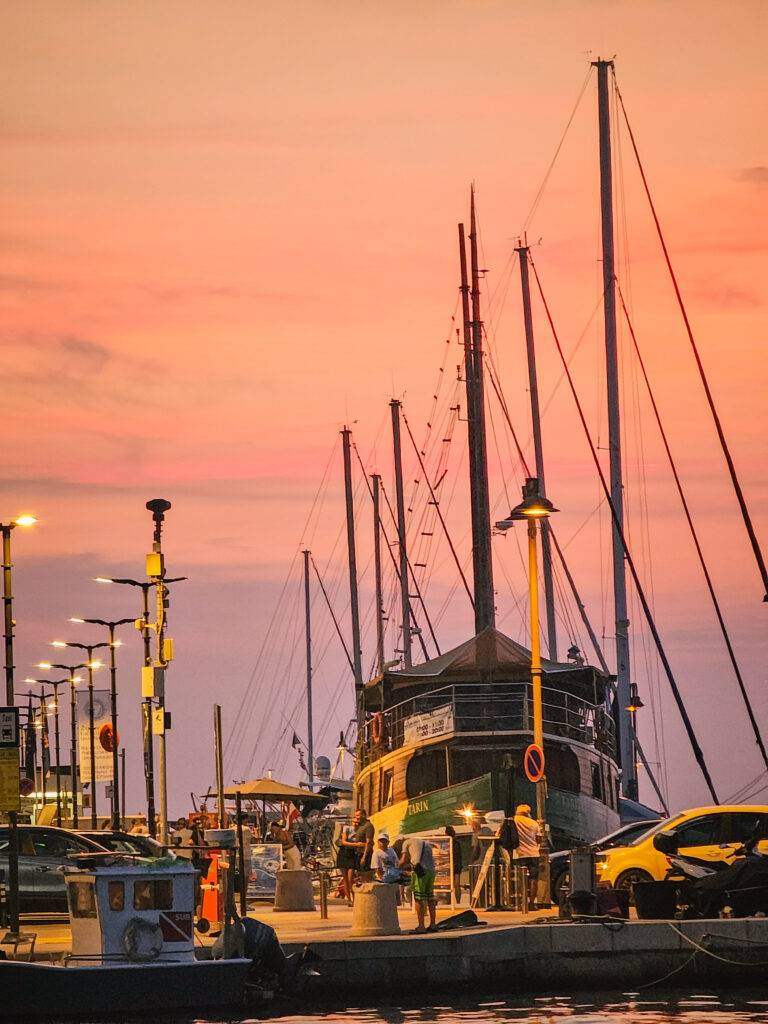
Dolphin Watching & Sunset Boat Tour With Dinner and Drinks
If you’re looking for a perfect way to end your Istria itinerary, this Dolphin Watching & Sunset Boat Tour With Dinner and Drinks is the best choice!
Is Istria worth Visiting
While Istria is gaining in popularity more recently, it is still underrated compared to the Dalmatia region. I personally love the beaches of Dalmatia more, mainly because most of them are sandy or pebbly. That is not to say that Istria doesn’t have beautiful beaches, but they can sometimes be more difficult to find.
The towns and islands of Istria are equally beautiful like those of Dalmatia (Rovinj to Dubrovnik for example), but what took my breath away in Istria is the nature. Istria has a lot more greenery and hidden natural gems that Dalmatia lacks sometimes.
If you haven’t been to Istria before, you are missing out a lot. Having said that, yes, Istria is very much worth visiting.
Read my other Croatia blog posts:
- Croatia Bucket List: 15 Best Things to Do in Croatia
- 10 Best Istria Hotels with the Pool You’ll Love
- 5 Charming Istria Hilltop Towns You Have to Visit in Croatia
- 8 Best Coastal Towns in Croatia You Have to Visit
- The Perfect Dubrovnik 5 Days Itinerary: A Local’s Guide
- Top 10 Dubrovnik Hotels with Pool for a Perfect Stay
- 15 Best Things to do in Dubrovnik: Travel Guide
- 3 Islands Boat Tour in Dubrovnik: Is it Worth it?
- 16 Must-Visit Dubrovnik Game of Thrones Filming Locations
- Top 10 Viewpoints in Dubrovnik with Best Views of Dubrovnik
- Is Croatia Expensive to Visit? (+My Cost Breakdown)
✅ If you’re looking for a custom travel plan, find out more about my personalised itinerary service here.
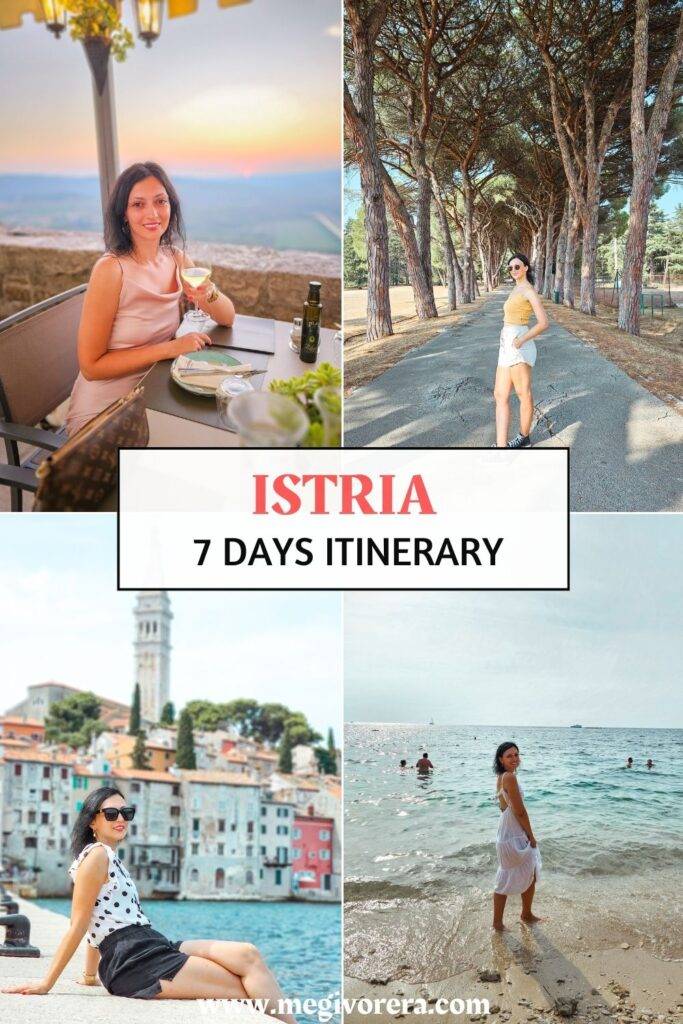
Like this post? Pin it!📍